

Six-Pack Design · Ab Definition · High-Definition Abdomen
A defined six-pack begins with the design of the fat layer.
Six-pack abs design is a program that analyzes the abdominal fat layer, center line, segments and flank contour together to bring out sharper masculine abdominal definition.
My abs concern type
Which abs concern is yours?
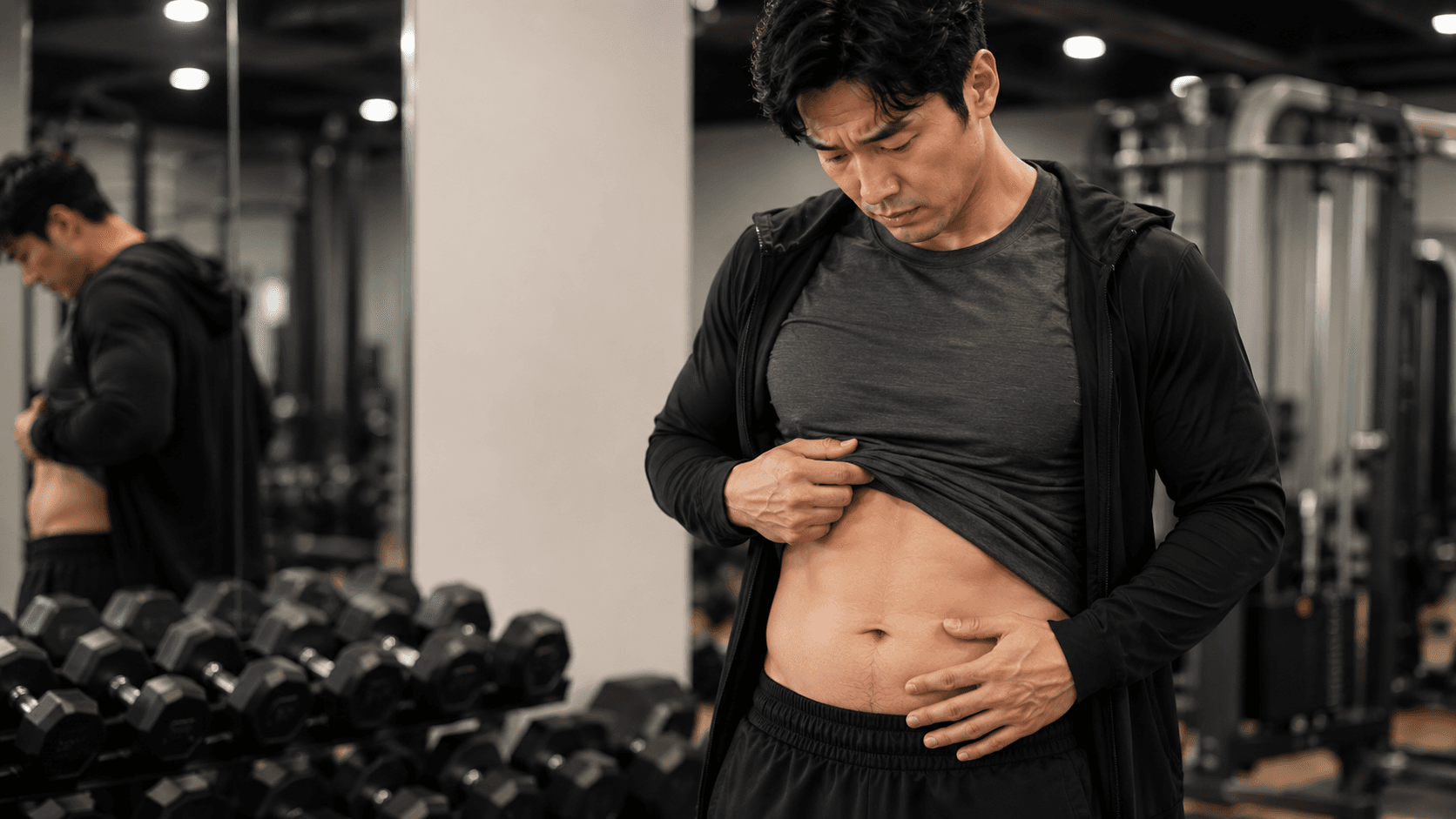
The limits of exercise
If these abdominal concerns
won’t resolve with exercise alone
- Your abs never look defined no matter how much you train
- You lost weight, but the abdominal lines are still faint
- Only part of the six-pack shows, and left and right are uneven
- Without an inguinal V-line, the abs never look finished
- The flank and love-handle lines stay untidy
- A busy routine makes upkeep hard, and the lines fade fast
Abs are not decided by training volume alone
Fat-layer thickness, the strength of fascial borders, left–right proportion — an area completed by precise HD design.Variation Analysis
Every set of abs is different.
Tailored analysis creates a more natural, balanced result.
Abs vary from person to person in left–right symmetry, muscle development, the spacing of the rectus abdominis, fat distribution and body proportion. Rather than imposing one fixed shape on everyone, six-pack abs design values analyzing your current structure and designing the contour that suits you.
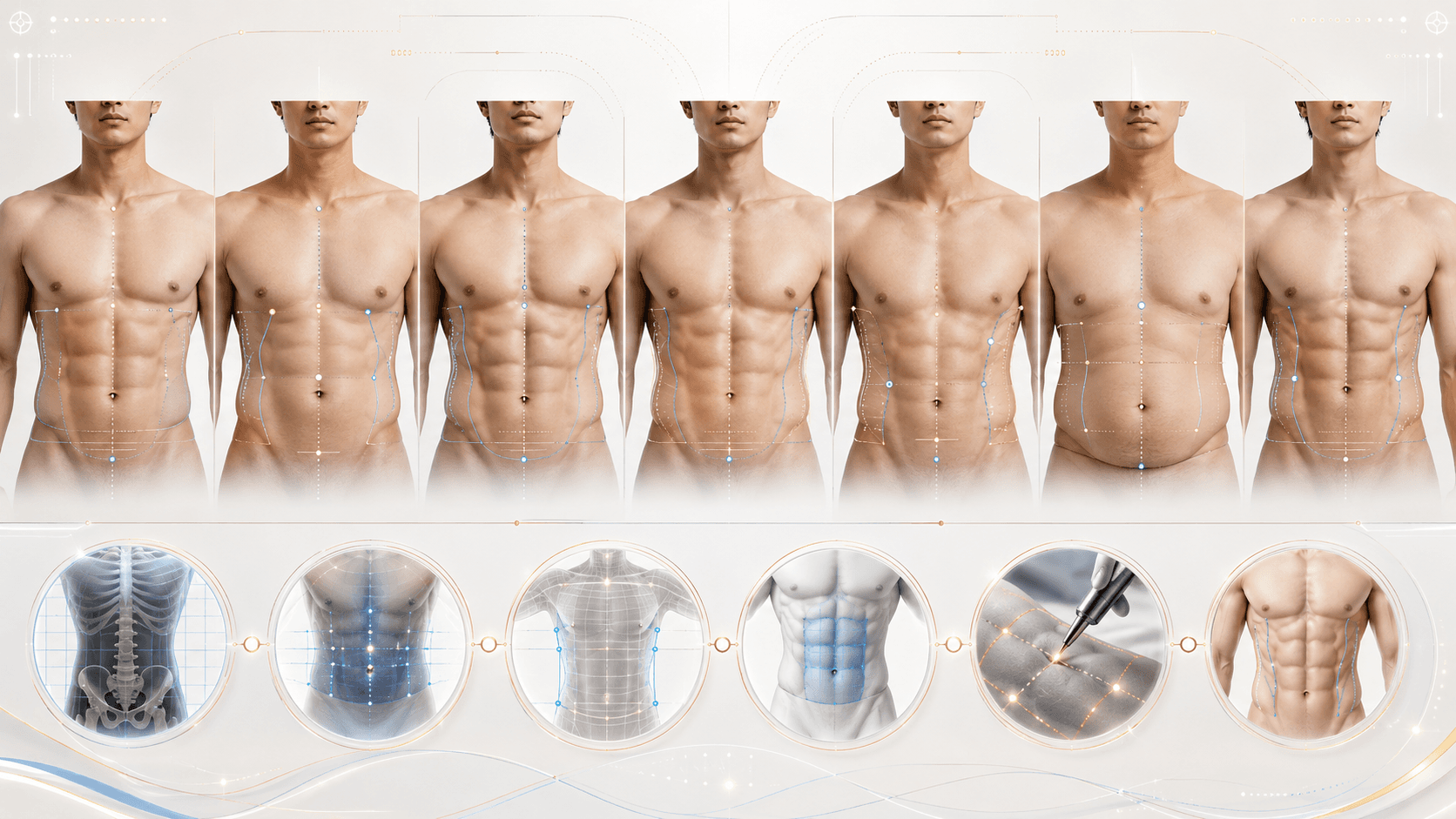
Left–right asymmetry
When one side of the abs stands out or the lines differ
Upper–lower difference
When the upper and lower abdomen differ in thickness and definition
Center-line variation
The depth and spacing of the rectus midline differ from person to person
Fat distribution
Fat thickness and distribution across the abdomen are not uniform
Length and segmentation
Rectus length and the number of horizontal divisions vary by build
Overall proportion
Ribcage, waist and pelvis ratios make the same abs read differently
Body Type Classification
A different body type means
a different starting point for abs design.
Male body types can broadly be viewed as endomorphic, mesomorphic or ectomorphic tendencies. Because fat-layer thickness, ribcage-to-waist ratio and muscle development differ, what matters is setting a design direction that fits the body type rather than applying one identical line.
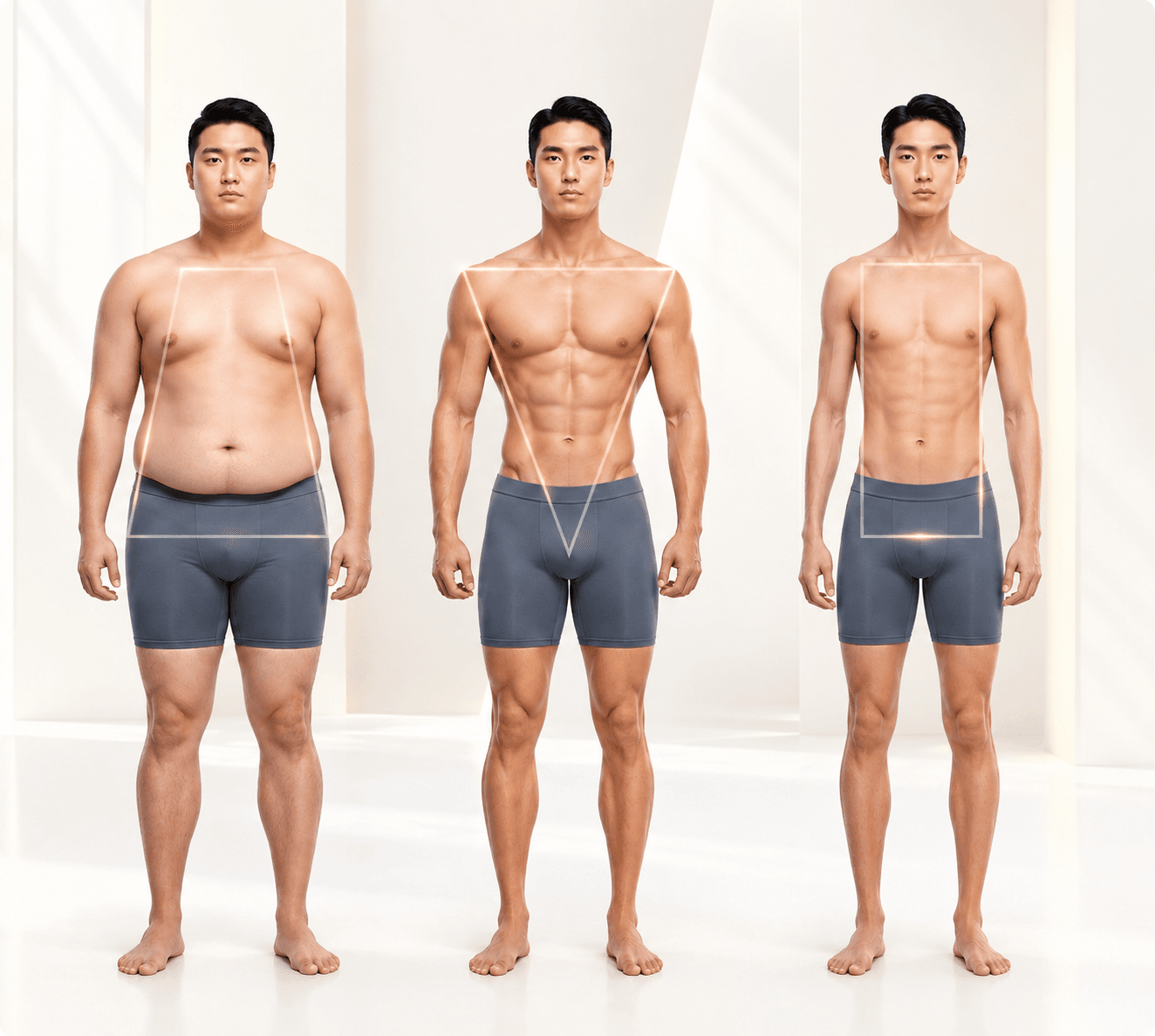
Endomorph
The abdominal fat layer tends to be thicker and the frame can look wide, so we review the abdomen-to-waist ratio and contour cleanup before sharpness.
Mesomorph
A build with a relatively good muscle base and high potential for abs lines; symmetry and tidy horizontal divisions become the design points.
Ectomorph
A slim build where volume or the presence of division lines can be weak, so balanced contour design matters.
Why Lines Blur
Four reasons a six-pack stays faint
even when you train
Subcutaneous fat thickness
Even 0.5–1cm of extra fat over the rectus abdominis is enough to blur the six-pack borders.
Strength of fascial borders
When the light-and-shade border between fascia is weak, the lines look flat regardless of training volume.
Left–right asymmetry
Differences in fat layer and muscle thickness between sides are hard to correct with exercise alone.
Flank–inguinal connection
Emphasizing only the abdomen separates it from the flanks and V-line, lowering the finish.
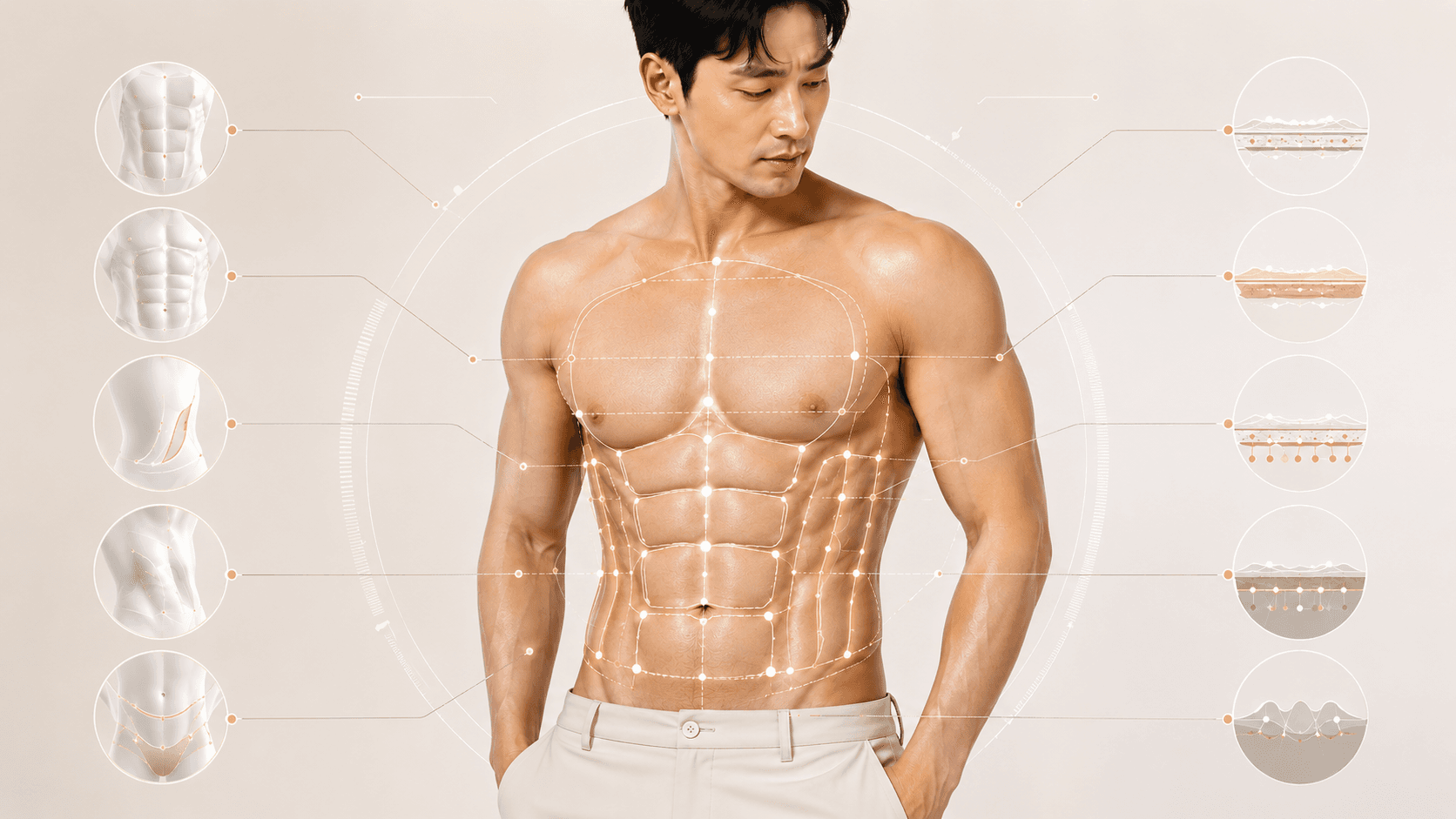
Analysis Map
Fat layer, segments and V-line,
read on a single map
Emphasizing only the six-pack separates it from the inguinal and flank areas and lowers the finish. NB reads four regions on one map before setting the design direction.
- AbdomenRectus and oblique borders; left–right balance of the six-pack segments
- Center LineStrength of the abdominal midline; dimension of the chest-to-abdomen connection
- WaistLove-handle thickness; clarity of the waist-to-pelvis V-line
- InguinalThe inguinal V-line — the final 1cm connecting abdomen and lower body

Ultrasound Layer Analysis
Layers the eye can’t see,
confirmed on ultrasound and then designed
Subcutaneous fat, fascia, rectus abdominis — three layers exercise alone cannot distinguish. We examine them directly on ultrasound before the procedure, then design quantitatively how far to refine for a natural six-pack.
- Fat-layer thickness measured in millimetres
- Fascia and muscle borders compared left to right
- Depth and amount decided per region in advance
- The expected range of change with continued training discussed in consultation
Why NB
What sets NB six-pack abs design apart
Natural abs design
We prioritize natural dimension that fits your build and muscle distribution — not ‘as sharp and as much as possible’.
Ultrasound abs mapping
Rectus and oblique positions and fat-layer thickness are assessed on ultrasound. Data-driven design makes the result.
Integrated V-line design
Revealing the abs alone looks unfinished if the inguinal line stays untidy. We design through to the V-line.
Revision-case capability
Precise redesign is possible even with adhesions, imbalance or scarring left from previous procedures.
NB Design Solution
Concern → design match
The rectus lines don’t show
→HD abs fat sculpting
Fat is removed precisely along the rectus borders, sharpening the muscle’s dimension and edges.
No V-line
→Inguinal line design
Completes the V-line connecting abdomen and lower body — the element that decides how finished the abs look.
Left–right imbalance
→Abs symmetry correction
Differences in fat-layer thickness between sides are analyzed and balanced.
Overall abdominal fullness
→Lower-abdomen cleanup
Tidies the lower abdominal fat layer for an abdomen that looks different even in clothes.
Personalized Design Process
Personalized analysis & design process
Six-pack abs design is not simply flattening the abdomen; it analyzes your current muscle structure, fat layer, left–right balance and body proportion together to design a more natural, defined abdominal line.
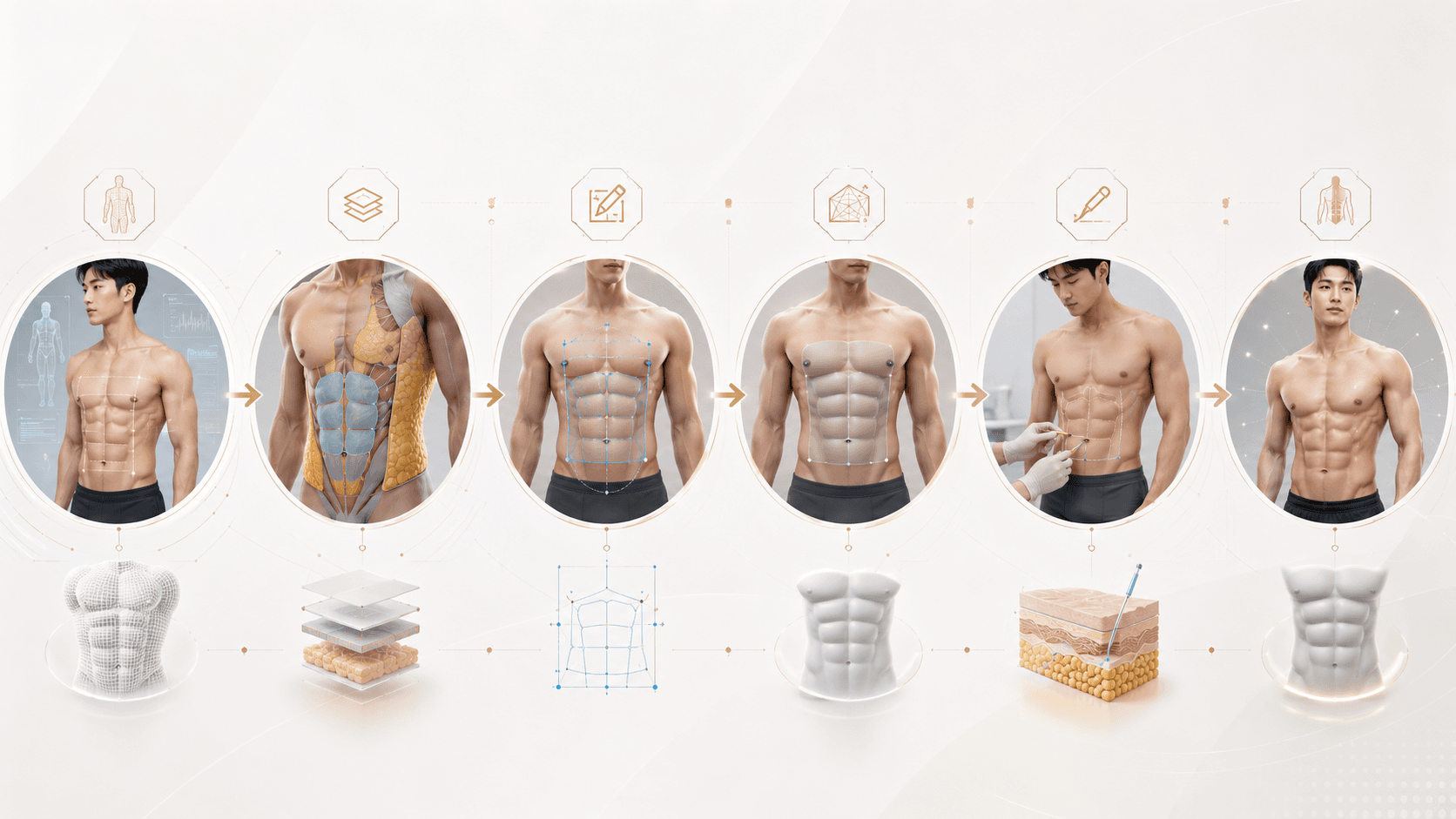
Precision analysis
Build, fat layer, muscle structure and asymmetry are measured step by step.
Fat & muscle assessment
Layer thickness and borders are compared left to right on ultrasound.
Tailored design plan
The contour and line direction that fit your current structure are set.
Line simulation
Result imagery and the recovery schedule are reviewed together.
Refined execution
Proceeds in stages at the regions and intensity decided in advance.
Balanced result check
Finishes toward a natural, balanced result.
Principle & Effect
How does abs sculpting
actually change the lines?
Abs sculpting considers fat distribution and the abdominal contour to precisely design the vertical line, horizontal divisions, oblique connection and lower-abdomen contour, creating a more defined abdominal impression. The appropriate intensity and direction, however, vary with build, fat layer and muscle structure.
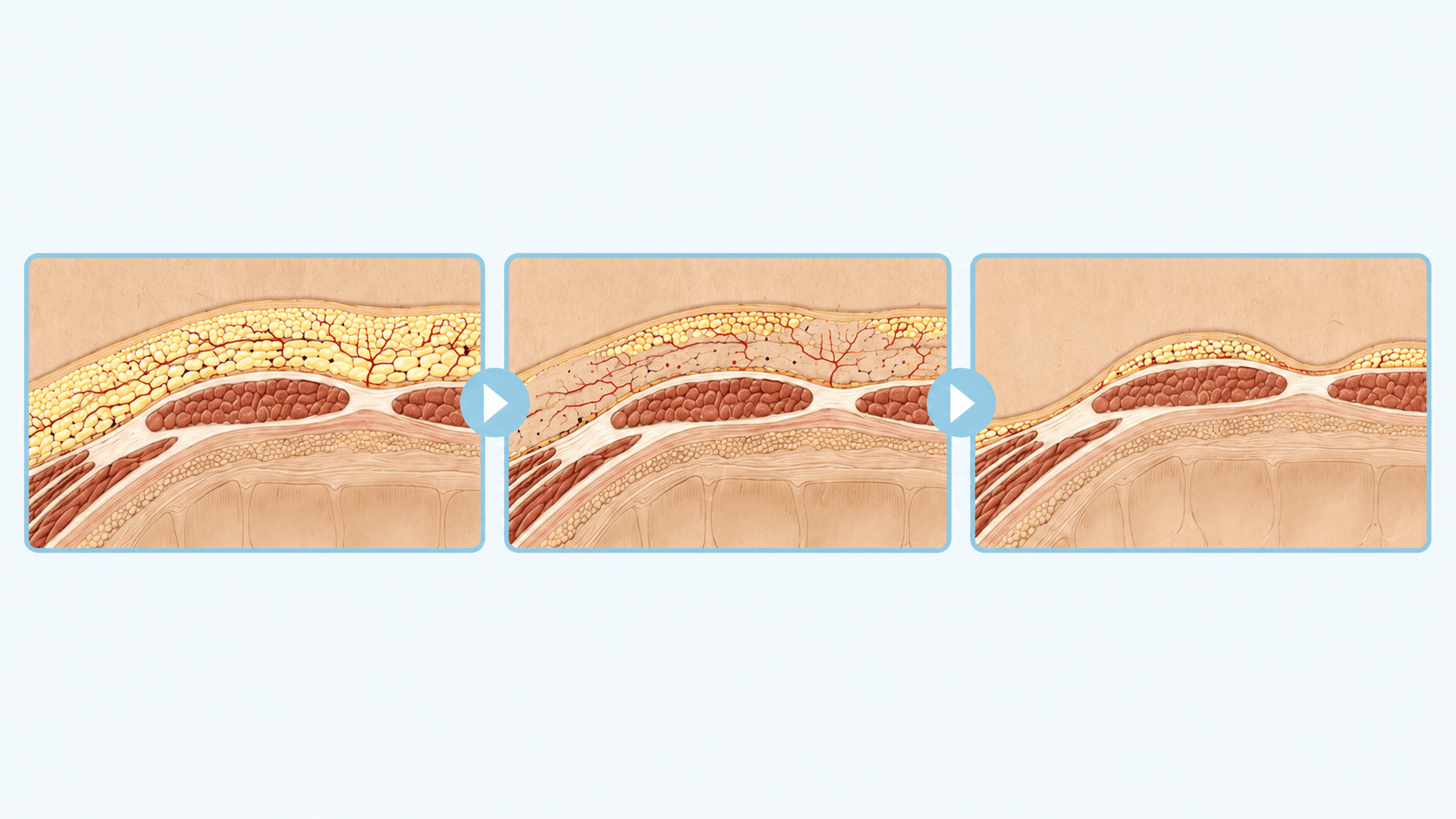
Fat-layer differential
Layer thickness is analyzed to decide intensity per region.
Contour shaping
A soft contour is designed along the muscle borders.
Vertical & horizontal lines
The strength of the rectus line and horizontal divisions is tuned.
Lower-abdomen cleanup
Tidying the lower abdomen changes how clothes fit.
Oblique connection
Extends to the obliques to connect the flank line.
Intensity by body type
Application intensity and direction differ by body type.
Consultation Planning
We look at your abdomen together
and draw the line together
Your build and target lines go up on the monitor and we design together. How far to refine, whether to keep training, what the recovery schedule looks like — result imagery and the plan, confirmed in one sitting.

Related men’s body procedures
Designs to consider together

After the gym, and in daily life, the abdominal line stays visible
The NB standard of results
What changes
Natural dimension with clearly revealed rectus borders
Symmetric design informed by ultrasound analysis
Abs completed with the inguinal line designed in
Masculine abs design that is natural, never overdone
Why choose NB six-pack abs design
- Experience in tailored HD design across abs concern types
- A principle of pre-surgical ultrasound abs mapping
- Integrated V-line and inguinal design capability
- Experience with many revision and adhesion cases
- Consultation and surgery performed by the head surgeon
FAQ
Frequently asked questions
Q. Is a six-pack line possible even if I’ve barely exercised?
It depends on fat-layer thickness and how developed the rectus abdominis is. We check your current state on ultrasound, then discuss together whether to combine training.
Q. Won’t the result look unnaturally ‘carved’?
Our design principle is dimension that is never excessive, matched to your build and muscle distribution, so the result reads as a natural impression.
Q. How long is recovery?
On average, return to daily life in 1–2 weeks and compression care for 4–6 weeks. It varies with region and intensity; your individual schedule is set in consultation.
Q. Will the lines blur again if I gain weight?
With fewer fat cells, regain in the same area is slower, but significant weight gain can soften the lines, so upkeep is recommended.

After surgery, with you through recovery
- 01VersaClear light therapy2 sessions
- 02Ucell standing-wave therapy2 sessions
- 03Radiofrequency care4 sessions
- 04
 Soft-meso injection· Performed by the doctor2 sessions
 - 05
 Fraxel scar laser· Performed by the doctor2 sessions
Basic aftercare is provided as a standard programme of 12 sessions in total — 4 swelling-care, 4 radiofrequency, 2 scar-laser and 2 meso-injection sessions. Actual scheduling and completion may vary depending on your ability to attend.
If care is needed beyond the basic aftercare, NB surgery patients receive a 50% discount on the standard price.
Legal Notice
※ If care cannot be provided due to reasons such as equipment malfunction, the affected care item may not be offered; as a service item, it is non-refundable.
※ Depending on your constitution and healing process, side effects such as swelling, bruising, inflammation, and scarring may occur after surgery.

Consultation
Six-pack abs design consultation
Find out first how far your abdomen can go.
Send a photo on KakaoTalk and we’ll analyze and reply quickly.