

Full-Body High-Definition · Proportion-First Design
We design the male body line by proportion, not by area.
Men's Full-Body HD doesn't look at the abs, chest, arms, shoulders, back, waist and lower body separately. It maps them together in one integrated view to design a male body line where proportion and contour come alive at once.
Your Full-Body Design Type
Which integrated design do you need?
You want the abs, chest, arms, shoulders and lower body seen together
Proportion RedesignOne area stands out and the overall proportion is off
Integrated Outfit FitYou want the impression to hold in shirts, jackets and athletic wear alike
Busy ScheduleYou'd rather plan it as one whole than run each area separately
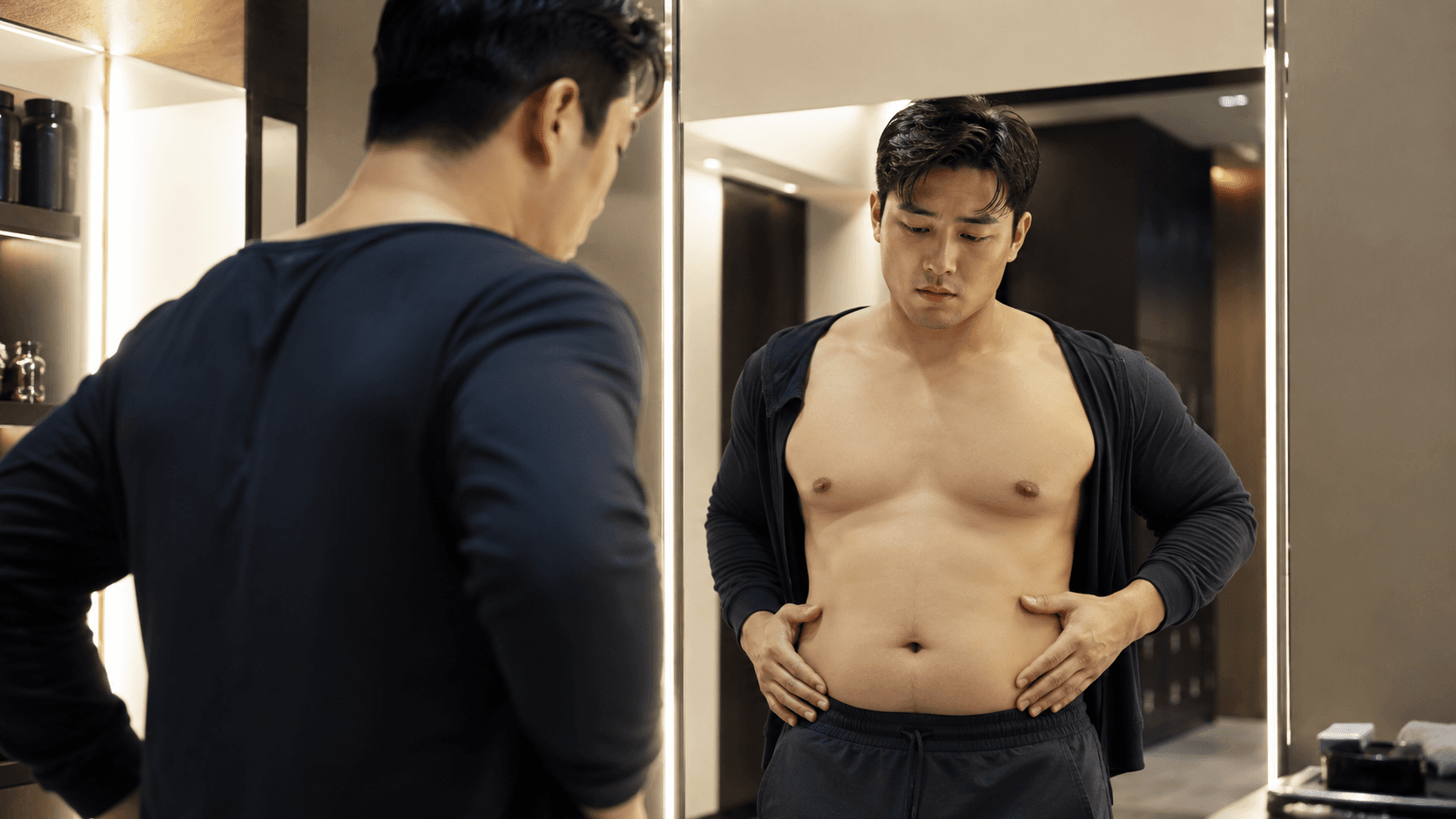
Empathy
When one area alone stands out
and the whole proportion is off
- One area alone stands out, so the overall proportion looks off
- The abs are there, but a flat chest leaves the upper body weak
- Shoulders, arms and back read separately, with no sense of unity
- The waist-to-lower-body connection isn't smooth
- The impression changes a lot depending on the outfit
- Running each area separately scatters the recovery schedule
Proportion isn't created by treating one area
The strength and connection of each area's line have to be seen together for a natural, integrated impression to emerge.Why Proportion Matters
Four reasons area-by-area work
falls out of balance
The Limit of Looking Area by Area
Emphasizing one area alone can leave its proportion mismatched against the others, throwing off the overall impression.
Proportion Priorities
Shoulder-to-waist, chest-to-abdomen and upper-to-lower-body proportions are hard to align through partial treatment alone.
Integrated Outfit Fit
For the impression to hold in shirts, jackets and athletic wear, each area's line has to create one flow together.
A Scattered Recovery Schedule
Splitting the timing area by area scatters recovery and can delay the completion of the overall design.
Full-Body Map
Upper body ‧ Core ‧ Lower body ‧ Proportion
four areas read in a single view
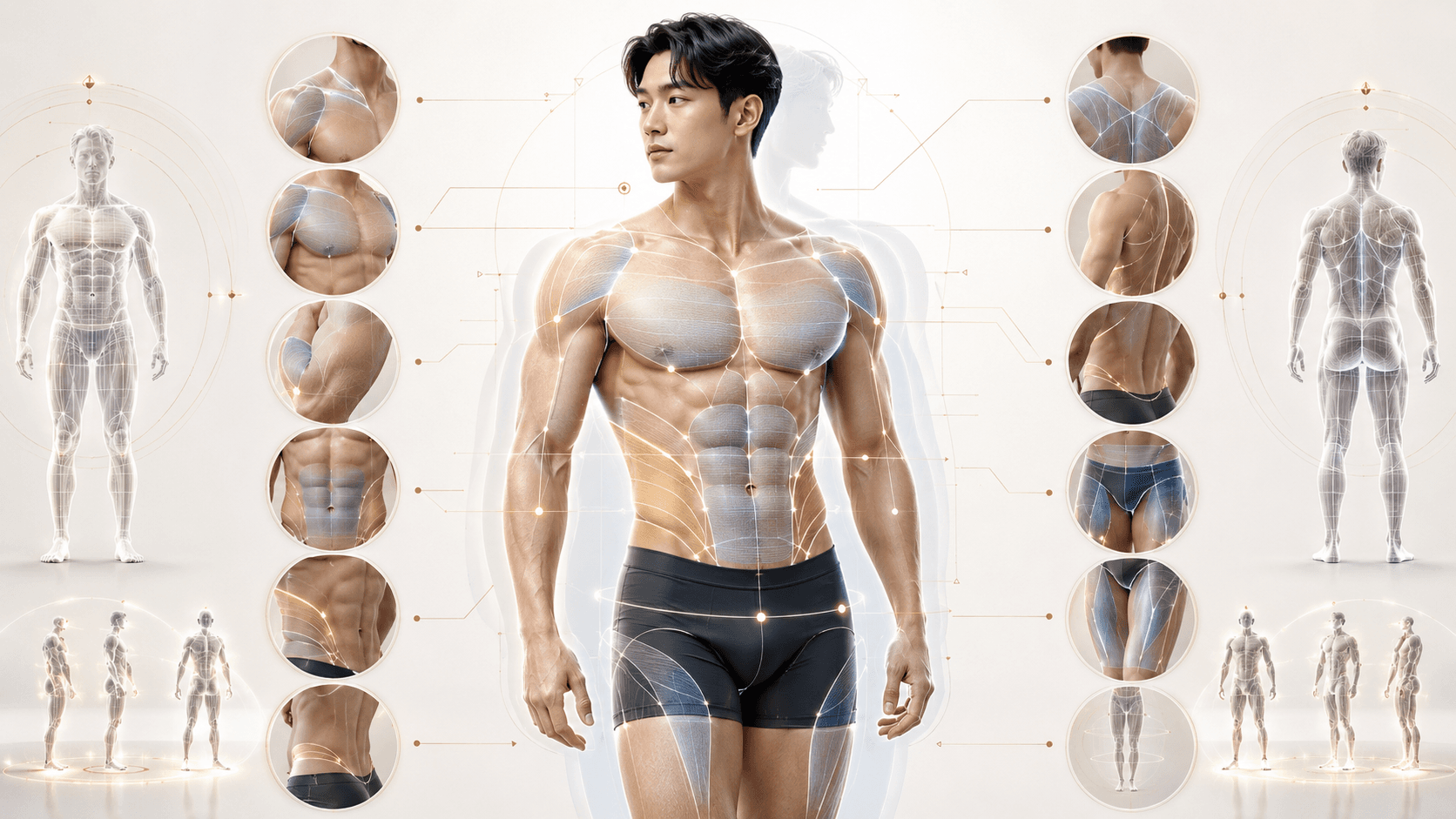
- Upper BodyChest, shoulders, upper arms — front ‧ side ‧ back impression
- CoreAbs, flanks, lower abdomen — V-line and definition
- Lower BodyThigh and hip connection — lower-body proportion
- ProportionBalance of the whole shoulder–waist–lower-body proportion
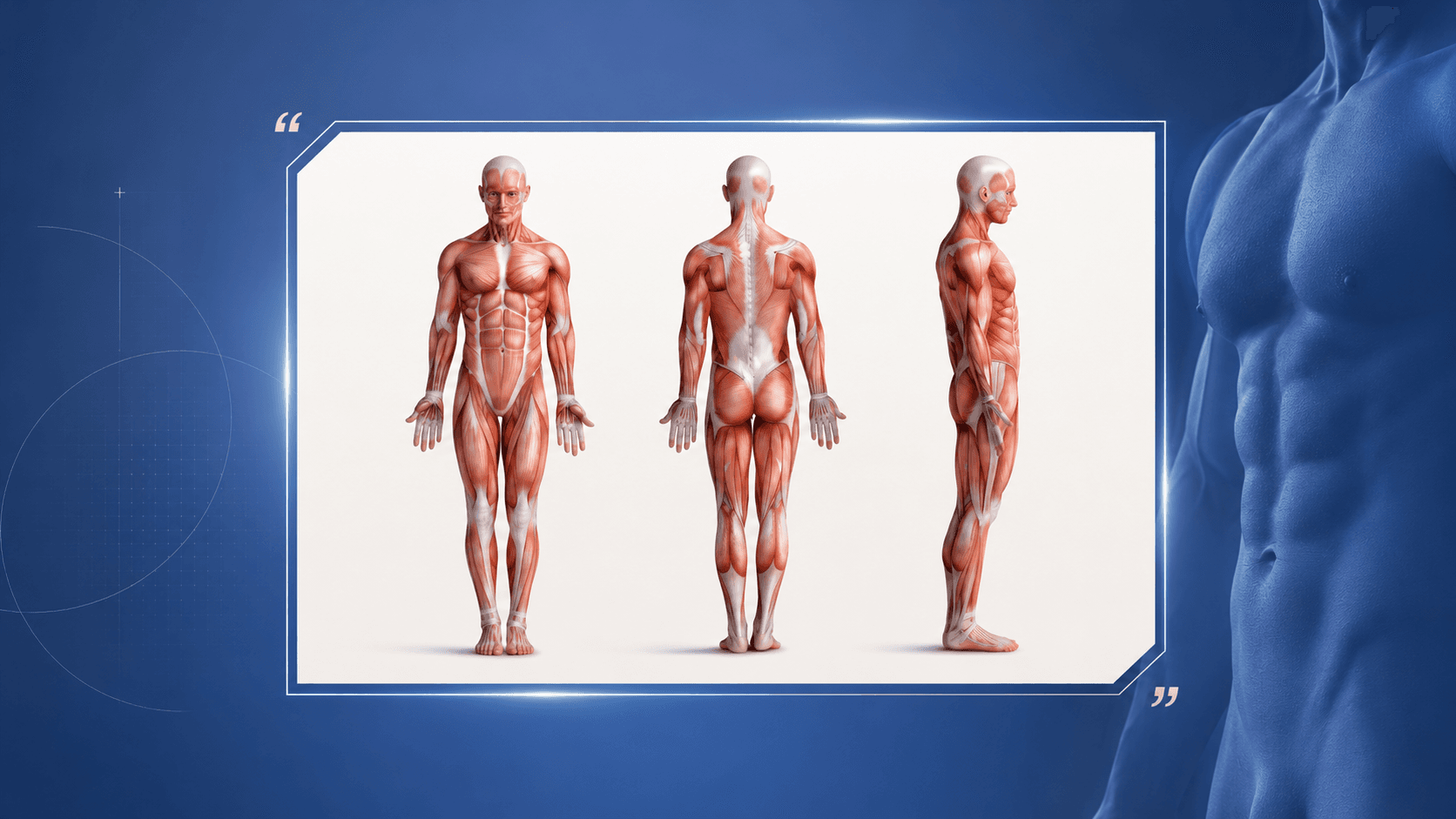
Muscle Anatomy
Full-body muscle connects
as a single flow
Chest, abdomen, back, arms, shoulders and lower body aren't detached areas — they run as one line across the front, back and sides. Full-Body HD looks at each area's muscle structure together with those connections and designs the proportion from there.
Why NB
What sets NB men's Full-Body HD apart
Full-Body Integrated Mapping
We set the abs, chest, arms, shoulders, back, waist and lower body onto a single map and look at proportion first.
Proportion-First Design
Before intensity by area, we decide the shoulder-to-waist, chest-to-abdomen and upper-to-lower-body proportions.
Integrated Outfit-Fit Assessment
We assess the impression in shirts, jackets and athletic wear together and design the line around it.
Integrated Recovery Scheduling
We guide recovery and return-to-routine timing as one plan so it doesn't scatter across areas.
NB Design Solution
Concern → Integrated design match
One area over-emphasized
→Proportion Redesign
We assess the shoulder-to-waist and chest-to-abdomen proportions first, then adjust the intensity by area.
No sense of unity
→Integrated Line Flow
We refine the connecting areas together so the line isn't broken between areas.
Impression varies by outfit
→Integrated Outfit-Fit Assessment
We look at the impression in suiting, casual wear and athletic wear together and design the line around it.
A scattered recovery schedule
→Integrated Schedule Design
We guide recovery and return-to-routine timing as one plan to ease the burden of scattering it.
Method
How we design in stages
Full-Body HD isn't a matter of pushing every area through in one overreaching session. It's a process of setting proportion first, then designing in stages with the recovery burden and tissue condition taken into account.
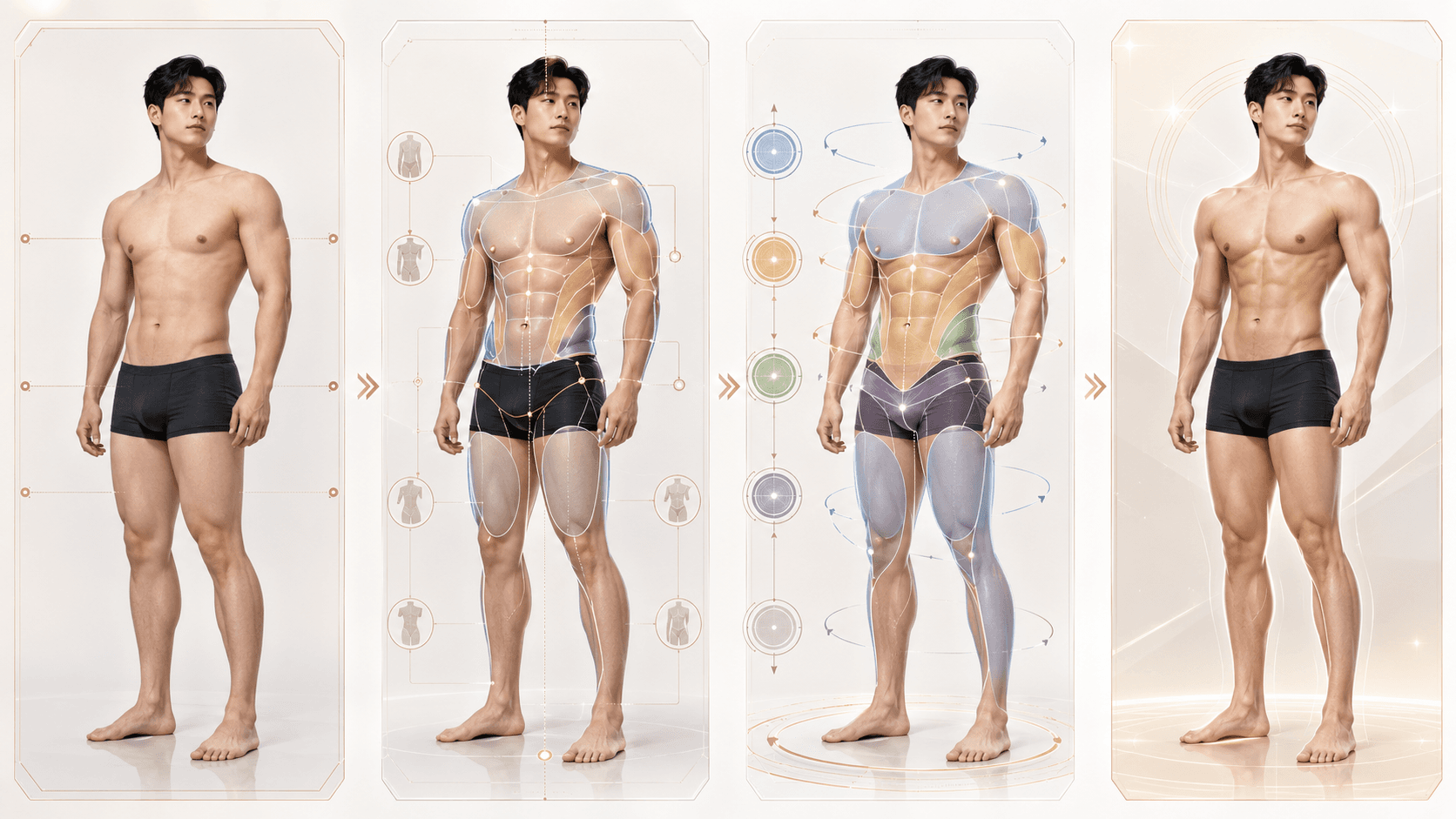
- 01 · Full-Body Integrated MappingWe set the abdomen, chest, arms, shoulders, back, waist and lower body onto a single map and look at proportion first.
- 02 · Setting Proportion PrioritiesBefore intensity by area, we set the priority among the shoulder-to-waist, chest-to-abdomen and upper-to-lower-body proportions.
- 03 · Dividing the Stage ScopeWe divide the stages to suit the individual's condition, taking the surgical extent, recovery burden and tissue condition into account.
- 04 · Recovery and Interval PlanningWe plan the intervals so the next part of the design can follow while the recovery and line change of each stage are confirmed.
Staged Plan
Full-Body HD has to be
planned in stages
Full-Body HD muscle design isn't a matter of pushing several areas through in one overreaching session. It matters that it be planned in stages, with the surgical extent, recovery burden, fat layer and tissue condition, and anesthesia time taken into account.
Where the scope is wide — abdomen, chest, arms, shoulders, back, flanks, thighs — it can be divided into 3–4 stages with appropriate intervals according to the individual's condition. Confirming the recovery and line change of each stage before continuing the next part of the design is how a more stable full-body balance is designed.
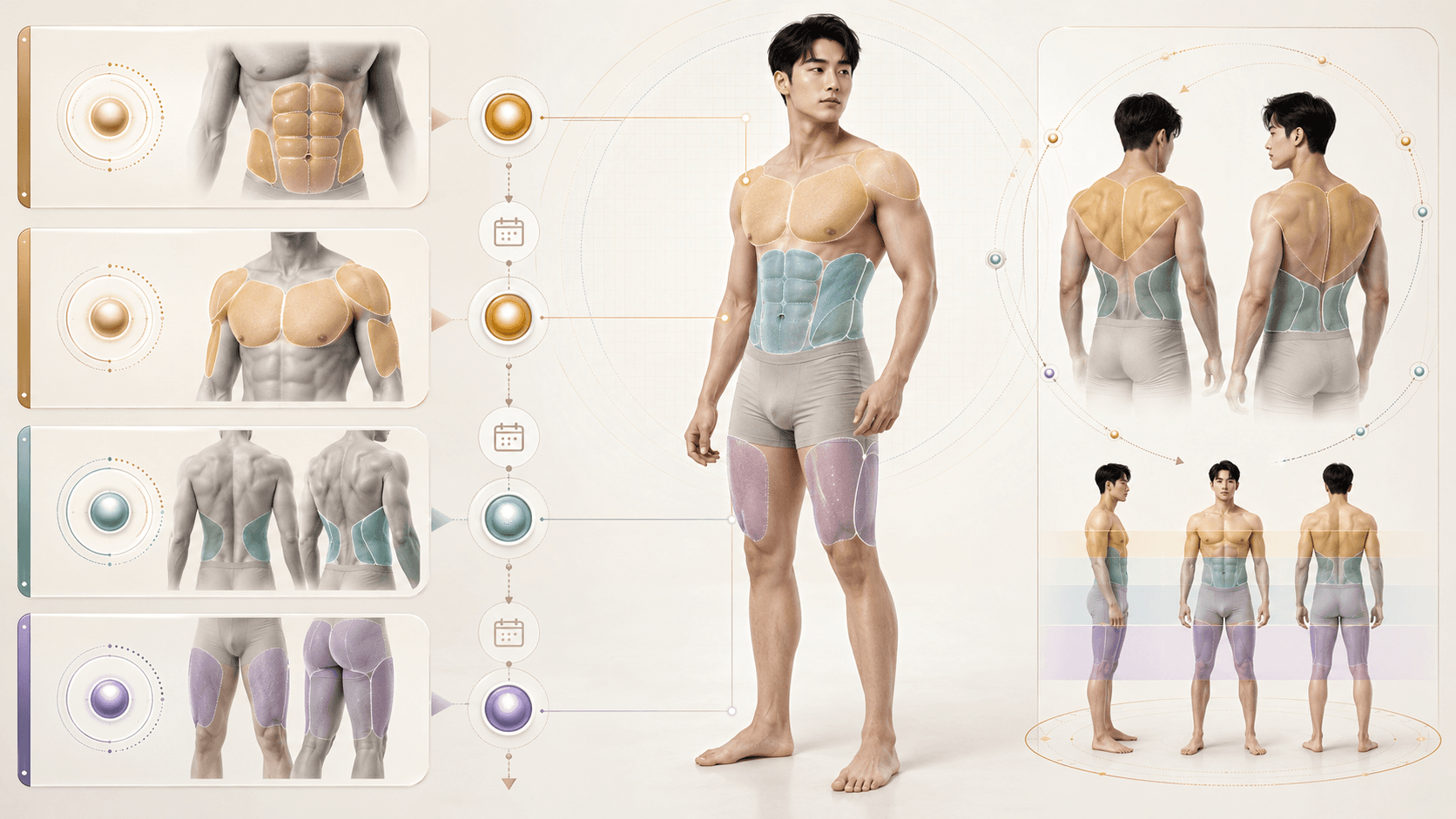
Core Line
Abdomen, six-pack, lower abdomen, oblique connection
Upper-Body Frame
Chest, shoulder and arm lines
Flank and Back Connection
Flanks, back line, love handles, posterior frame
Lower Body and Full-Body Balance
Thighs, the line above the pelvis, full-body proportion

Consultation & Ultrasound
We look at the whole proportion together,
and draw the line together
After comparing the full-body fat layer and fascial borders area by area with ultrasound, we put your body type and target proportion on the monitor and decide the integrated design together.
- ·Measure the full-body fat layer area by area
- ·Fascia and muscle borders compared left to right
- ·Decide proportion-first treatment intensity and areas in advance
- ·Guide the integrated recovery schedule and return stages together
Staged Consultation
We plan the order
and the intervals together
In the consultation we plan together, to suit your condition, which area to begin with, how much of an interval between stages is appropriate, and how to spread out the recovery burden. We prioritize a staged design that accounts for recovery and full-body balance over an overreaching scope.
- PriorityThe order of stages, set by individual priorities and body type
- IntervalStage intervals, set while confirming recovery and line change
- RecoverySpreading out the recovery burden and return timing of each stage


Shirts, jackets, athletic wear — all alive in one consistent proportion
NB's standard for results
What changes
A full-body impression where shoulder, waist and lower body are refined together
An integrated flow where the line isn't broken between areas
A consistent impression in shirts, jackets and athletic wear
A lighter burden through one integrated schedule rather than a scattered one
Why patients choose NB men's Full-Body HD
- Experience in proportion design based on full-body integrated mapping
- A principle of deciding treatment intensity by proportion first
- Integrated outfit-fit assessment and line-flow design
- Capability in managing an integrated recovery schedule
- Consultation and surgery performed directly by the lead surgeon
FAQ
Frequently Asked Questions
Q. Can Full-Body HD all be done at once?
Where the scope is wide, rather than pushing it all through in one overreaching session, it can be planned across 3–4 stages with the surgical extent, anesthesia time, recovery burden and tissue condition taken into account. The consultation assesses your condition and guides an appropriate order and interval.
Q. Why is it divided into stages?
Because Full-Body HD is a design in which several areas connect, it matters to confirm the recovery and line change of each stage before continuing the next part of the design. A plan that accounts for recovery and balance is needed, rather than an overreaching scope.
Q. Which area do you begin with?
Usually the order is set by individual priorities and body type — along the lines of the abdominal and core line, the upper-body frame, the flank and back line, then lower-body balance.
Q. Is the cost the sum of each area?
The sum by area is the baseline, though with an integrated design the combination can differ in terms of recovery efficiency and schedule integration. We guide you precisely in the consultation.
Q. How long is recovery?
It varies with the scope: on average 2–3 weeks to return to daily life and 4–8 weeks of compression care. Recovery may vary by individual.
Q. Is it possible without exercise?
The range of results can differ with how developed the muscle already is. Whether to combine exercise is decided in the consultation.

After surgery, with you through recovery
- 01VersaClear light therapy2 sessions
- 02Ucell standing-wave therapy2 sessions
- 03Radiofrequency care4 sessions
- 04
 Soft-meso injection· Performed by the doctor2 sessions
 - 05
 Fraxel scar laser· Performed by the doctor2 sessions
Basic aftercare is provided as a standard programme of 12 sessions in total — 4 swelling-care, 4 radiofrequency, 2 scar-laser and 2 meso-injection sessions. Actual scheduling and completion may vary depending on your ability to attend.
If care is needed beyond the basic aftercare, NB surgery patients receive a 50% discount on the standard price.
Legal Notice
※ If care cannot be provided due to reasons such as equipment malfunction, the affected care item may not be offered; as a service item, it is non-refundable.
※ Depending on your constitution and healing process, side effects such as swelling, bruising, inflammation, and scarring may occur after surgery.

Consultation
Men's Full-Body HD Consultation
Check first how far your full-body proportion can go.
Send a photo on KakaoTalk and we'll analyze it and reply quickly.