

High-Def Gynecomastia · Volume · Skin · NAC · BodyTite
From a feminine chest impression, to a masculine pectoral line
High-definition gynecomastia correction isn't simply surgery to reduce chest volume. It evaluates the fat layer and possible glandular tissue, stretched skin, nipple-areola position, the lower border of the pectoralis and whether skin tightening is needed, to design a flatter, more masculine chest line.
My chest concern type
What's your gynecomastia concern?

Empathy
A chest contour that shows
even in a short-sleeve T-shirt
- The chest contour shows through short-sleeve and thin T-shirts
- The chest sits raised and reads feminine
- Even with training, the chest volume doesn't refine
- A heavy, sagging chest impression bothers you
- The nipple-areola complex looks shifted down and outward
- You hesitate to take your top off at the pool or sauna
A chest contour can become the concern that makes you hesitate over what to wear
Volume, stretched skin, nipple-areola position — they have to be evaluated together for a natural direction to emerge.Not Only Volume
Gynecomastia isn't
a matter of volume alone
Male gynecomastia isn't simply a problem of increased chest volume. In most cases of gynecomastia, added volume can come together with skin expansion, skin laxity from the weight of the chest, and downward-outward displacement of the nipple-areola complex.

Added Volume
We evaluate the areas where the fat layer and possible glandular tissue make the chest sit raised.
Skin Expansion & Laxity
We evaluate the skin slack stretched by the weight of the chest and the lower sagging impression.
Nipple-Areola Position
We also look at how far the nipple-areola complex has shifted down and outward.
Lower Border of the Pectoralis
We check the baseline of where the masculine chest border is created.
Complex Analysis Map
High-definition gynecomastia
composite analysis map
NB evaluates the fat layer, possible glandular tissue, fibrotic and cellulitic tissue, skin elasticity, nipple-areola position, the lower border of the pectoralis and whether BodyTite skin tightening is indicated — all together. We don't design from a single factor.
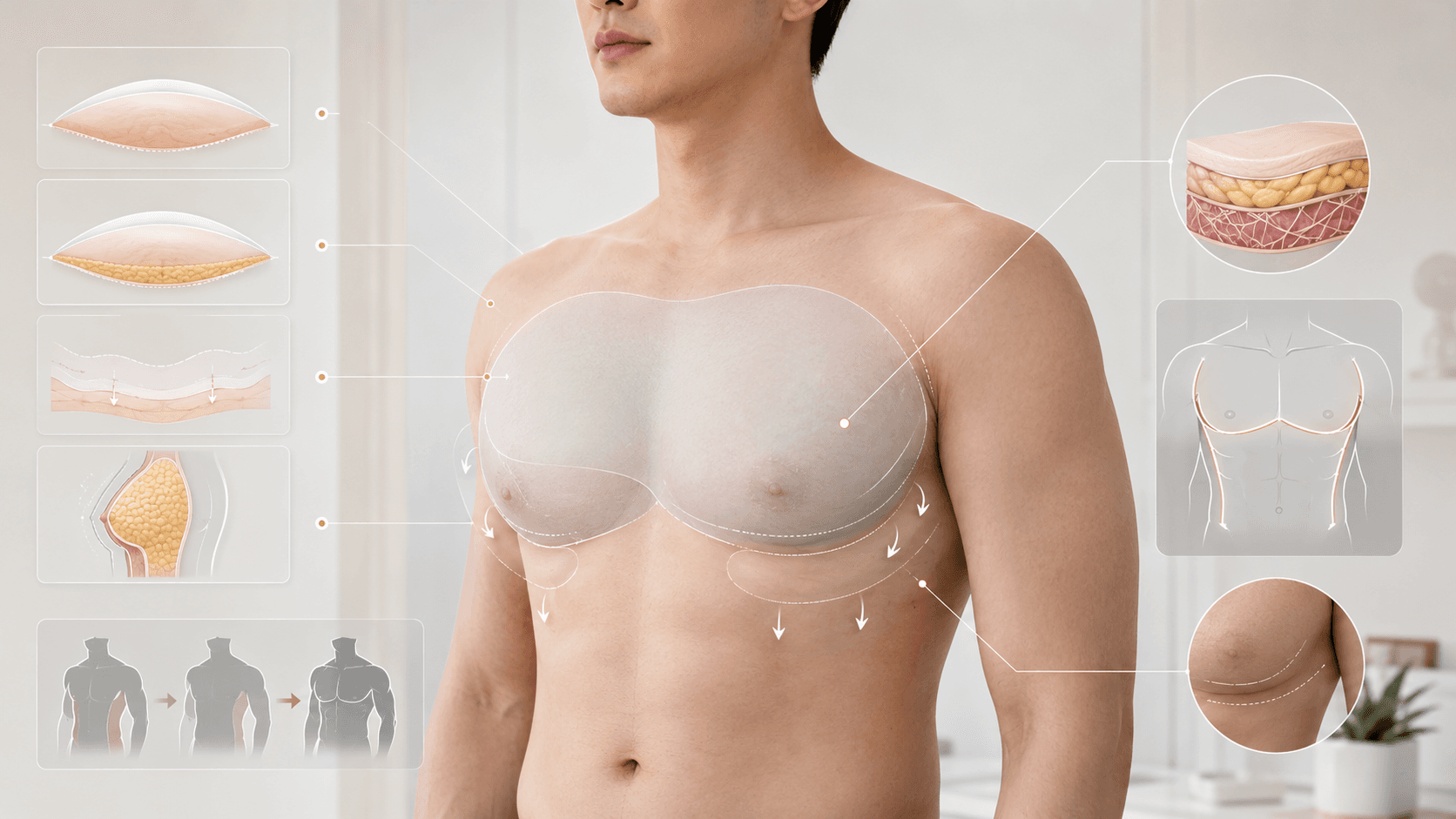
Limits of Volume-Only
The limits of simple volume removal
If you only reduce volume, the stretched skin, the sagging impression, the shift in nipple-areola position and the double fold below and lateral to the areola can all remain as they were. That's why what to reduce and what to keep have to be designed together.
Stretched Skin
If only volume is reduced, the skin that had stretched remains as it was and the sagging impression can continue.
Sagging Impression
Without accounting for the supporting structure, the lower chest can look like it settles downward.
Nipple-Areola Displacement
Removing only volume without assessing position can make the nipple-areola complex look even lower.
Double Fold Below the Areola
A double-folding sagging structure can remain below and lateral to the areola.

NAC & Skin Laxity
We look at nipple-areola position
and skin laxity together
The design direction changes with where the nipple-areola complex sits and whether the skin still has the capacity to retighten. Without assessing position and elasticity, a sagging impression can remain even after volume is reduced.
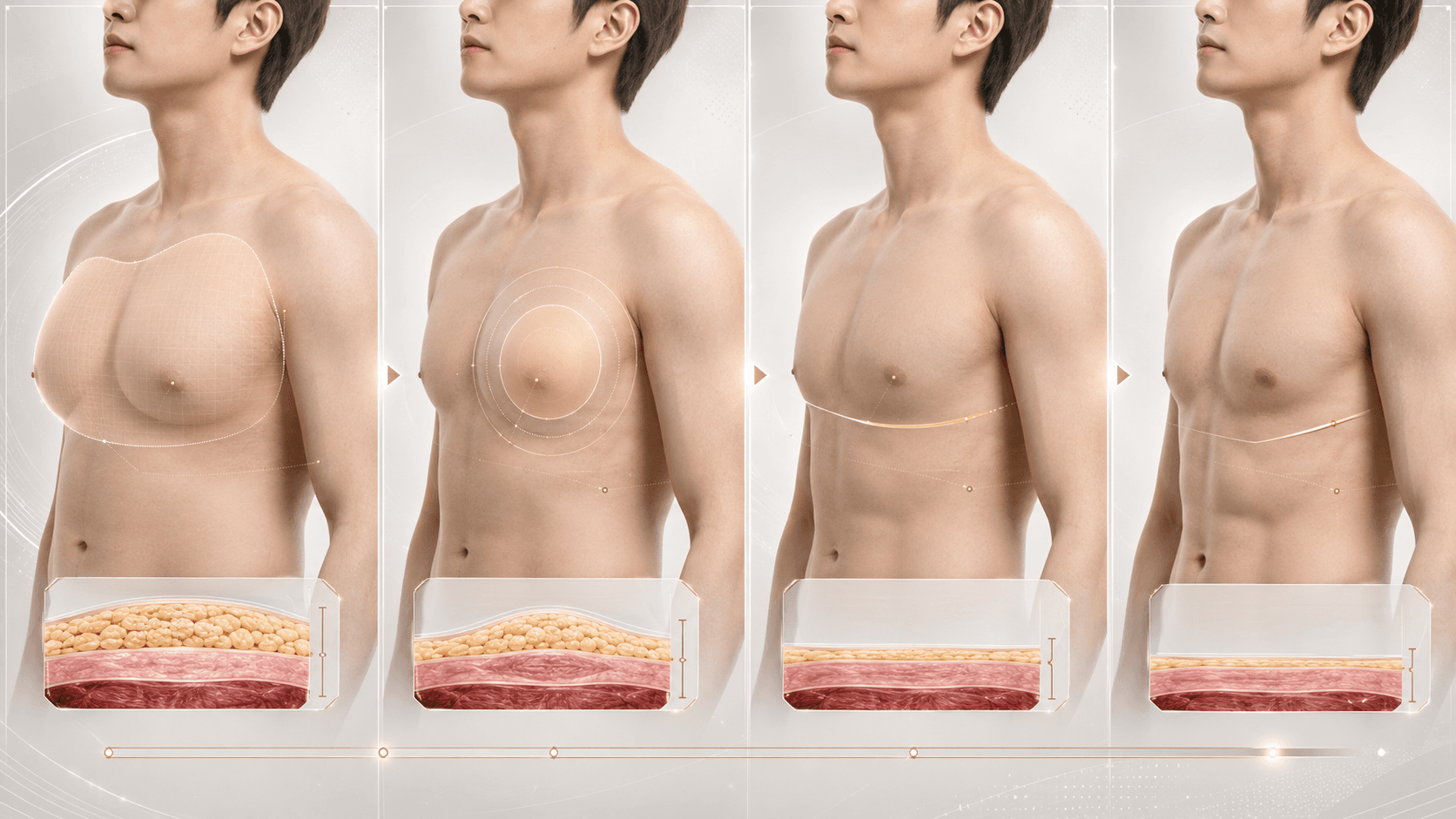
Nipple-Areola Position
We measure how far down and outward the nipple-areola complex sits from the center of the chest.
Skin Elasticity
We evaluate whether the skin still has the capacity to retighten, or whether the stretch has set.
Lower-Pole Volume
We check whether weight concentrated in the lower chest is creating a sagging impression.
Left–right asymmetry
We compare the volume and position difference between the two sides together.
Gland Balance · Deformity Prevention
Balance in gland removal
— preventing inversion and saucer deformity
Removing too much glandular tissue can lead to nipple inversion or a saucer-like depression below the areola. That's why a balanced design is needed — one that distinguishes the tissue to reduce from the supporting structure to keep.
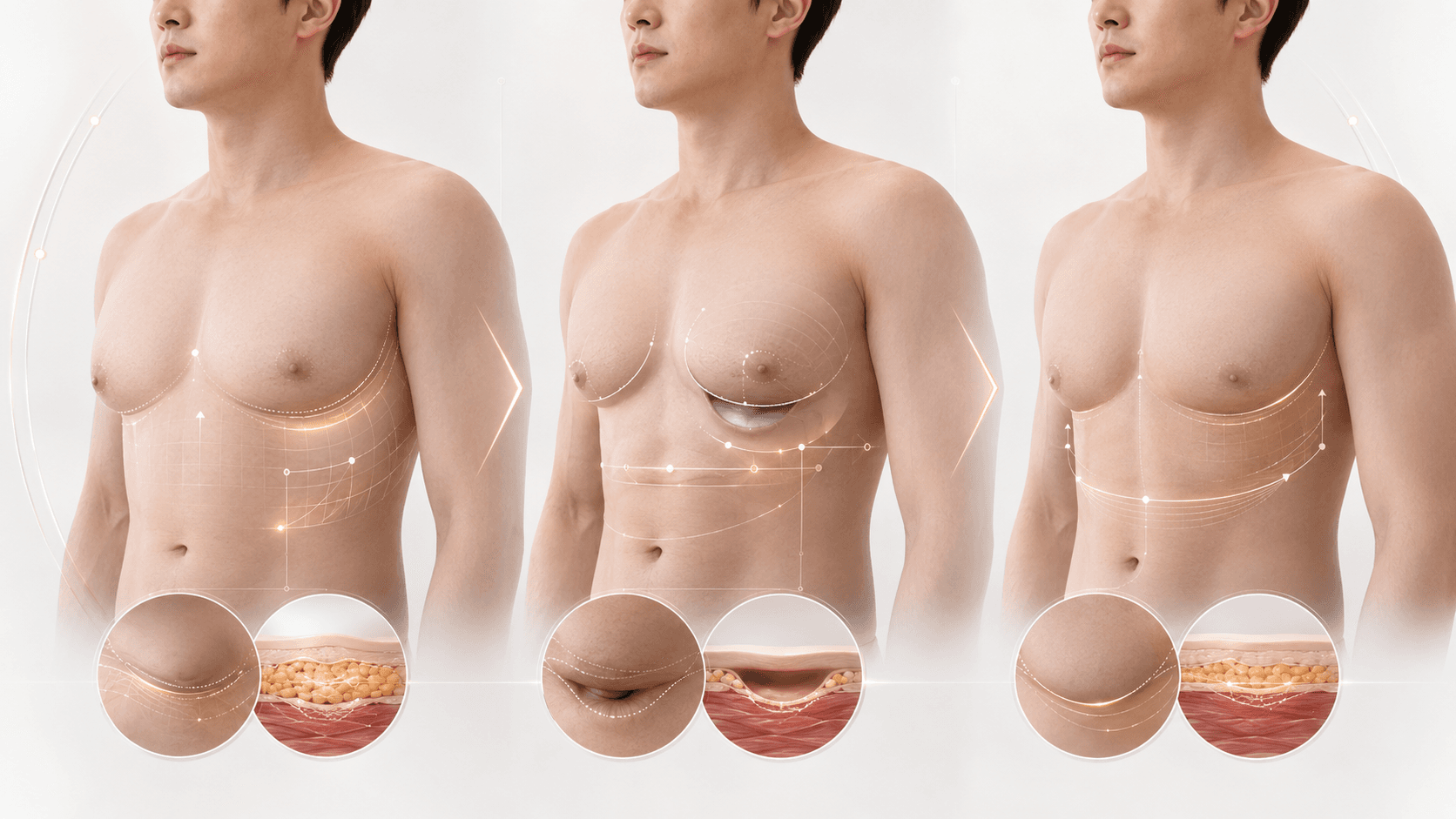
Tissue to Reduce
We refine the excess volume and possible glandular tissue that create a feminine impression.
Structure to Keep
The tissue supporting the nipple-areola complex is left in place so the shape doesn't collapse.
Preventing Nipple Inversion
Removing too much glandular tissue can pull the nipple inward, so balance is needed.
Preventing Saucer Deformity
We adjust the amount removed so the area below the areola doesn't hollow like a saucer.
BodyTite Skin Tightening
When BodyTite skin tightening
is worth considering
When the skin has stretched, when there's a lower-chest sagging impression, or when skin slack is expected, radiofrequency-based skin tightening can be considered alongside. Whether it applies is judged in the consultation, according to skin elasticity and tissue condition.
When the Skin Has Stretched
When skin slack is expected, radiofrequency-based skin tightening can be considered alongside.
Lower Sagging Impression
When the lower chest looks like it settles downward, skin contraction is designed in as well.
Case-by-Case Judgement
Whether it applies is judged in the consultation, according to skin elasticity and tissue condition.

Why NB
What sets NB high-definition gynecomastia correction apart
Composite Analysis Design
We evaluate the fat layer, possible glandular tissue, skin elasticity and nipple-areola position together.
Tissue to Reduce · Structure to Keep
Rather than removing excessively, we look for the balance that keeps the structure supporting the shape.
Skin Tightening Integration
When skin slack is expected, we consider radiofrequency skin tightening alongside.
Masculine Chest Line
We design from a feminine impression toward a more masculine pectoral chest shape.
NB Design Solution
Concern → Design match
Raised volume
→Volume & Gland Refinement
We evaluate the volume that reads feminine together with possible glandular tissue, and refine them.
Stretched skin
→BodyTite Skin Tightening
When skin slack is expected, we consider radiofrequency-based contraction alongside.
Nipple-areola displacement
→Position & Support Structure Assessment
We look at the nipple-areola position and the tissue that will support it together in the design.
Feminine impression
→Masculine Pectoral Line Design
Using the lower border of the pectoralis as the reference, we bring the chest closer to a more masculine shape.
Consultation & Ultrasound
Ultrasound-based consultation
fat layer · glandular tissue · skin
Before the procedure, we check the fat layer, possible glandular tissue, skin elasticity and nipple-areola position directly with ultrasound, then design what to reduce and what to keep quantitatively.

- Compare the fat layer and possible glandular tissue left to right
- Evaluate the distribution of fibrotic and cellulitic tissue
- Measure skin elasticity and nipple-areola position
- Judge in advance whether BodyTite skin tightening is needed

Masculine Chest Line
From a feminine chest
to a masculine pectoral line
NB aims beyond simply reducing volume — to design from a feminine chest impression toward a more masculine pectoral chest line. We look at the tissue to reduce, the supporting structure to keep and whether skin tightening is needed together, building the chest shape around the lower border of the pectoralis.

Confidence that changes with a single T-shirt
High-definition gynecomastia correction refines the chest contour, aiming to ease the burden even in the moments when the top layer gets lighter — a short-sleeve T-shirt, the pool, training wear. Results may vary by individual tissue condition.
NB's standard for results
What changes
A design that evaluates volume, glandular tissue, skin and nipple-areola position together
An approach that distinguishes the tissue to reduce from the supporting structure to keep
BodyTite skin contraction considered alongside where needed
From a feminine impression toward a more masculine pectoral shape
Why patients choose NB high-definition gynecomastia correction
- Experience in composite analysis of the fat layer and possible glandular tissue
- A principle of assessing nipple-areola position and skin elasticity
- Balanced design of tissue to reduce and structure to keep
- BodyTite skin tightening integrated where needed
- Consultation and surgery performed directly by the lead surgeon
FAQ
Frequently Asked Questions
Q. Is gynecomastia resolved by reducing volume alone?
It may not be. When the chest has been heavy and stretched for a long time, skin slack, a sagging impression and a change in nipple-areola position can remain, so skin elasticity and the lower border of the pectoralis have to be evaluated alongside volume.
Q. Is removing more glandular tissue better?
Removing too much glandular tissue can lead to nipple inversion or a saucer-like depression below the areola. The tissue to reduce and the supporting structure to keep have to be judged in balance, according to each person's tissue condition.
Q. When is BodyTite needed?
When the skin has stretched, when there's a lower-chest sagging impression, or when skin slack is expected, radiofrequency-based skin tightening can be considered alongside. Whether it applies is judged in the consultation, according to skin elasticity and tissue condition.
Q. Is gynecomastia correction different from pectoral (masculine chest) surgery?
Gynecomastia correction is the process of reducing the chest volume that reads feminine, possible glandular tissue and skin laxity, to bring the chest closer to a masculine shape. Pectoral surgery is a design that supplements insufficient pectoral volume and frame — the purpose is different, though the two can connect in their ultimate goal of creating a masculine chest line.

After surgery, with you through recovery
- 01VersaClear light therapy2 sessions
- 02Ucell standing-wave therapy2 sessions
- 03Radiofrequency care4 sessions
- 04
 Soft-meso injection· Performed by the doctor2 sessions
 - 05
 Fraxel scar laser· Performed by the doctor2 sessions
Basic aftercare is provided as a standard programme of 12 sessions in total — 4 swelling-care, 4 radiofrequency, 2 scar-laser and 2 meso-injection sessions. Actual scheduling and completion may vary depending on your ability to attend.
If care is needed beyond the basic aftercare, NB surgery patients receive a 50% discount on the standard price.
Legal Notice
※ If care cannot be provided due to reasons such as equipment malfunction, the affected care item may not be offered; as a service item, it is non-refundable.
※ Depending on your constitution and healing process, side effects such as swelling, bruising, inflammation, and scarring may occur after surgery.

Consultation
High-Definition Gynecomastia Consultation
Check first whether your chest concern sits closer to volume, skin or the nipple-areola complex.
Send a photo on KakaoTalk and we'll analyze it and reply quickly.