
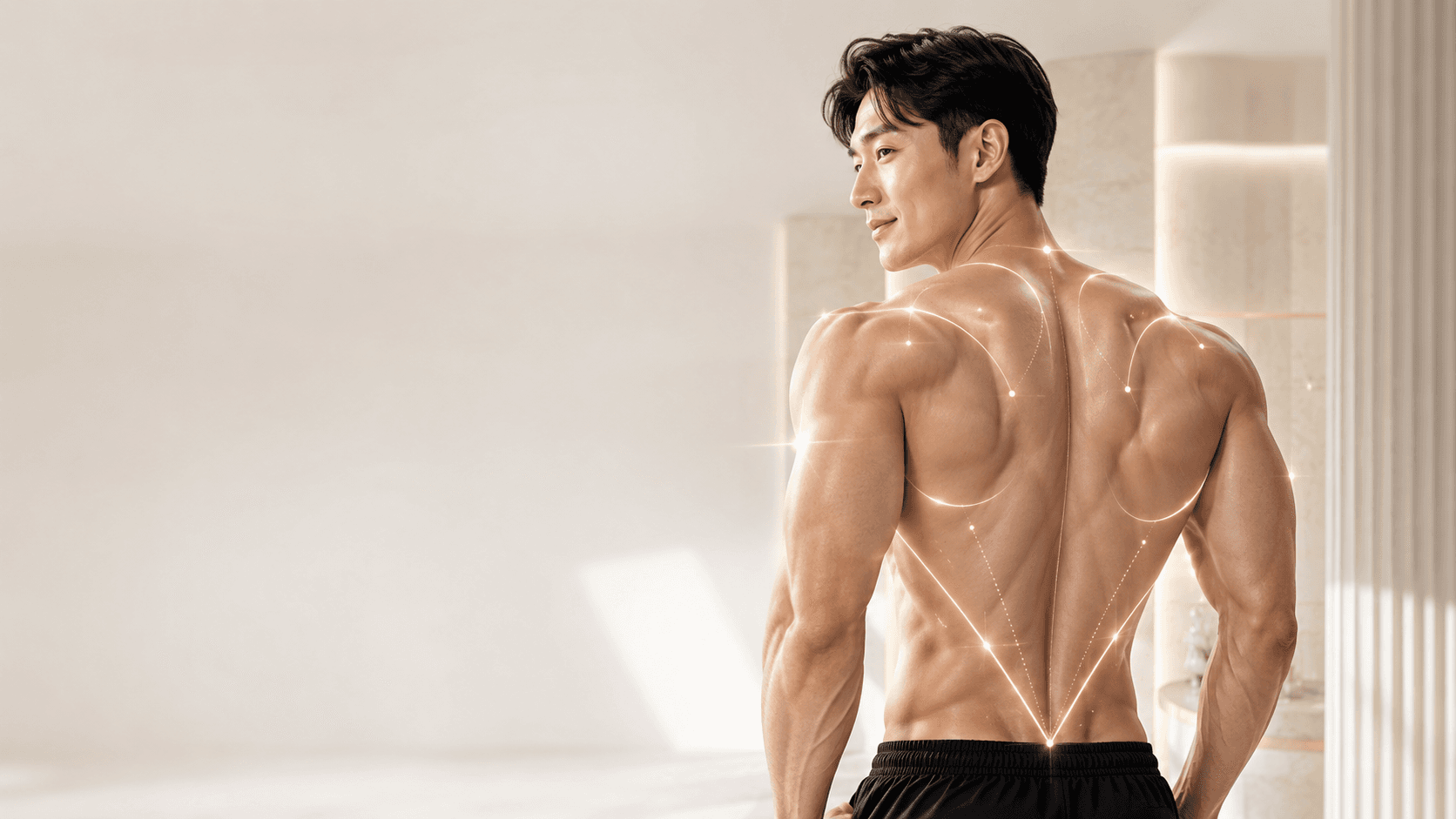
Back Muscle Design · V-Back Frame · Lat Contour
The impression you make from behind is decided at the back line.
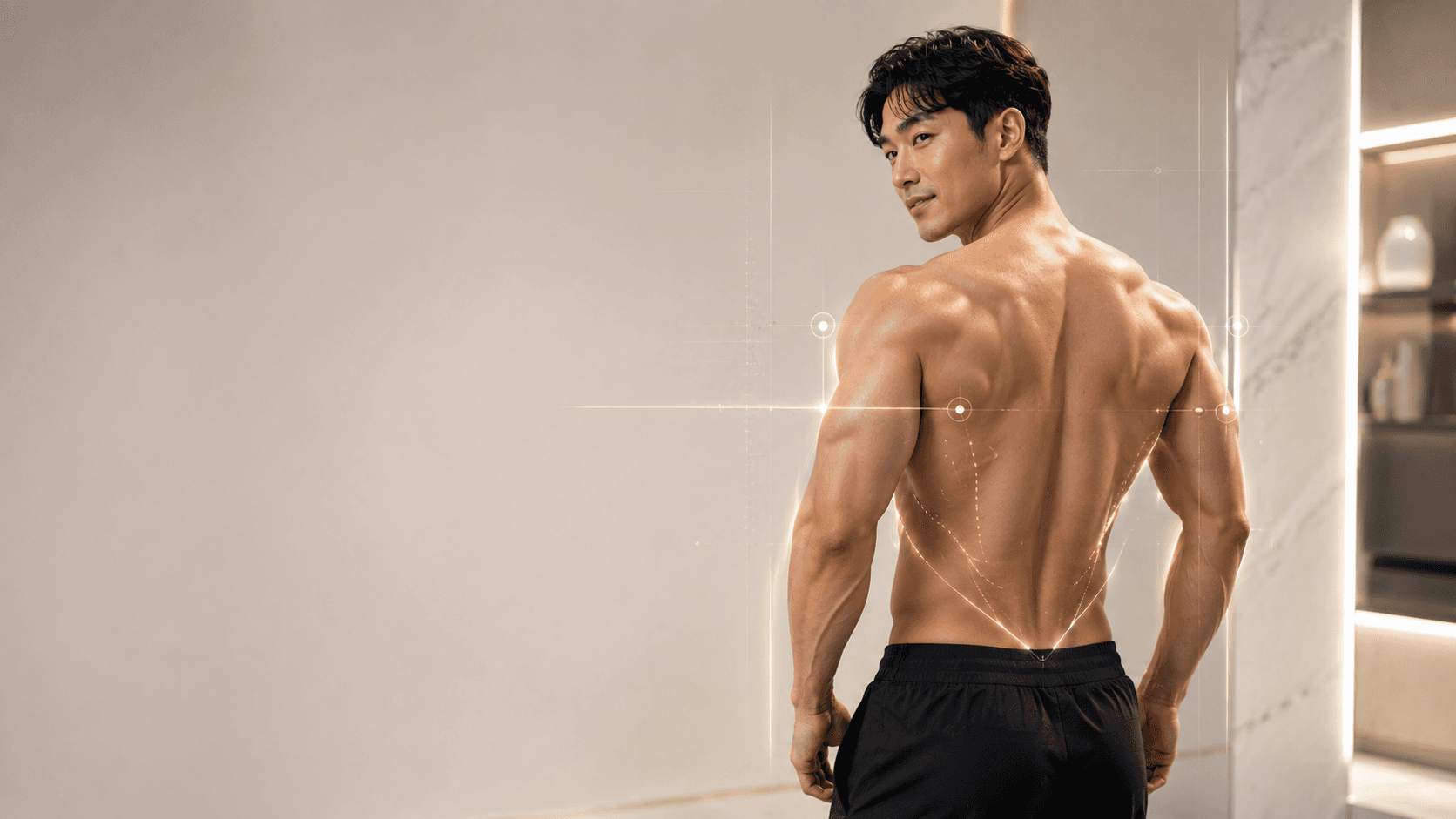
Back muscle HD sculpting is a program that analyzes the lat impression, the upper back, the rear waist and the shoulder-to-back connection together to design a men's rear frame with a V-back impression.
Your Back Concern Type
What's your back concern?
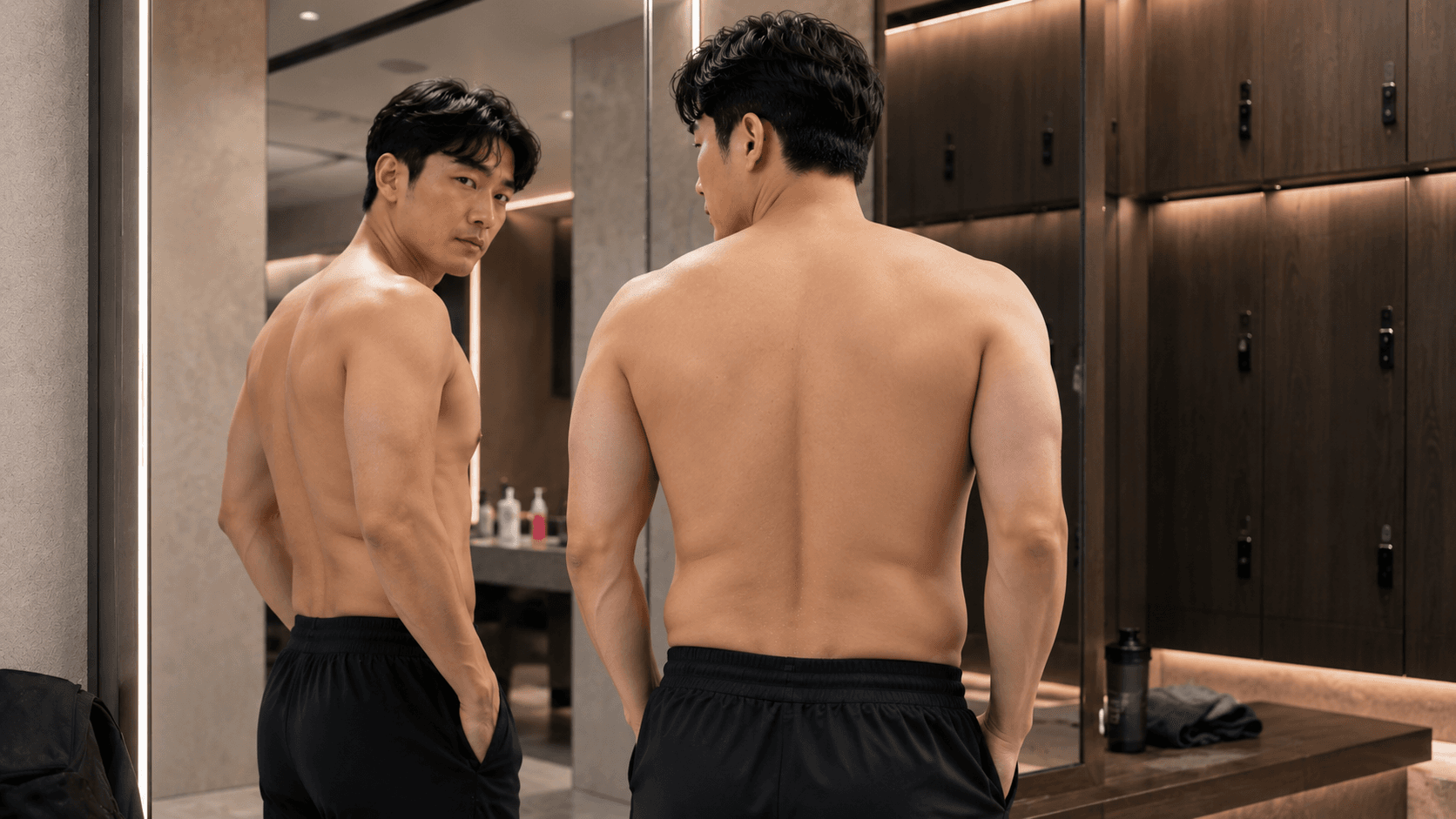
Empathy
If the back line seen from behind
stays faint
- The lat line seen from behind looks flat
- The back of the shoulders is thick, so the V-back impression is weak
- Love handles at the rear waist blur the rear line
- The shoulder-to-back connection isn't smooth
- The back line doesn't come through in a shirt's fit
- The back impression barely shows even in training photos
A back line isn't completed by exercise alone
It's a rear frame created by the lats, upper back, rear waist and shoulder connection together.Candidate Types
Which back-line type are you?
The reason the rear impression looks weak differs from person to person. The design direction changes depending on which area — lats, upper back or rear waist — is weaker.
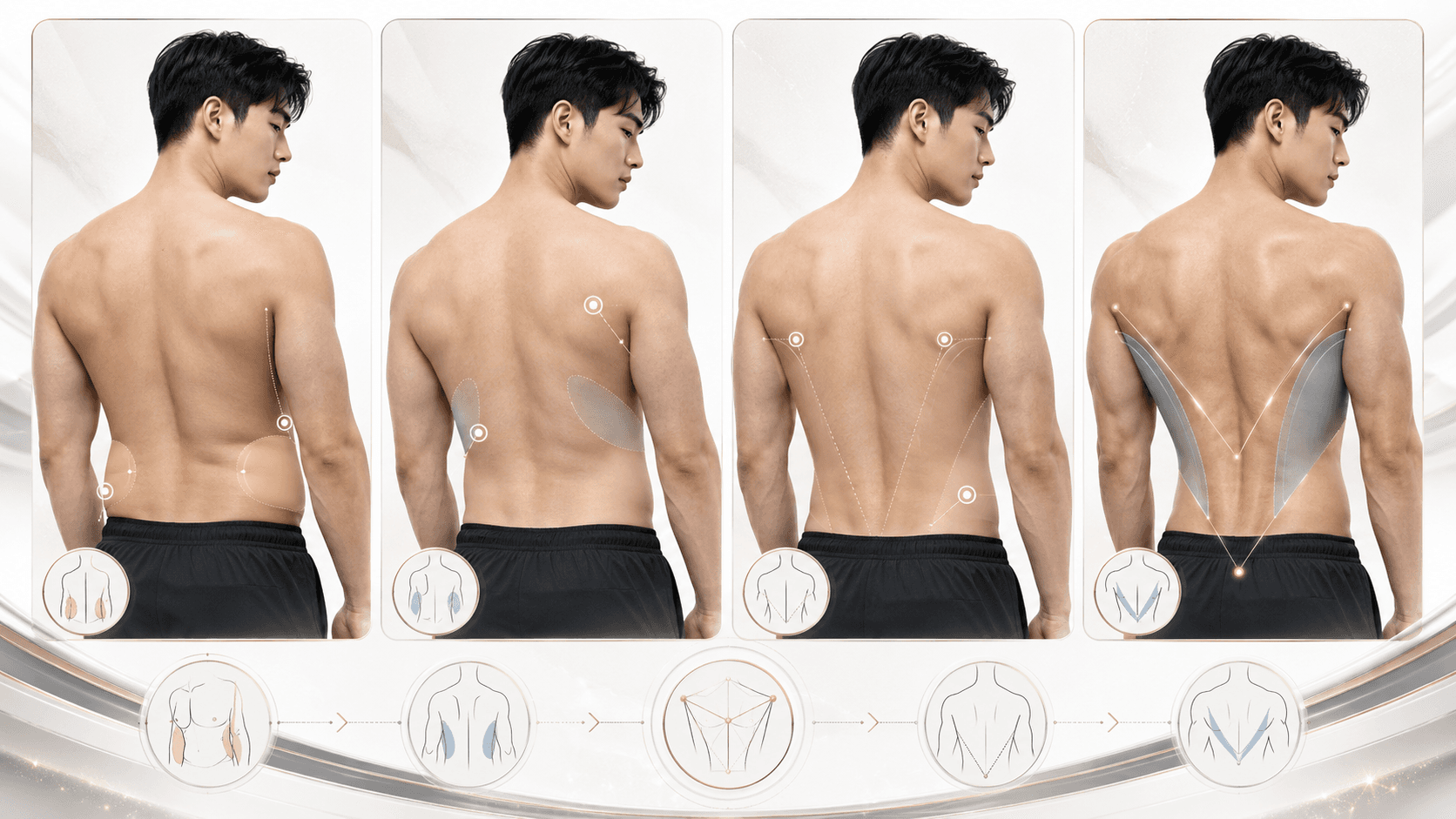
Soft Rear Flank
Love handles remain at the rear waist, so the finish of the rear V looks blunt.
Weak Lat Impression
The outer lat line is flat, so the impression at the entry of the V-back is weak.
Blurred V-Back
The whole rear V frame running from shoulder to waist looks faint.
Balanced Rear Frame
There's no major imbalance, but you want to reinforce the rear impression one step sharper.
Shoulder–to–Waist Connection
A back line is the connection
between shoulder and waist
Back muscle HD sculpting isn't only about reducing back fat — it's the process of designing the rear V frame that runs from shoulder through back to rear waist. When the connection breaks, the rear impression looks blunt.
Back Fat-Layer Thickness
When the fat layer over the lats is thick, the rear line looks flat even with training.
Fascial Border Definition
When the outer lat border is weak, the starting point of the V-back impression blurs.
Rear Waist Love Handles
When the fat layer at the rear waist isn't refined, the finish of the V looks weak.
Shoulder-to-Back Connection
When the transition from shoulder to back is blurred, the whole rear frame looks blunt.
Analysis Map
Lats · Upper back · Rear waist · Left–right symmetry
four areas read in a single view
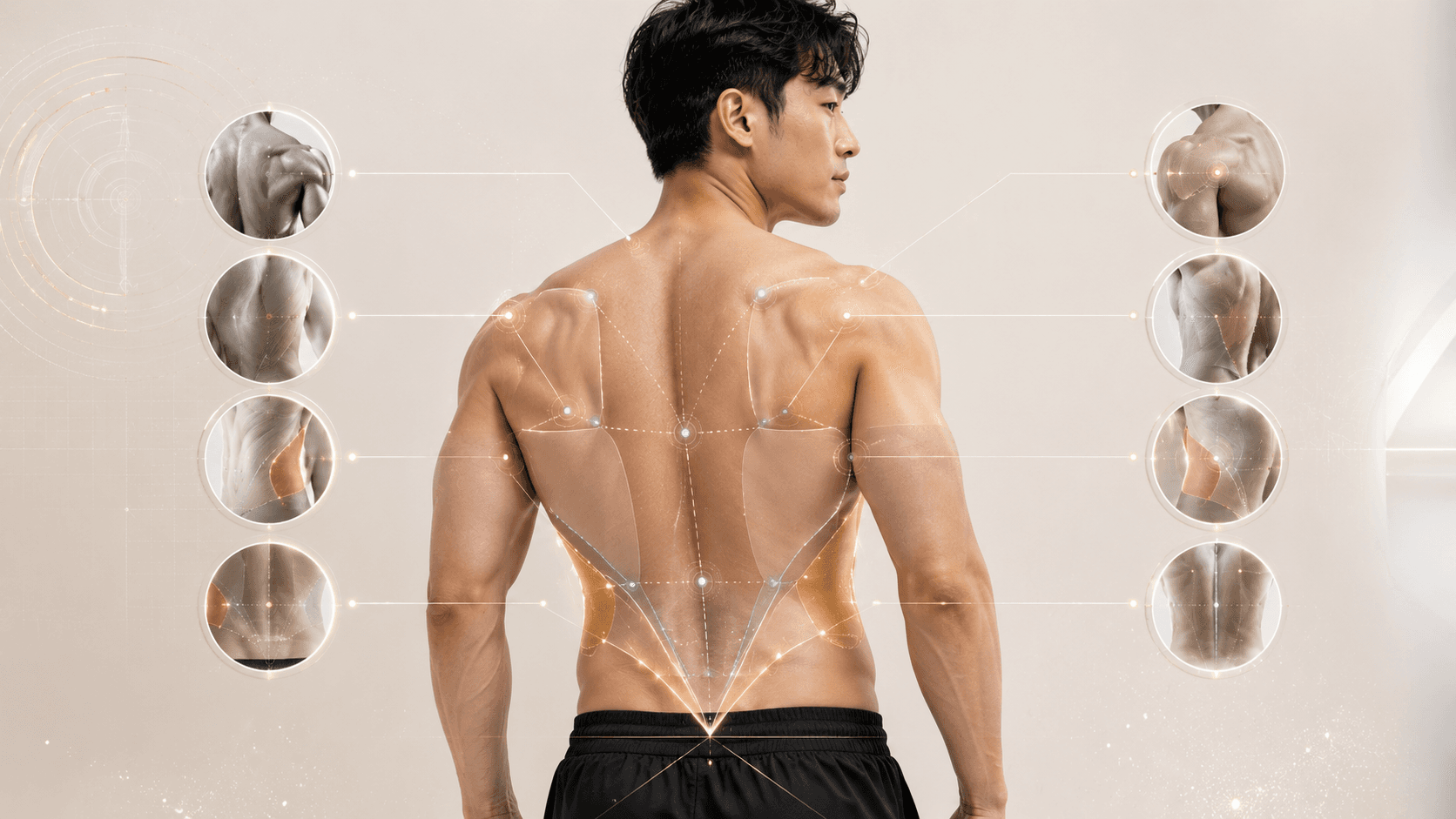
- LatsOuter lat line, the strength of the V-back entry
- Upper BackThickness around the scapula, smoothness of the shoulder-to-back transition
- Lower BackRear waist love handles, the impression of the V's finish
- SymmetryBalance of the left and right rear lines
Why NB
What sets NB back muscle HD sculpting apart
Integrated V-Back Design
We evaluate the lats, upper back and rear waist at once to design the rear V frame.
Outer Lat Contour
The outer lat line creates the impression at the V-back entry. We refine it precisely.
Rear Waist Love Handle Refinement
We evaluate the rear waist love handles that blur the rear line together.
Shoulder-to-Back Connection Design
We look at the thickness difference of the two areas together so the transition is smooth.
NB Design Solution
Concern → Design match
Weak lat impression
→Outer Lat Contour Design
We precisely refine the fat layer along the outer lat line to bring out the V-back entry.
Thick upper back
→Line Refinement Around the Scapula
We refine the thickness at the shoulder-to-back transition to make the V frame's starting point smooth.
Blurred rear waist
→Rear Waist Love Handle Refinement
We evaluate the fat layer in the area that finishes the rear V together.
Left–right imbalance
→Rear Symmetry Correction
We refine the thickness and angle difference of the two rear lines together.
Method
How we design the rear frame
We evaluate the fat layer and fascial borders of the lats, upper back and rear waist, and design in a direction where the V-back frame running from shoulder to waist emerges naturally.
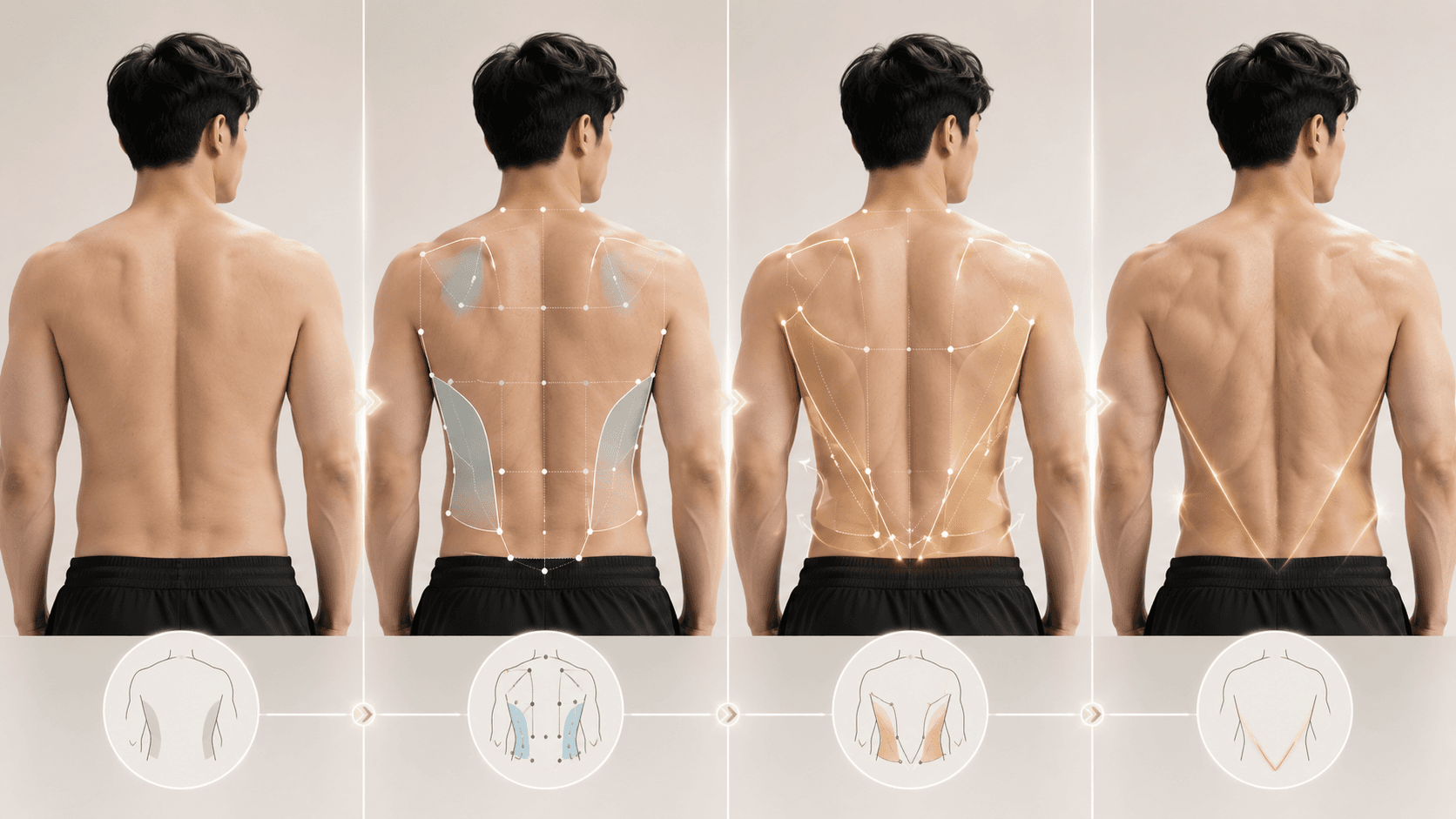
- 01 · Fat-Layer AssessmentWe measure the fat-layer thickness of the lats, upper back and rear waist by area to diagnose why the line looks faint.
- 02 · Lat Contour AnalysisWe compare the strength of the outer lat border left to right to set the design direction for the V-back entry.
- 03 · Shoulder-to-Waist Connection DesignWe evaluate the flow of the shoulder-to-back transition and the rear waist finish together to link the rear frame.
- 04 · Natural Rear FrameWe prioritize a naturally athletic V-back impression over an 'over-sculpted' one.
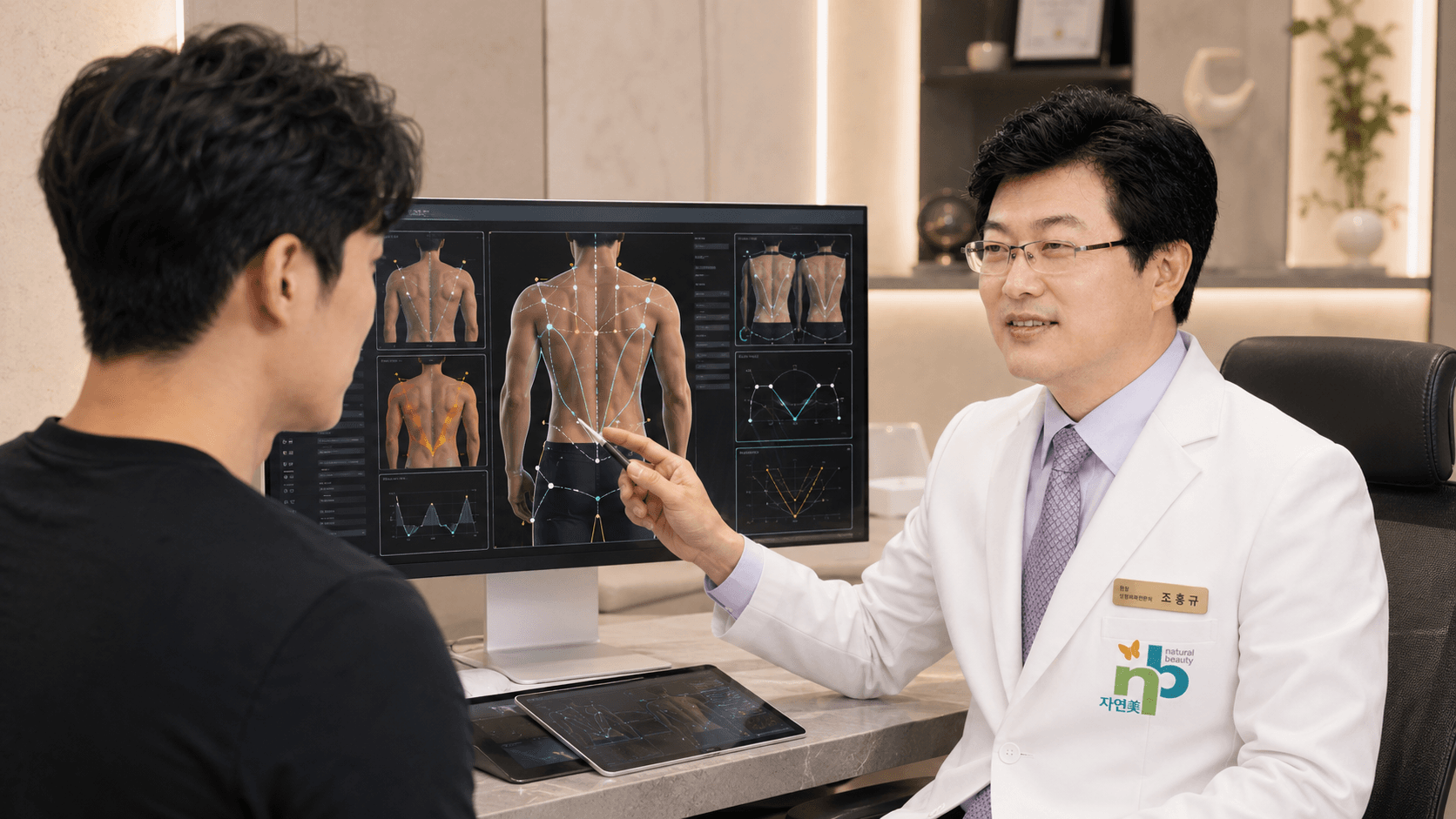
Consultation & Ultrasound
We look at your back together,
and draw the V-back together
After comparing the fat layers and fascial borders of the lats, upper back and rear waist left to right with ultrasound, we put your body type and target rear line on the monitor and design it together.
- ·Measure the back fat-layer thickness by area
- ·Compare the outer lat border left to right
- ·Deciding the treatment depth and amount by area in advance
- ·Explaining the range of change when training is combined

The rear V frame that changes a shirt's fit
NB's standard for results
What changes
A natural V-back entry seen from behind
A rear frame impression linking the shoulders and the rear waist
A rear line where the V's finish falls smoothly
A rear proportion where the shoulder-to-back transition is natural
Why patients choose NB back muscle HD sculpting
- Experience in integrated design across the lats, upper back and rear waist
- A principle of V-back impression assessment
- Ultrasound-based left–right comparison design
- Adhesion-minimizing technique applied
- Consultation and surgery performed directly by the lead surgeon
FAQ
Frequently Asked Questions
Q. Is back muscle HD sculpting different from back liposuction?
It isn't only about reducing the back fat layer. We evaluate the rear frame running from shoulder to waist, the lat impression and the rear waist connection together.
Q. Can it look as natural as a trained back?
It varies with each person's muscle development, fat layer and skin condition; we design toward a natural rear frame rather than an over-sculpted one.
Q. The back isn't a part people see — do I really need this?
The side and rear impression works as importantly as the front in how clothes fit and in photos. It's decided according to your own priorities.
Q. Is a back line possible without exercise?
The range of results can differ with how developed the lats already are. Whether to combine exercise is decided in the consultation.
Q. How long is recovery?
On average 1–2 weeks to return to daily life and 4–6 weeks of compression care. Because the back is affected by posture, strenuous activity needs to be limited, and recovery may vary by individual.
Q. Will there be a scar?
We minimize the incision to the flank and the inner rear so scars are barely visible even when exposed.

After surgery, with you through recovery
- 01VersaClear light therapy2 sessions
- 02Ucell standing-wave therapy2 sessions
- 03Radiofrequency care4 sessions
- 04
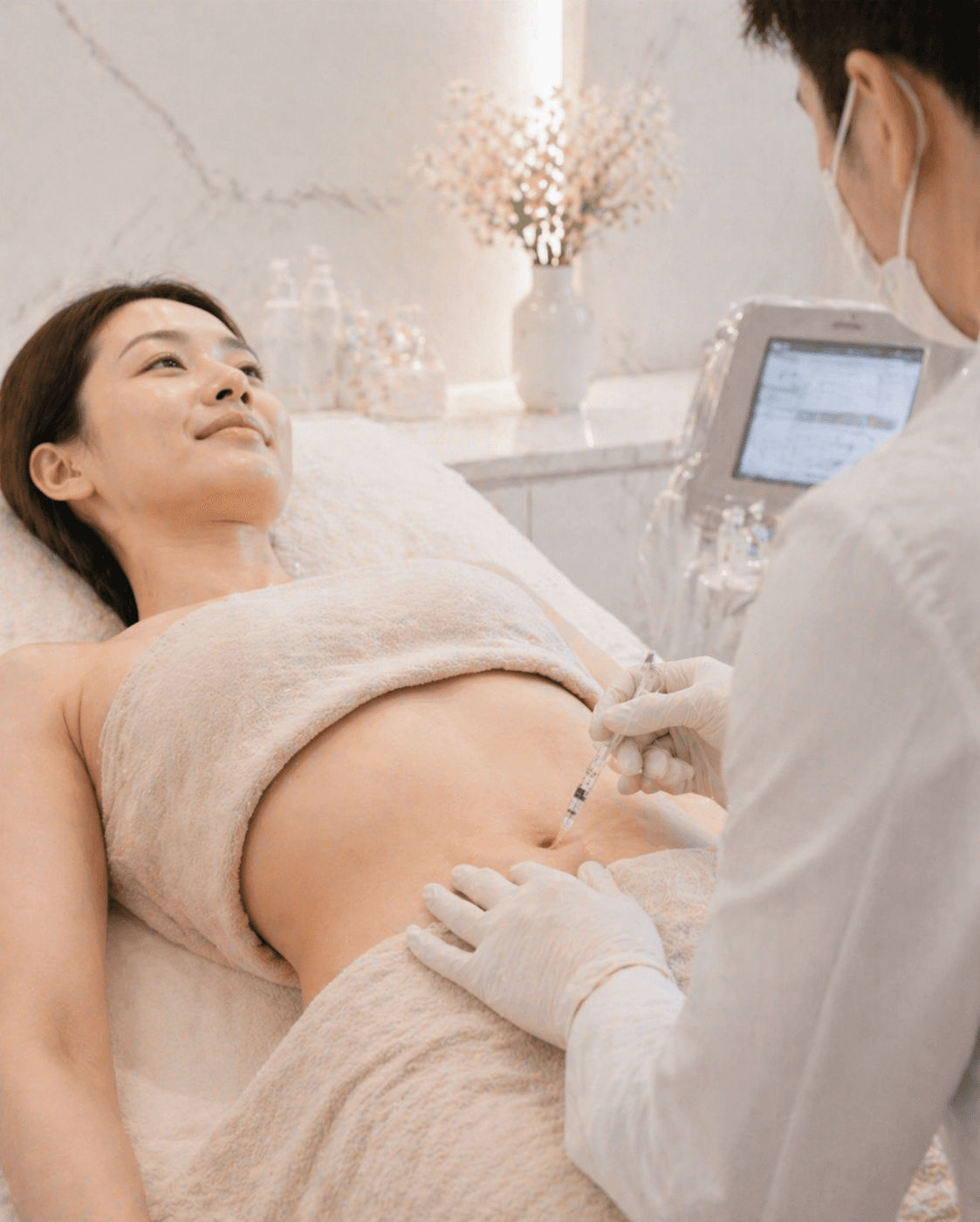 Soft-meso injection· Performed by the doctor2 sessions
 - 05
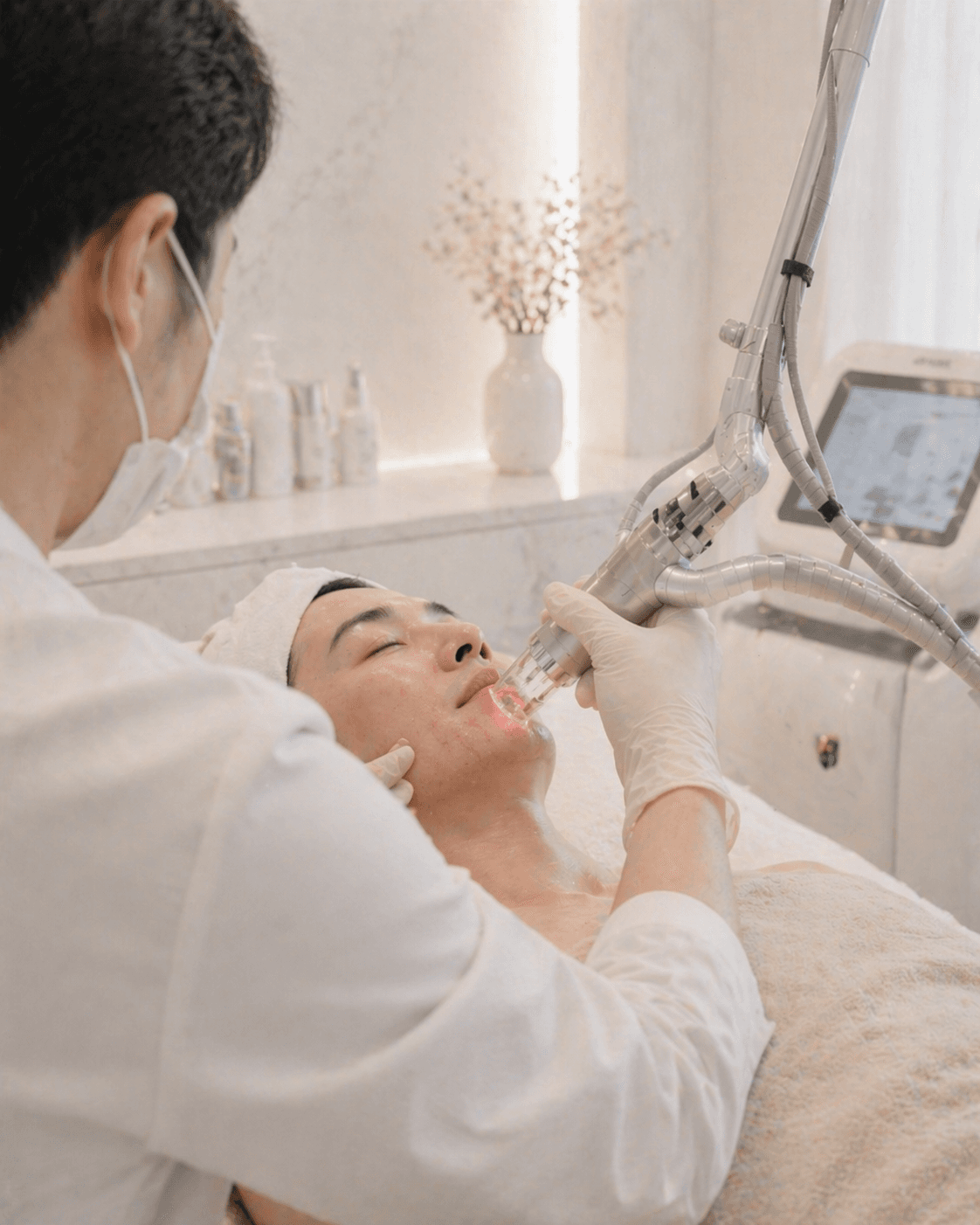 Fraxel scar laser· Performed by the doctor2 sessions
Basic aftercare is provided as a standard programme of 12 sessions in total — 4 swelling-care, 4 radiofrequency, 2 scar-laser and 2 meso-injection sessions. Actual scheduling and completion may vary depending on your ability to attend.
If care is needed beyond the basic aftercare, NB surgery patients receive a 50% discount on the standard price.
Legal Notice
※ If care cannot be provided due to reasons such as equipment malfunction, the affected care item may not be offered; as a service item, it is non-refundable.
※ Depending on your constitution and healing process, side effects such as swelling, bruising, inflammation, and scarring may occur after surgery.
Consultation
Back Muscle HD Sculpting Consultation
Check first how far your back line can go.
Send a photo on KakaoTalk and we'll analyze it and reply quickly.