
NB Adhesion Reset
After liposuction unevenness, depression, tightness call for a cause-based approach
Concerns that look alike may stem from different causes such as adhesion, tissue loss, fibrosis, or reduced elasticity. NB first analyzes your current condition and designs a correction plan suited to it.
Quick Symptom Check
Which symptom matches yours?
Concerns that look alike may stem from different causes.
Is This You?
You expected it to improve over time, but instead it started to bother you even more
- More noticeable under lighting
- Dents show through when wearing leggings
- The abdomen looks bunched under knitwear
- Firm to the touch
- No change even after massage
- Afraid of a revision procedure

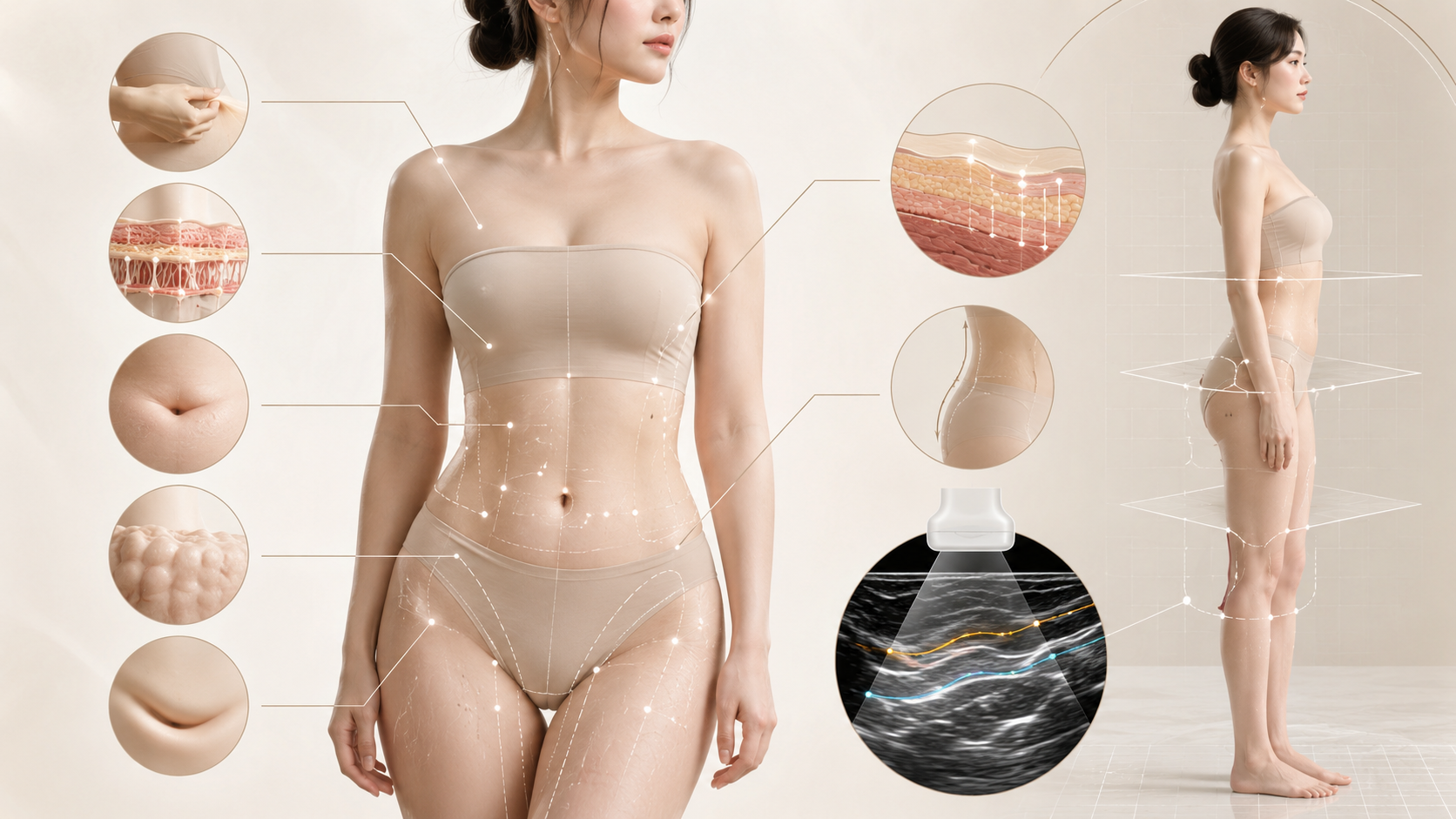
Why It Happens
The issue may not be fat itself, but tissue that has adhered together
01
Superficial adhesion
Shallow unevenness
02
Deep adhesion
Dents when you move
03
Fat loss
Depression and hollowing
04
Fibrosis
Firm lumps
WHAT IT IS
What does liposuction revision actually do?
Liposuction revision (adhesion reset) begins by identifying why the irregularity, depression, tethering or asymmetry left after the previous surgery appeared, and then re-planning the correction around the condition of the tissue as it is now.
It is not simply a matter of removing more fat. The appropriate approach and the range of correction that is possible vary with adhesion, fibrosis, fat deficit and skin elasticity.
- Irregularity that looks the same can come from different causes - superficial adhesion, deep adhesion, fat deficit or fibrosis.
- Depending on the cause, the approach differs: adhesion release, fat repositioning or grafting, or addressing skin elasticity.
- While swelling and tissue changes remain, the final contour cannot be judged accurately.
- Revision is not a treatment that removes every irregularity and asymmetry.
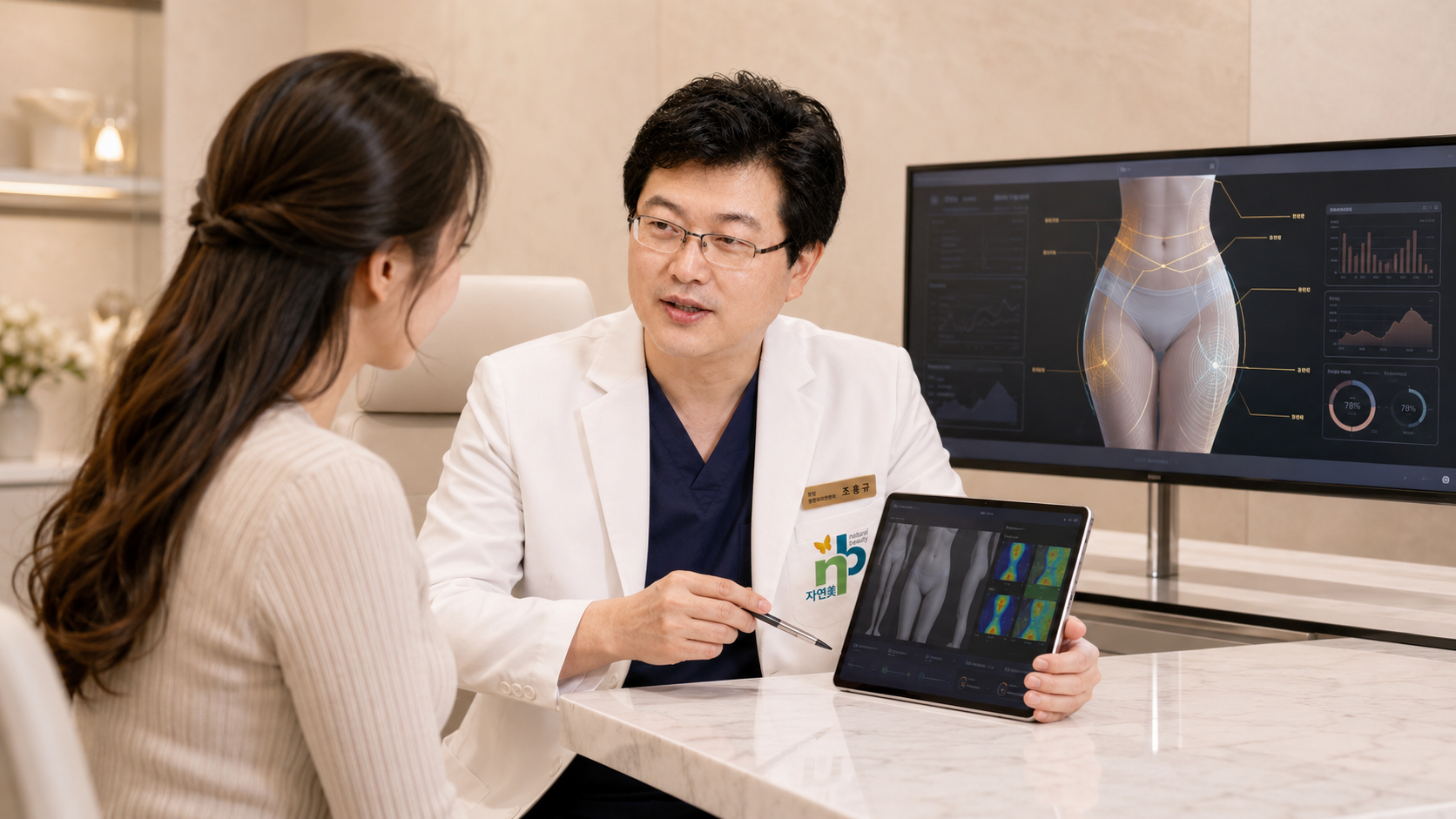
NB Diagnosis
Before the visible line, we first look at why it appears that way
- 01Movement-based assessment
- 02Analysis of skin-pull direction
- 03Palpation exam
- 04Ultrasound-based assessment
- 05Analysis of the prior liposuction extent
A cause-analysis clinic
Solution Map
Even the same unevenness may call for a different correction method
Area Cases
Cases by area
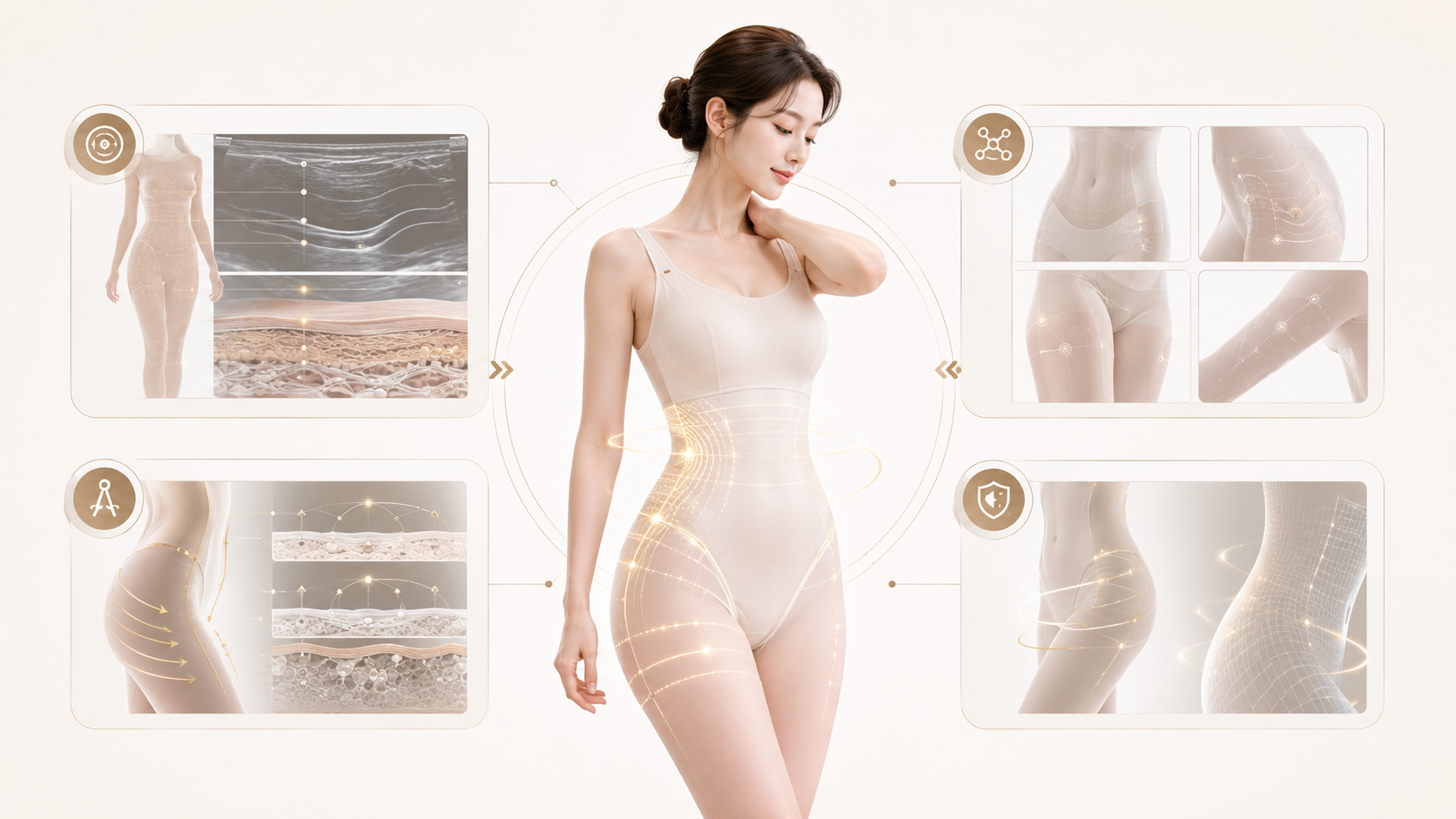
NB Adhesion Reset Method
Not simply liposuction again, but reconnecting the line
01
Adhesion release
Selected areas are released after assessing the depth and extent of adhesion and fibrosis
02
Micro dissection
Precise dissection minimizing tissue damage
03
Fat repositioning
Shifting volume to follow the line's flow
04
Micro fat grafting
Precise filling of depressed or deficient areas
05
BodyTite in combination
Integrated application when reduced elasticity is present
SAFETY & LIMITS
Revision starts with what is possible and what is not
The following are reactions and complications reported with liposuction and liposuction revision. Whether they occur, and to what degree, varies between individuals.
Reported reactions and complications
- Swelling, bruising and pain, and changes in sensation that may be temporary or persistent
- Fluid collection such as seroma or haematoma
- Infection, delayed wound healing, scarring
- Contour irregularity, asymmetry, skin laxity
- Pigment changes
- The possibility that further treatment or repeat correction is needed if the expected degree of correction is not achieved
- Rarely, serious complications such as anaesthesia-related problems, venous thromboembolism, or injury to vessels or deep structures
Limits of correction
- Where scarring and fibrosis are already well established, the range that can be corrected may be limited.
- If skin elasticity is significantly reduced, some laxity or irregularity may remain even after the contour is corrected.
- When loose skin itself is the main problem, liposuction or adhesion correction alone may not be enough.
- When fat is grafted into a depression, part of the grafted fat may be absorbed, and how much is retained varies between individuals.
- Until swelling has settled sufficiently, the final contour cannot be assessed accurately.
- Revision is not a treatment that removes every irregularity or asymmetry; the range that can be corrected depends on the current condition of the tissue.
This page does not state a fixed range of correction or a definite result for any individual patient. What is actually possible is explained individually after examination and imaging.
Before & After
Before and after cases by concern type
Concern type
Area
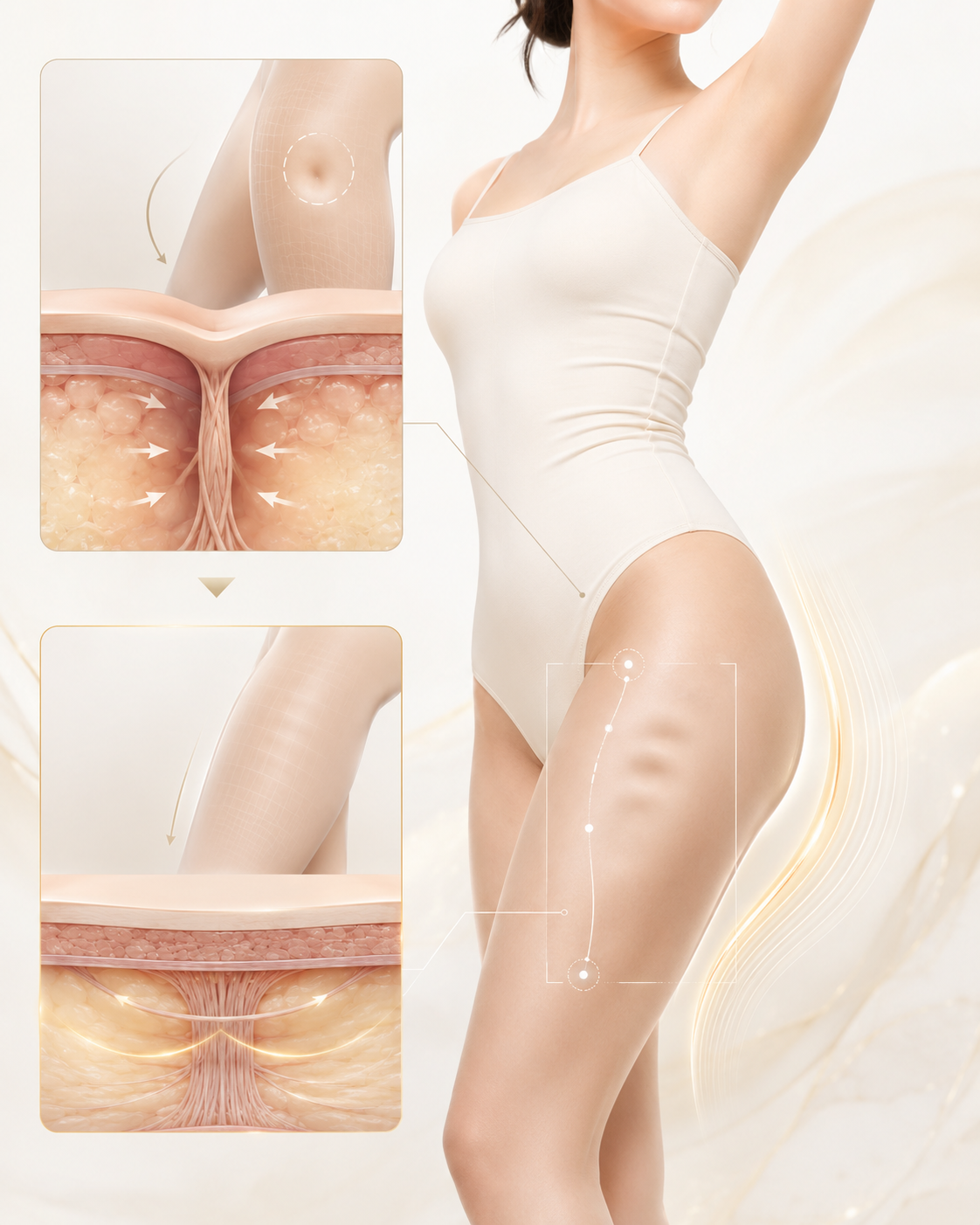
Example description
A case with severe dents on movement due to deep adhesion. Addressed with adhesion release combined with micro fat grafting.
Lifestyle
So that now you can choose the clothes you want to wear rather than the ones that hide the line
Thigh
Slacks, leggings
Abdomen
Knitwear, a natural fit rather than cropped
Arm
Fitted shirts, sleeveless
Lower buttock
The back view in leggings

WHERE TO START
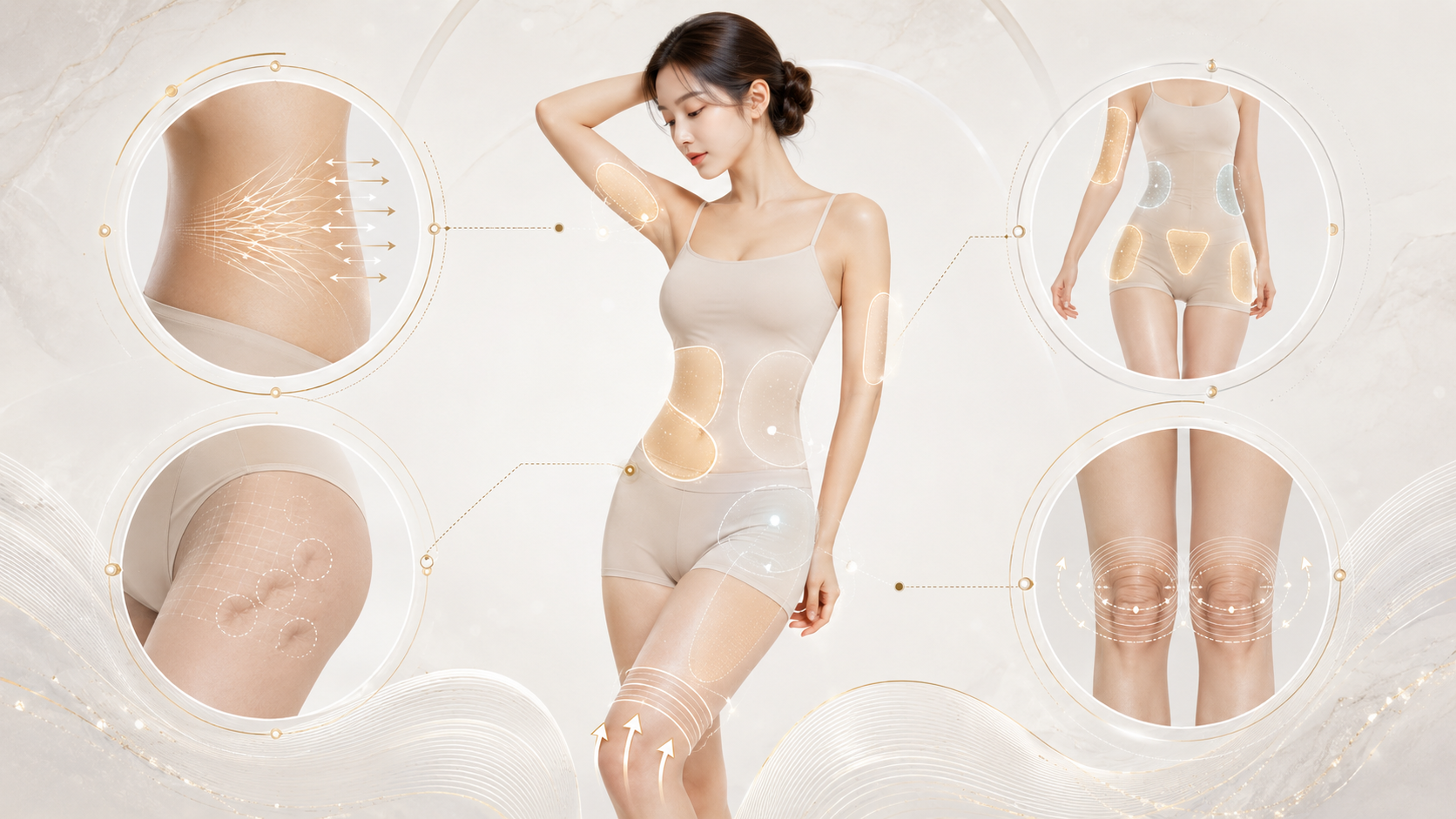
Start by identifying your condition across four paths
It may not be a matter of removing more fat. We distinguish tissue that has adhered, areas that have sunken, area-specific irregularities, and aging above the knee, then guide you to the right path.
01
Adhesion Reset
When it feels adhered, tight, or firm
We first read conditions where adhesion, tightness, or fibrosis is suspected
See details →
02
Depression & Irregularity
When it looks sunken or uneven
We distinguish depression, dents, dimples, and uneven-dent types before designing a plan
See details →
03
Revision Design
When area-specific revision is needed
A redesign that reads deformity patterns by area across the abdomen, arm, thigh, and hip
See details →
04
Knee BodyTite
When wrinkles or sagging above the knee are a concern
For aging-related skin laxity and folding, BodyTite tightening above the knee
See details →
WHY NB REVISION
Why a revision should be at NB
01
Revision-focused practice
Revision is harder than a first operation, and assessing the current condition of the tissue matters more. NB consults with a focus on distinguishing the cause and re-planning.
02
Assessment with ultrasound
Before surgery, ultrasound is used to check the thickness of the skin and subcutaneous fat layer and the condition of the surrounding tissue. The correction is planned on the basis of that assessment.
03
Performed directly by a plastic surgery specialist
The plastic surgery specialist you meet at your first consultation is the same doctor in the operating room. The more so for a revision, having the specialist perform it directly matters.
04
Step-by-step, safe correction
A revision should not be forced all at once. Depending on the condition, we build a correction plan in safe, gradual stages.
05
Choosing the method by the state of the adhesion
Rather than correcting everything with one method, the depth and extent of adhesion and fibrosis, fat deficit and skin condition are assessed first, and adhesion release, fat repositioning or grafting and energy devices are combined as the condition requires.
REVISION PROCESS
The NB revision four-step process
①
Ultrasound assessment
Checking the current condition of the tissue
②
Correction design
Building a tailored revision plan
③
Performed directly by the specialist
Correction matched to the assessed cause and tissue condition
④
Aftercare
Care to help maintain the results
FAQ
Frequently asked questions
Q. Why does adhesion occur?
During healing after liposuction, scarring and fibrosis may develop and adhesions can form between the skin and the subcutaneous tissue. Individual healing response, the extent and depth of suction, and the degree of tissue injury may all play a part. Depending on the depth and pattern of the adhesion, how it appears and how it can be corrected may also differ.
Q. Can it improve with massage?
Light, superficial areas may benefit, but massage alone has limits with deep adhesion or fibrosis. If massage brings little improvement, analyzing the cause should come first.
Q. When is a revision possible?
In general it is recommended to reassess the condition of the tissue at least 6 months after the first operation, because while swelling and tissue changes remain the final contour cannot be judged accurately. The actual timing may be later depending on recovery and how far the tissue has stabilised, and it is decided together at consultation after examination and ultrasound.
Q. Is fat grafting always necessary?
When depression or tissue loss is present, micro fat grafting may be needed. When adhesion is present, the approach centers on adhesion release. After diagnosis, we design a plan according to a condition-specific solution map.
Q. Why does unevenness occur?
There are four varied causes: superficial adhesion, deep adhesion, fibrosis, and fat loss. Even the same unevenness may call for a different correction method depending on the cause, so we look first at why it appears that way rather than at the visible surface.
Q. Can depression be corrected?
The approach varies with the cause. When fat loss is the main cause, we design micro fat grafting; when deep adhesion is the main cause, we design adhesion release alone or in combination. The solution differs by area and depth.
Q. Will repeating liposuction solve it?
Suctioning again without analysing the cause can make the condition worse. Revision is not an operation that removes more; it is a process of re-planning a damaged contour. Distinguishing the current condition accurately comes first, and the method and the range that is possible differ according to the cause.
WHY NB
Why choose
NB Plastic Surgery
Performed directly by a specialist with 25+ years of experience
The board-certified plastic surgeon you meet at your first consultation is the same surgeon in the operating room. Surrogate and ghost surgery are strictly prevented as a matter of policy.
A principle of 1–2 surgeries per day
We strictly limit the number of daily surgeries to focus on careful, safe procedures. The surgeon operates while at their best physical condition.
Basic post-operative care included
Care for swelling, firmness, and scars is included as standard. We support you through to recovery.
Thorough pre-operative screening
We carefully follow pre-operative testing and fasting of 8 hours or more. Safety comes first.
NB Plastic Surgery — committed to your care through recovery
Book a consultation →RECOVERY & FOLLOW-UP
Care does not end with surgery
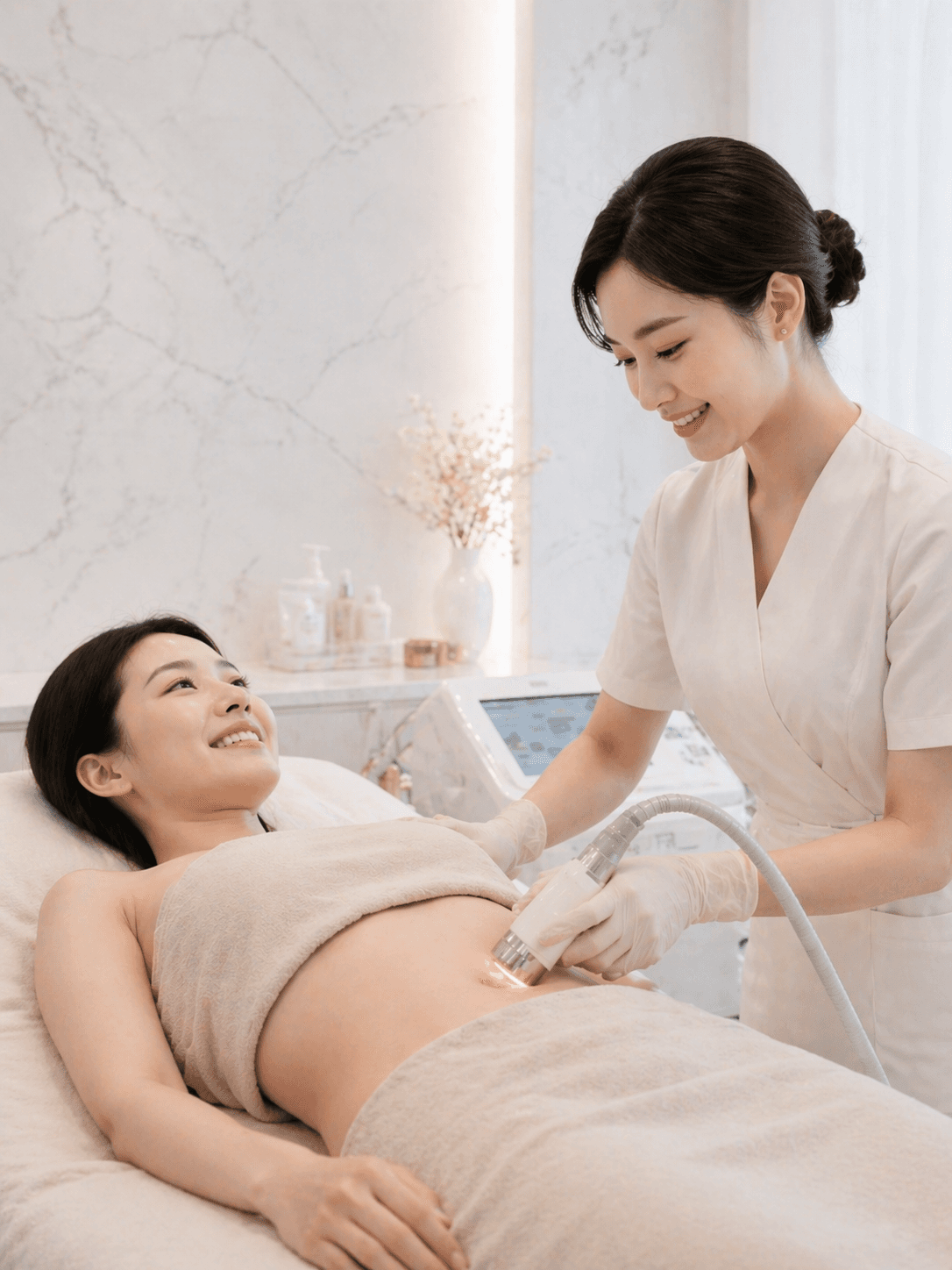
NB treats post-operative recovery and follow-up observation as an important part of the surgical process, and runs a staged aftercare programme - radiofrequency, oedema and circulation care, tissue recovery care and more - according to the condition of each patient.
A standard basic aftercare programme of 12 sessions in total — 4 swelling-care, 4 radiofrequency, 2 scar-laser and 2 meso-injection sessions — is provided; actual scheduling and completion may vary depending on the patient's ability to attend.
If further care is needed after the basic aftercare programme, or the patient wishes to continue, patients who had surgery at NB may receive additional care at 50% off the standard price of that care.
The aftercare programme is not a fixed-session voucher or a prepaid care product; it is a follow-up programme composed by the medical team according to the recovery of the patient. Additional care after the basic programme is charged separately, with a 50% discount for patients who had surgery at NB.
NB AFTER CARE
As important as the surgery itself:
Post-operative care
At NB Plastic Surgery, we give full attention not only to the surgery but also to post-operative dressing and aftercare, aiming to support the best possible results.
The aftercare below is provided as standard after surgery.
01 · 4 swelling-care sessions
Swelling recovery care
- Versa Clear light therapyVersa Clear
- U-Cell standing-wave circulation careU-Cell
02 · 4 firmness-care sessions
Easing firmness and fibrosis
- Radiofrequency massage care
- Soft-meso injection, 2 sessionsHelps shorten fibrosis · additional fat reduction
03 · 2 scar laser sessions
Minimizing scars
- MiXto Evolution fractional laserMiXto Evolution · CO₂ Fractional
04 · Rigorous surgical principles
A safety-first system
- Managed schedule of 1–2 surgeries per day
- Thorough pre-operative screening · fasting of 8 hours or more
- Surrogate and ghost surgery strictly prevented as a matter of policy
- The head surgeon personally handles consultation, surgery, and follow-up care
If you would like additional care beyond the standard number of sessions, patients who have had surgery at our clinic can receive the same aftercare services at a 50% discount.
NB HANDMADE TECHNIQUE
Adhesion Reset revision — Handmade technique changes the outcome
Liposuction done with power equipment alone is fundamentally different from the NB handmade technique.
Meticulous handwork helps create natural lines and a lower likelihood of adhesion.
NB Handmade
Performed by hand by the head surgeon
The same head surgeon who designs the plan at your first consultation personally guides the cannula in the operating room. When the surgeon who designed the plan operates directly, the intended lines can be realized.
Maintaining an even fat layer
Rather than relying on power suction alone, the surgeon adjusts the cannula's direction and pressure by hand. This helps keep the remaining fat layer even and aims to minimize unevenness.
A low-adhesion dissection strategy
The directions and depths where adhesion tends to form are planned in advance. Dissection is carried out with the possibility of revision in mind, which helps reduce the likelihood of adhesion afterward.
Careful finishing by area
Borders and line transitions are refined with particular care. The connecting lines that look natural when dressed are the result of hand finishing.
Standard power liposuction
Primarily power-equipment driven
Strong suction removes fat quickly. It is fast, but fine control is difficult and there is a possibility of damage to surrounding tissue.
An uneven fat layer
Relying on power can leave the fat layer unevenly distributed. This may lead to surface unevenness and line issues around the borders.
Relatively higher risk of adhesion
Excessive dissection or uneven removal can increase the likelihood of adhesion. This can make correction more difficult if revision is needed.
Insufficient border finishing
The border between the treated area and its surroundings may be left looking unnatural. Surface irregularities can appear especially in thinner areas.
NB uses power equipment (VASER2 · BodyTite) to help prepare the fat layer and encourage skin retraction, while the line design and finishing are completed by the head surgeon's own handwork. Combining equipment with the handmade technique is central to NB's results.
MEDICAL REVIEW
Medically reviewed by
CHO HONG KYU, Chief Director
Plastic Surgeon
Last reviewed ·
REFERENCES
References
- American Society of Plastic Surgeons - Liposuction Risks and Safety
- Dixit VV, Wagh MS. Unfavourable outcomes of liposuction and their management. Indian Journal of Plastic Surgery, 2013
- Tabbal GN et al. Advances in Liposuction: Five Key Principles. Plastic and Reconstructive Surgery - Global Open, 2013
- Ferry AM et al. Avoidance and Correction of Deformities in Body Contouring. Seminars in Plastic Surgery, 2021
- Asan Medical Center Health Information - Suction lipectomy
After surgery, with you through recovery
- 01VersaClear light therapy2 sessions
- 02Ucell standing-wave therapy2 sessions
- 03Radiofrequency care4 sessions
- 04
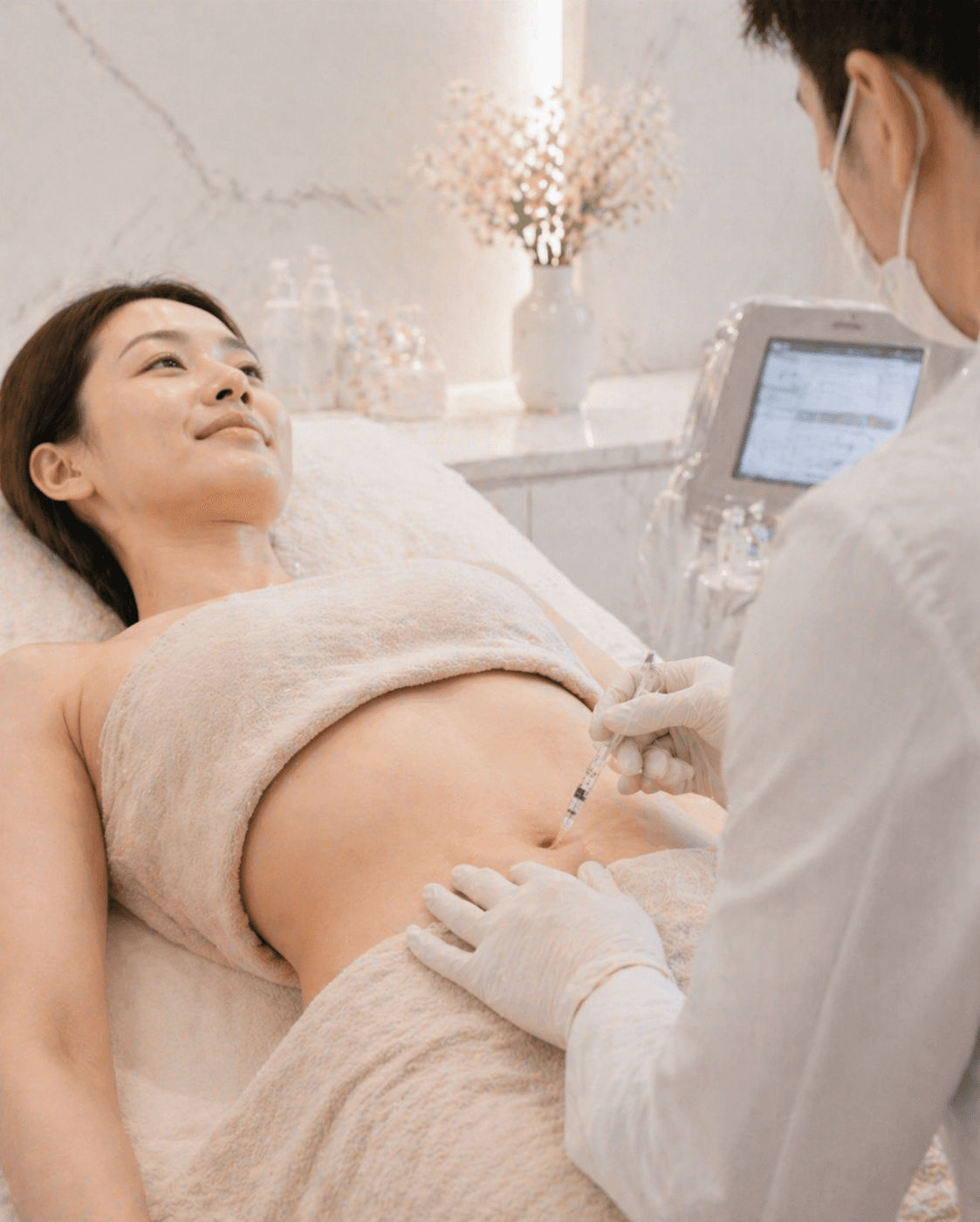 Soft-meso injection· Performed by the doctor2 sessions
 - 05
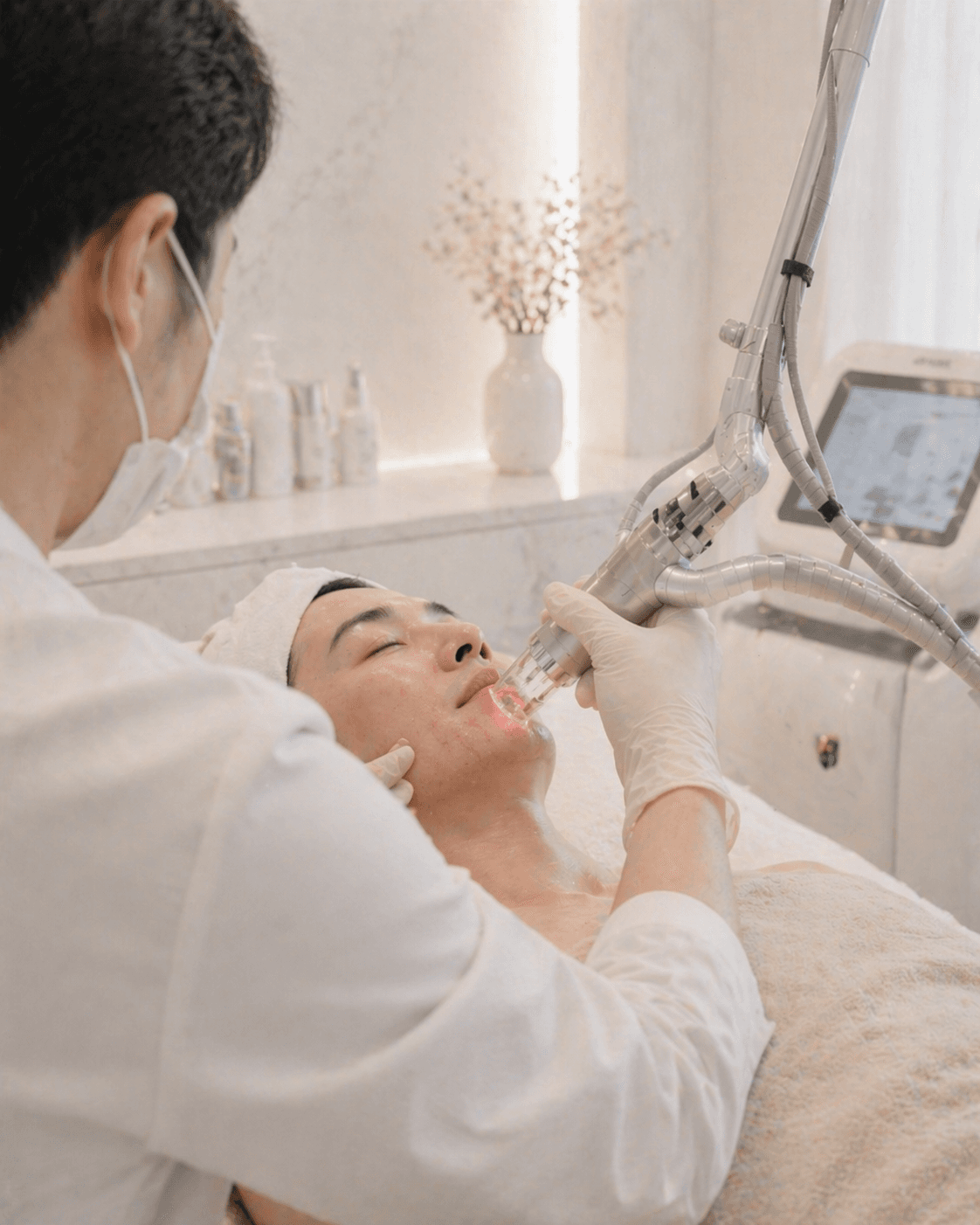 Fraxel scar laser· Performed by the doctor2 sessions
Basic aftercare is provided as a standard programme of 12 sessions in total — 4 swelling-care, 4 radiofrequency, 2 scar-laser and 2 meso-injection sessions. Actual scheduling and completion may vary depending on your ability to attend.
If care is needed beyond the basic aftercare, NB surgery patients receive a 50% discount on the standard price.
Legal Notice
※ If care cannot be provided due to reasons such as equipment malfunction, the affected care item may not be offered; as a service item, it is non-refundable.
※ Depending on your constitution and healing process, side effects such as swelling, bruising, inflammation, and scarring may occur after surgery.
NB Adhesion Reset
What you need now is not to agonize over whether to have surgery again, but to accurately identify your current condition
Direct consultation with a plastic surgeon · Assessment with ultrasound NB Plastic Surgery, Sinsa, Gangnam