

ALSA Autologous Blood Filler
Rather than filling in an obvious way, we support the face naturally
We assess areas such as the under-eye, anterior cheek, nasolabial folds and chin where soft volume support has declined, and plan with a natural impression and facial balance in mind

Empathy
You have not aged much, yet your face somehow looks tired
In the mirror the under-eye can look hollow, and as anterior cheek support declines the face can look drained. The nasolabial folds look deeper, yet filling them obviously with too much filler feels like a burden. Rather than how much to fill and where, what matters first is identifying which areas have lost support.
It is not about "hollowing" but about loss of support
The under-eye, anterior cheek, nasolabial folds and chin all affect mid-face support and lower-face balance together. Filling only one area can end up looking unnatural.

Even in the same area, the direction and degree of lost support differ from person to person, and the direction of correction is confirmed together in consultation.

What Is It
Not filling a lot, but restoring only the support that is missing
ALSA autologous blood filler is an approach that uses components derived from the patient's own blood to address hollowing, loss of support and a soft decrease in volume. Rather than strongly projecting a particular area, it aims at a natural, undemanding improvement in impression that follows the flow of the face. The point is not to fill a lot, but to restore only as much of the missing support as is needed.
Not a heavily filled face, but a face that does not look off
Good filler is better judged not by how much was filled, but by how little it looks out of place.

Natural Support
Natural support
- ·Restoring only as much as is needed where support has declined
- ·Considering the flow and balance of the face together
- ·A soft improvement in impression that does not show
To Avoid
Excess volume to avoid
- ·An impression that stands out from overfilling a single area
- ·Unnatural volume that runs against the flow of the face
- ·An approach that fills by quantity rather than by support
We look together at the areas where support declines
Conditions differ even in the same area, and suitability is confirmed in consultation. The under-eye in particular is thin and delicate, so it is approached with great care.
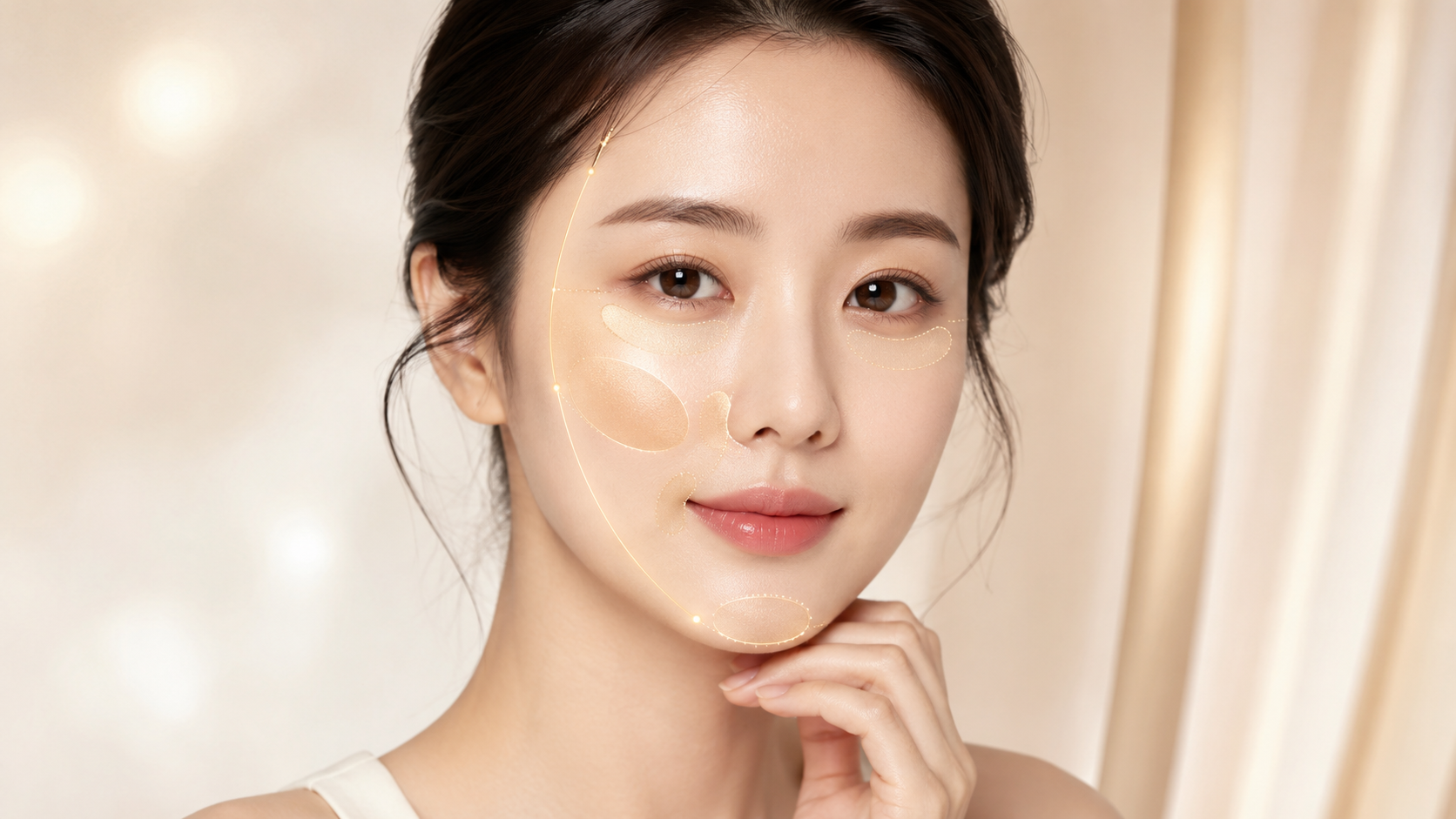
Under Eye
Under-eye transition
When the under-eye looks hollow and shadowed, this softly supports the transition zone. That said, the under-eye is thin and delicate, so it is approached with great care.
Cheek Support
Anterior cheek support
When support at the centre of the face declines and it looks drained, this can be reviewed as a way to restore it naturally.
Nasolabial
Nasolabial support line
When the nasolabial area looks deep, we examine weight and the direction of support together and approach it gently.
Mid Cheek
Cheek hollowing
When the inner cheek looks hollow and the impression appears gaunt, gentle volume support can be reviewed.
Temple
Temple
When the temple is hollow and the facial contour looks angular, this restores it with the overall flow in mind.
Fine Texture
Fine lines · skin texture support
This can also be reviewed as a way to support shallow fine lines and skin texture, and the degree varies considerably from person to person.
The purpose that suits your face comes before the type of filler
ALSA, standard HA filler and skin boosters are not ranked against each other — they are choices with different purposes and areas.
Natural Support
ALSA autologous blood filler
A direction reviewed when natural support and soft correction of transition zones are needed. Rather than strong projection, it aims at an undemanding improvement in impression that follows the flow of the face.
Shape & Contour
Standard HA filler
A direction considered when shaping a contour or seeking clear volume. It is not a question of being better or worse than ALSA — the purpose and area simply differ.
Skin Condition
Skin booster
A direction considered when you want to refine skin texture, hydration and skin condition rather than volume. Since the purpose differs, it is sometimes planned alongside.
Standard filler is not a bad thing — the approach is simply different. Which choice suits you, by area and purpose, is judged together in consultation.
When it may fit, and when caution is needed
Being honest about the limits is the first step toward a natural result.
May Fit
When it may fit
- ·When the under-eye is hollow, shadowed and looks tired
- ·When declining anterior cheek volume support bothers you
- ·When the nasolabial folds are deep but too much filler feels like a burden
- ·When you want to restore chin balance naturally
- ·When you want a natural impression that does not show
- ·When a past experience of overfilled filler has left you hesitant
Caution
When caution is needed
- ·When you want strong projection or a distinct change in shape
- ·When sagging is significant and support or lifting takes priority over volume
- ·When there is inflammation, infection or an active skin condition
- ·When another procedure was recently performed in the same area
- ·When you bruise or swell easily, or your vessels are sensitive
- ·When you are pregnant or breastfeeding
Suitability differs with individual condition, and it is best judged after a consultation with a doctor.

Consultation
Before how much to fill, where and how to restore
In consultation we check the cause of under-eye hollowing, anterior cheek support, the nasolabial pattern, and the chin-to-lower-face proportion. We look at skin thickness, tissue condition and the level of change you want, and set a direction from there. Rather than deciding on a product or an amount first, it is better to check the state of your own face first.
What we check together
We look at the areas that have lost support along with facial balance, and build a plan that is not excessive.


Under Eye
Cause of under-eye hollowing
We check together whether the hollow appearance comes from lost support, from shadow, or from tissue condition.
Cheek
Anterior cheek support
We examine how much support at the centre of the face has declined and in which direction restoration is needed.
Nasolabial
Nasolabial pattern
We assess the pattern that makes the nasolabial folds look deep together with the weight of surrounding tissue.
Balance
Chin · lower-face proportion
We check how the chin and lower-face proportion affect the overall balance.
Tissue
Skin thickness · tissue
Because the method and the injected amount can change with skin thickness and tissue condition, we examine them together.
Goal
The level of change you want
We check how natural a change you want, and set a direction together that is not excessive.
Procedure flow and recovery
Facial balance consultation
We check the state of under-eye, anterior cheek, nasolabial and chin support along with the overall flow of the face, and set a direction.
Autologous blood-based preparation
A preparation process using components derived from your own blood is carried out. The method can differ according to individual condition and plan.
Volume restoration by area
Where support has declined, we proceed by restoring only as much as is needed, gently, without overfilling.
Follow-up
Swelling, bruising and temporary asymmetry may occur, and the degree and duration vary from person to person. The course is checked together in consultation.
The course of recovery and the degree of response vary from person to person, and it is best to be advised on detailed precautions in consultation.
We talk about expectations and limits together
Direction of change
A natural improvement
Duration
Varies with conditions
Result
Varies by person
Duration can vary with tissue condition, area, injected amount and metabolism, so a specific period is hard to state definitively. The aim is a natural improvement in impression, and results may vary from person to person.
30-Second Volume Guide
Find the natural volume direction that suits your face
Rather than choosing a product name first, this is a reference flow for checking where support is missing and how naturally you want it restored.
Step 1 · Select all that apply
Which hollowed or concerning areas bother you most?
Step 2 · Select one
How much change do you want?
Step 3 · Select one
How important is looking natural?
Step 4 · Select one
How do you feel about standard filler?
Step 5 · Select one
Are skin texture and fine lines also a concern?
Step 6 · Select if applicable
Are there any conditions that need caution?
Explore together
Filler
Compared together when shape, contour or clear volume is the goal.
Filler →Skin BoosterSkin booster
Explored when skin texture, hydration and condition — rather than volume — are the concern.
Skin booster →RejuranRejuran
Reviewed for thin, sensitive skin and when support for the recovery environment is needed.
Rejuran →JuvelookJuvelook
Compared when you want to refine pores, skin texture and firmness in a collagen direction.
Juvelook →
Impression
An impression that looks at ease, not a filled face
The goal is not a face that obviously has filler, but an impression that simply looks comfortable and natural. Where and how to restore matters more than how much is injected. Results and the course of recovery may vary from person to person.
With filler, where and how you restore matters more than how much you inject
Before the product or the amount, we check the state of support in your own face. We plan together after consultation · NB Plastic Surgery, Sinsa, Gangnam
After the procedure, with you when needed
Petit procedures do not include a separate aftercare program; if swelling care is needed after the procedure, it is offered at 50% of the cost.
Legal Notice
※ If care cannot be provided due to reasons such as equipment malfunction, the affected care item may not be offered; as a service item, it is non-refundable.
※ Depending on your constitution and response, reactions such as swelling, bruising, and inflammation may occur after the procedure.