
Traumatic Adhesion Depression Correction
We assess the structure beneath the depression first
Post-traumatic surface depressions are often more than a volume deficit — they frequently involve scar adhesions, tissue tethering, and surface irregularities.
Adhesion release · Surface refinement · Volume enhancement · Natural contour restoration — designed as one integrated plan.
If any of these changes remain after trauma
- A certain area looks sunken since the injury
- The depression becomes more noticeable when smiling or making expressions
- The skin at that site looks pulled or tethered
- The surface is uneven rather than smooth
- Scar, adhesion, and depression overlap in the same area
If any of these apply, the condition may be more complex than a simple scar or volume loss — scar adhesion may be a contributing factor.
Why does it remain unchanged over time?
Scar adhesions that form during the healing process after trauma pull the underlying tissue inward.
This tethering compresses the surface, creating a depression, and leads to surface irregularities that differ from the surrounding skin. Filling volume alone often cannot restore a natural contour.
We read the direction and depth of tethering, not just appearance
Adhesion location, tethering direction, surface condition, and depth are all assessed together. Even depressions that look similar on the surface can have very different underlying structures.
Adhesion Analysis Map
Centred on the depressed area, the adhesion location, tethering direction, and extent of surface irregularity are mapped as a guide for the correction plan.
Ultrasound-Guided Consultation
The tissue layer and depth of the adhesion are confirmed via ultrasound, and the direction for release and supplementation is determined together.
Release. Refine. Fill. Reconnect.
A staged structural restoration approach — not merely volume supplementation.
Adhesion Release
Scar adhesions that tether tissue are meticulously separated and released.
Surface Refinement
As the compressed space recovers, surface irregularities are refined together.
Volume Enhancement
Only the volume needed is supplemented with micro-fat grafting for a natural result.
Contour Restoration
The overall line is refined so the treated area transitions naturally into the surrounding contour.
Not erasing —
but restoring the original flow.
You do not need to judge this alone
After trauma, it can be difficult to tell externally whether the change is a scar, an adhesion, or a volume issue. We start by accurately assessing the current condition. A consultation alone is entirely fine.
When tethering is released, movement returns and lines reconnect.
The area that had been held still since the injury begins to flow naturally again. Not overdone — closer to the original texture.
Frequently Asked Questions
Q. Can correction still be done even if a long time has passed since the injury?
Adhesions often persist over time. The approach will differ depending on elapsed time, severity of adhesion, and surface condition, so we will guide you on the precise direction after evaluation.
Q. Will the scar itself disappear?
The aim is not scar removal but releasing the structure pulled and compressed by scar adhesion, then refining the surface and contour. Separate additional care may be needed for the scar tissue itself.
Q. Can't I simply fill in the depressed area?
When tissue is still being tethered by adhesion, adding volume alone tends to leave surface irregularities or an unnatural contour. This is why adhesion release, surface refinement, and volume enhancement are considered together.
Q. I had a correction elsewhere and the result was unsatisfactory. Is revision possible?
The approach depends on the previous correction method and the current adhesion and surface condition. We will confirm the tissue layers by ultrasound and then advise on feasibility and direction.
Q. How long is the recovery period?
Return to daily activities is typically possible after 3–7 days, and swelling and bruising gradually subside over 2–3 weeks. A natural contour stabilises over 1–3 months. Individual variation exists depending on the injury site and degree of adhesion.
Q. How is the initial assessment conducted?
Ultrasound is used to assess adhesion location, tethering direction, surface condition, and depth together. The plan is formed by evaluating not only the visible depression but also the underlying structure.
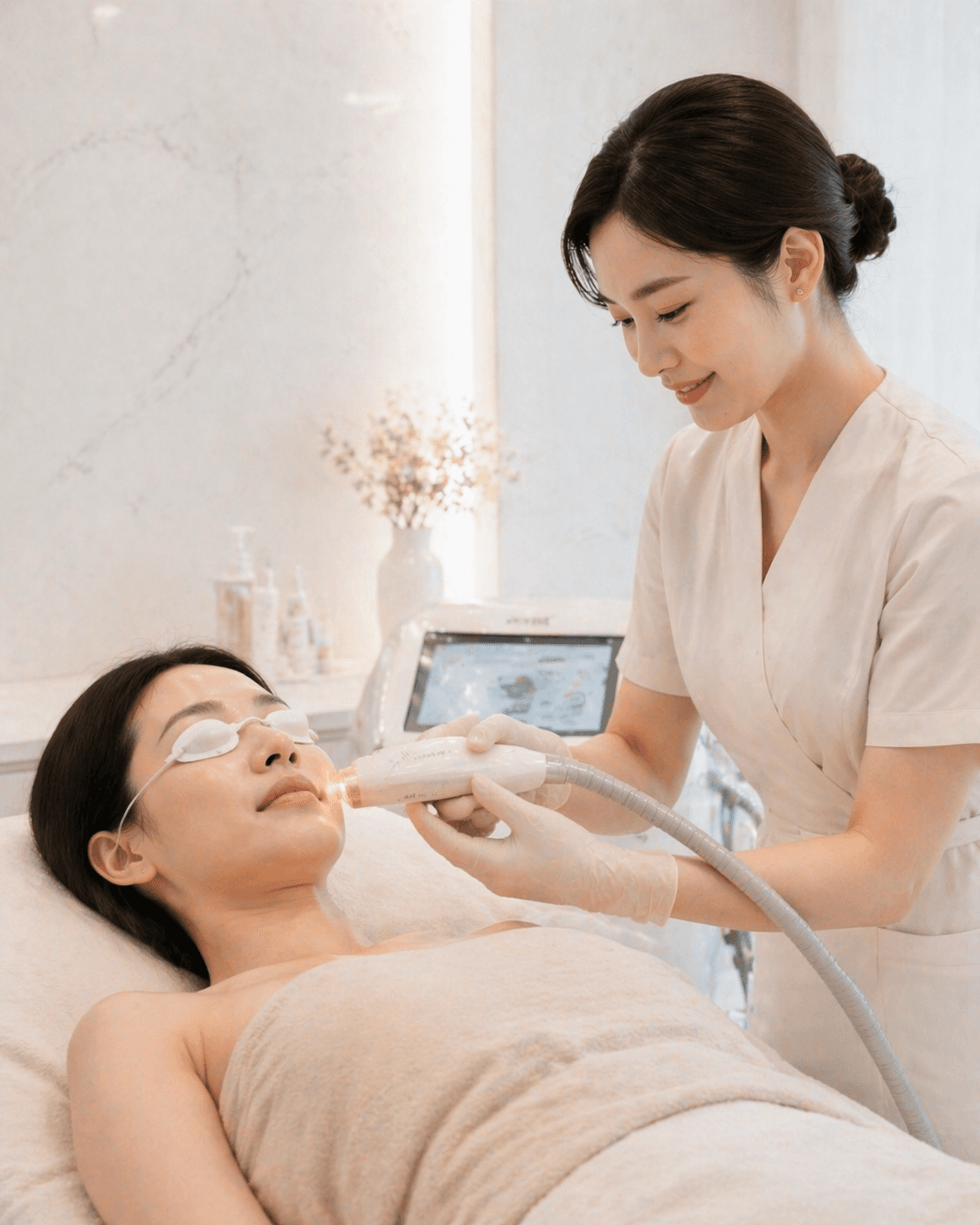
After surgery, through swelling and scar care
Included Value
Based on standard market price
- 01VersaClear light therapy2 sessions
- 02Ucell standing-wave therapy2 sessions
- 03
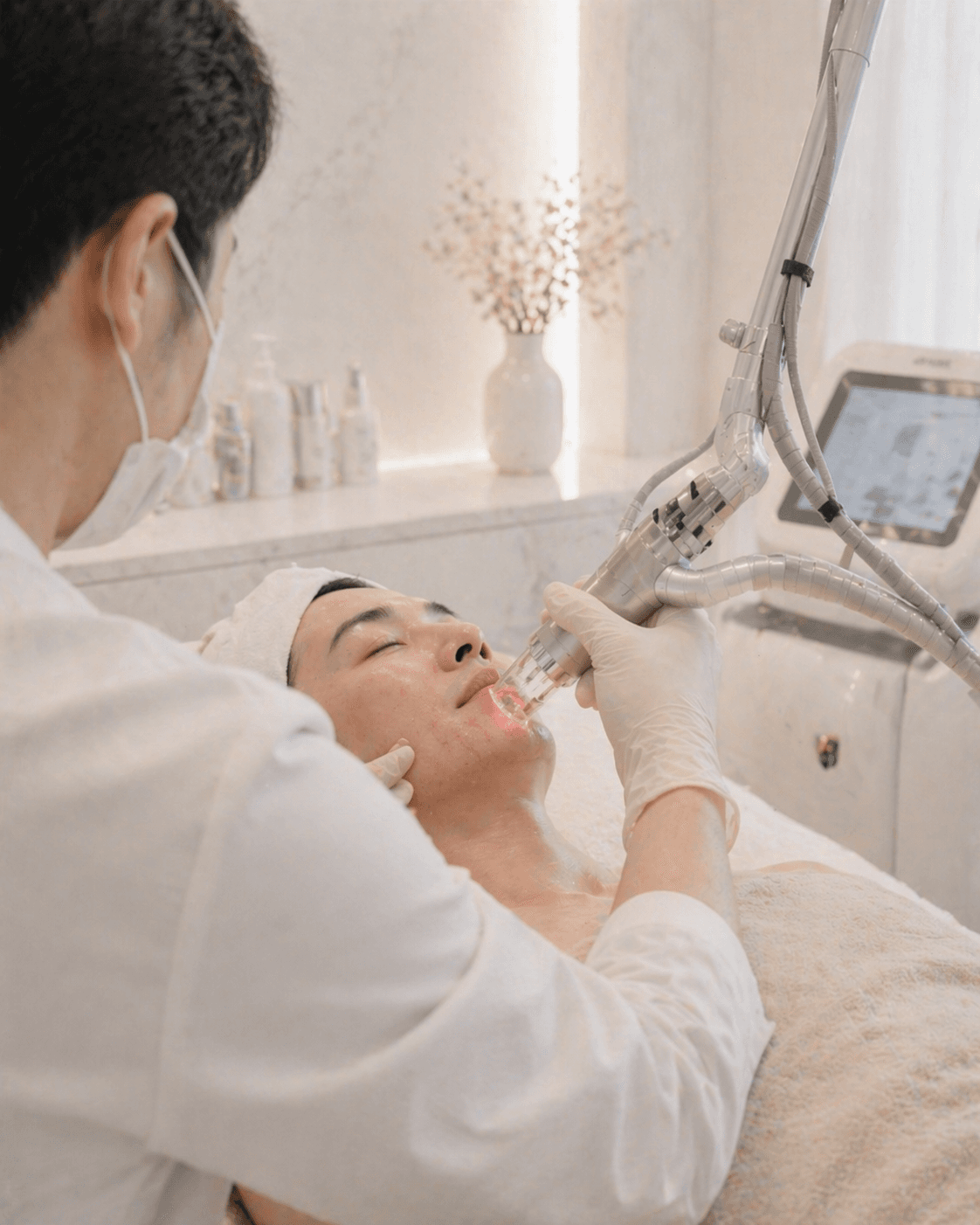 Fraxel scar laser· Performed by the doctor2 sessions
* Soft-meso injection is available if lumping occurs
Included in the surgery cost.
If additional care is needed, NB surgery patients receive a 50% discount
Legal Notice
※ If care cannot be provided due to reasons such as equipment malfunction, the affected care item may not be offered; as a service item, it is non-refundable.
※ Depending on your constitution and healing process, side effects such as swelling, bruising, inflammation, and scarring may occur after surgery.
Start by understanding your current condition
Changes after trauma may differ from a simple scar. Accurately assessing the current state of adhesion, surface, and volume is the first step.
A consultation alone is entirely fine.
You can take your time deciding.