
Unhappy with your rhinoplasty result?
We approach it more carefully than the first time after analysing adhesion · scar · structure we redesign toward a more natural result
Do you have concerns like these?
Revision isn't about raising it again; it re-analyzes why it became awkward in the first place. Rather than simply replacing the implant, we resolve the structural cause first.
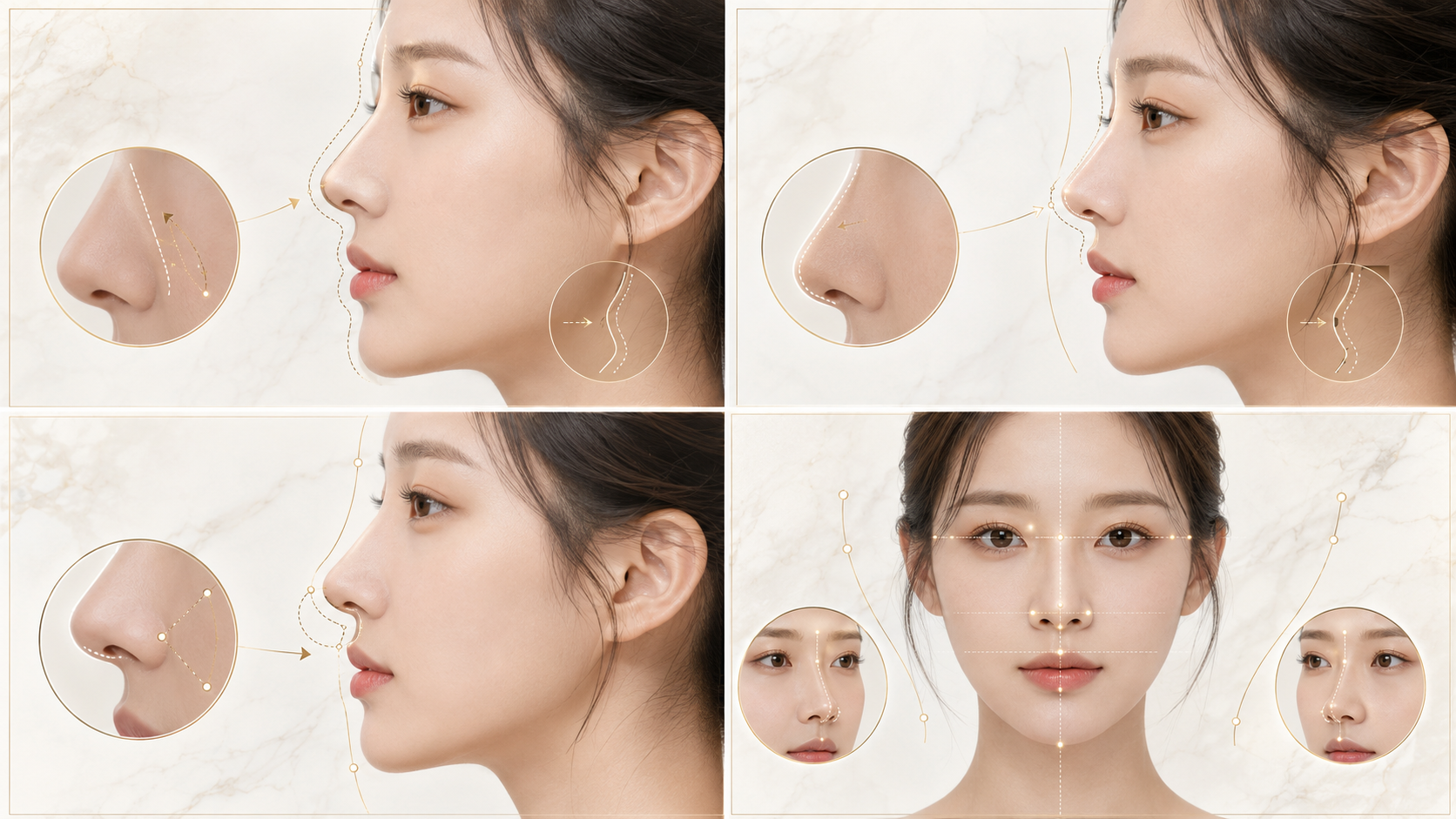
My tip has turned red and the skin has thinned
When the skin has thinned from implant pressure, immediate structural correction is needed.
My nose is crooked or leaning to one side
This arises from cartilage asymmetry or implant displacement. Structural redesign is needed.
My nose is too high or unnatural
A result from excessive implant height or a wrong angle. We readjust it to your facial proportion.
My implant is palpable or moves
A problem from poor implant fixation or capsular contracture. Refixation or replacement is needed.
Breathing is uncomfortable after surgery
When a functional problem arises from septal deformity or an internal structural issue, we correct function and aesthetics together.
Revision types NB handles
Each type has a different approach. We distinguish adhesion, scar, and structural problems to establish a tailored plan.
Implant replacement / removal
Silicone · Gore-Tex replacement, or removal due to infection or a foreign-body reaction. Autologous cartilage reconstruction can be combined.
Capsular contracture correction
We remove the hardened capsule and reinsert into a new space. The capsule resection extent is key.
Asymmetry · twist correction
We structurally readjust cartilage asymmetry or poor implant position. Ultrasound analysis first.
Autologous cartilage reconstruction
Reconstructing the nasal structure with ear · septal cartilage without an implant. Preferred for re-revision or thinned skin.
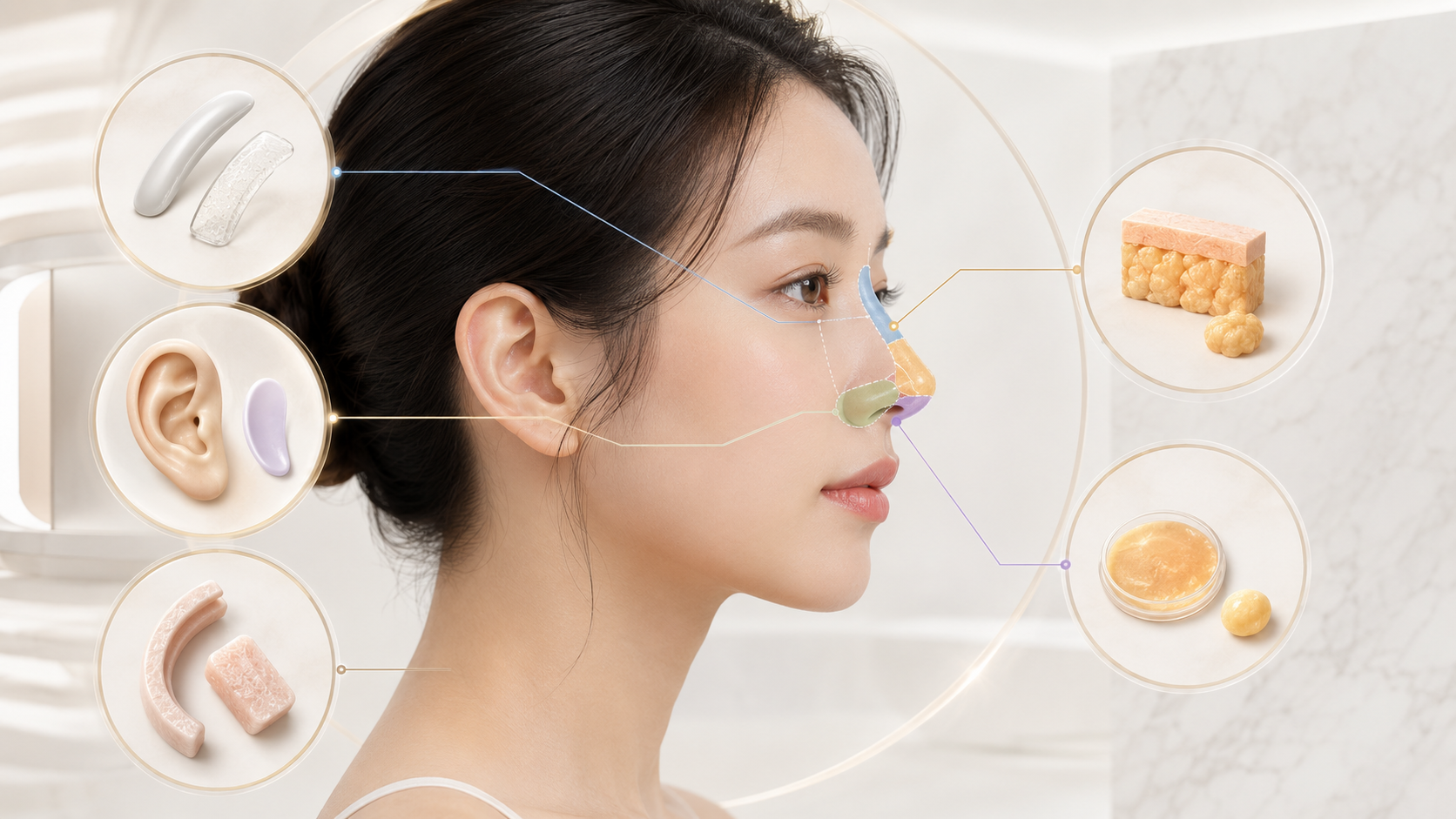
Not just changing the line, but redesigning structure and material together
We look at height, starting point, tip support, skin laxity, and material condition together. Rather than an excessive revision, we prioritize a scope that can recover naturally.

The NB revision difference
It's not a simple revision. We analyze the cause, redesign the structure, and create a more natural result.
Cause analysis first
With ultrasound, we check the implant position, capsule thickness, and cartilage condition before surgery.
Staged planning
We combine skin thickness, degree of adhesion, and the previous surgical method to plan the optimal correction sequence.
Operated directly by the doctor
The doctor operates from start to finish. The more it is a revision, the more experience and judgment determine the result.
Skin-preservation strategy
We apply a minimally invasive approach that preserves thinned skin as much as possible while correcting the internal structure.

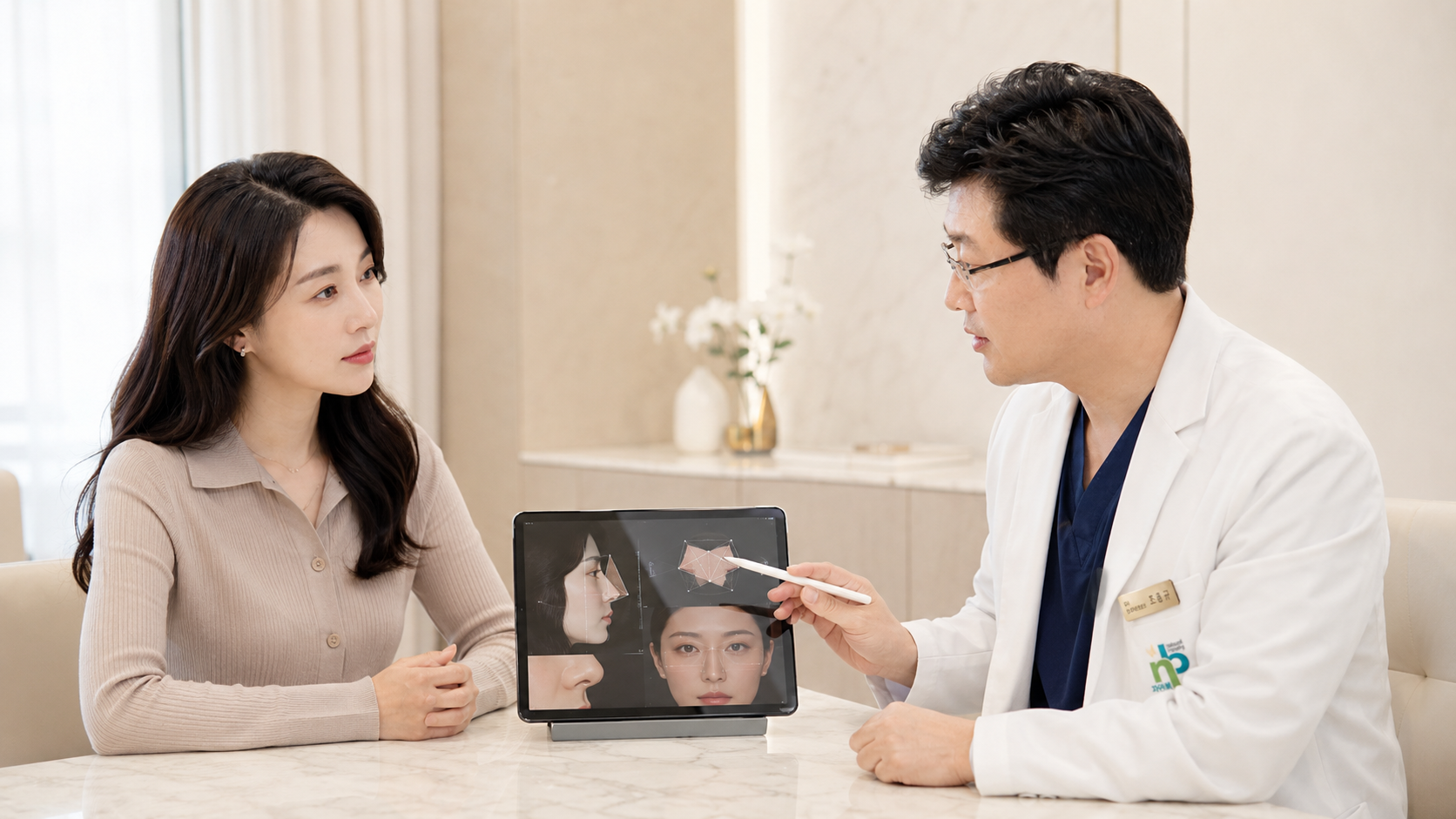
We re-examine the cause first and propose a redesign direction
The doctor directly analyzes the implant condition, capsule, and cartilage/skin laxity, and looks at height, starting point, and tip support together. We propose a redesign direction within a recoverable scope, without overdoing it.
Please check before surgery
More carefully than the first time more naturally than the first time
NB looks at the cause before the result
A naturally recovered side line and impression

Before the consultation, check your nose direction first
Self-diagnosis is for reference; the final judgment is decided in consultation with the doctor.
Frequently asked questions
When is revision rhinoplasty possible?
Generally, tissue stabilizes only after 6 months to 1 year following the previous surgery. Emergencies such as infection or necrosis are treated early as exceptions.
Can the nose be built with autologous cartilage alone?
Yes. Using ear cartilage (auricular) or septal cartilage, the nasal structure can be reconstructed without an implant. When the skin has thinned, autologous cartilage is safer.
Why does capsular contracture occur?
As a foreign-body reaction, a fibrous capsule forms around the implant and hardens as it contracts. In severe cases it causes shape deformity or pain.
How long is recovery after revision rhinoplasty?
Initial swelling is 2–3 weeks; full result confirmation is 6 months to 1 year. Recovery can take longer than the first surgery.
Won't more scars form?
NB applies a minimally invasive approach that uses the existing incision line as much as possible. We correct while minimizing additional scarring.
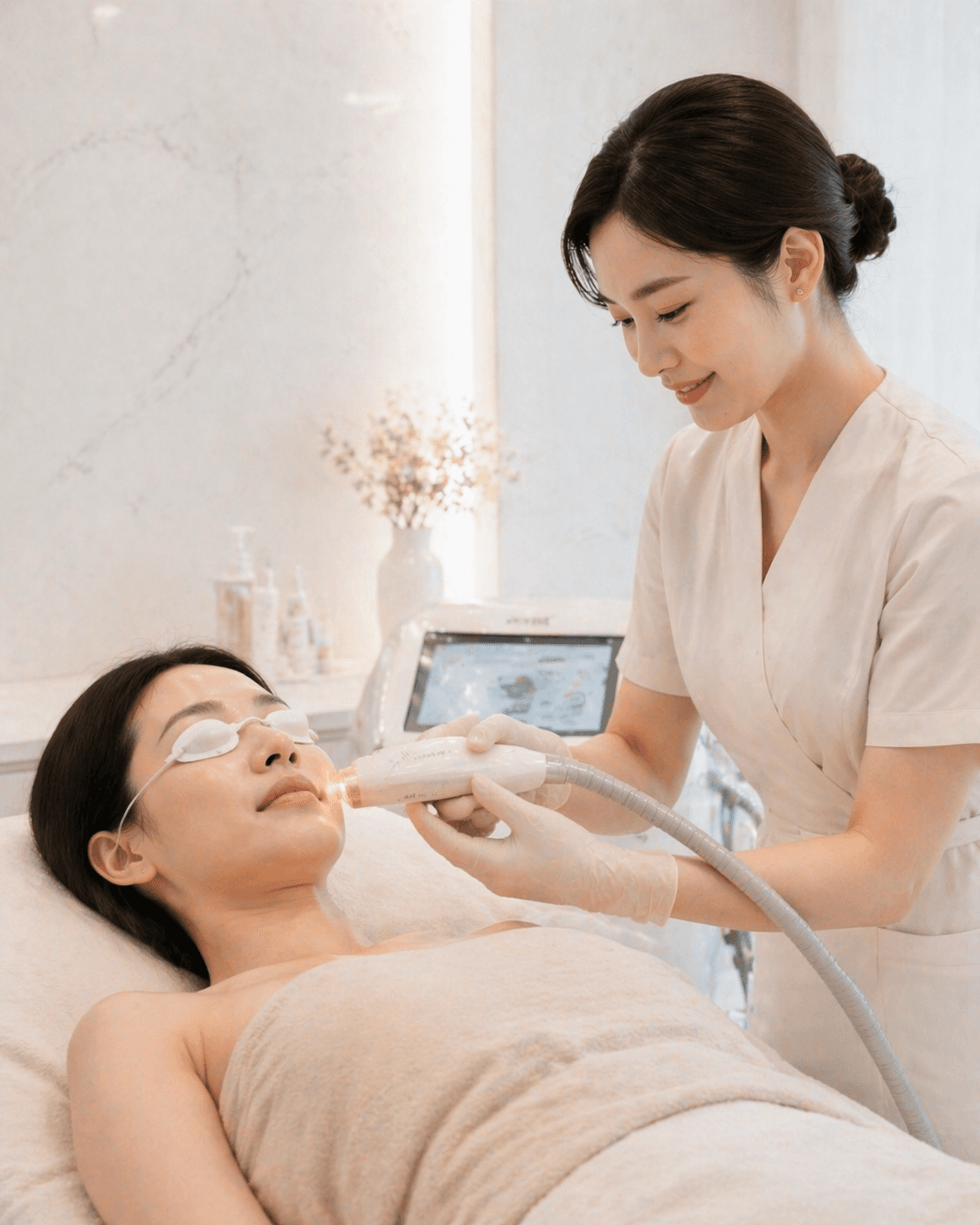
After surgery, through swelling and scar care
Included Value
Based on standard market price
- 01VersaClear light therapy2 sessions
- 02Ucell standing-wave therapy2 sessions
- 03
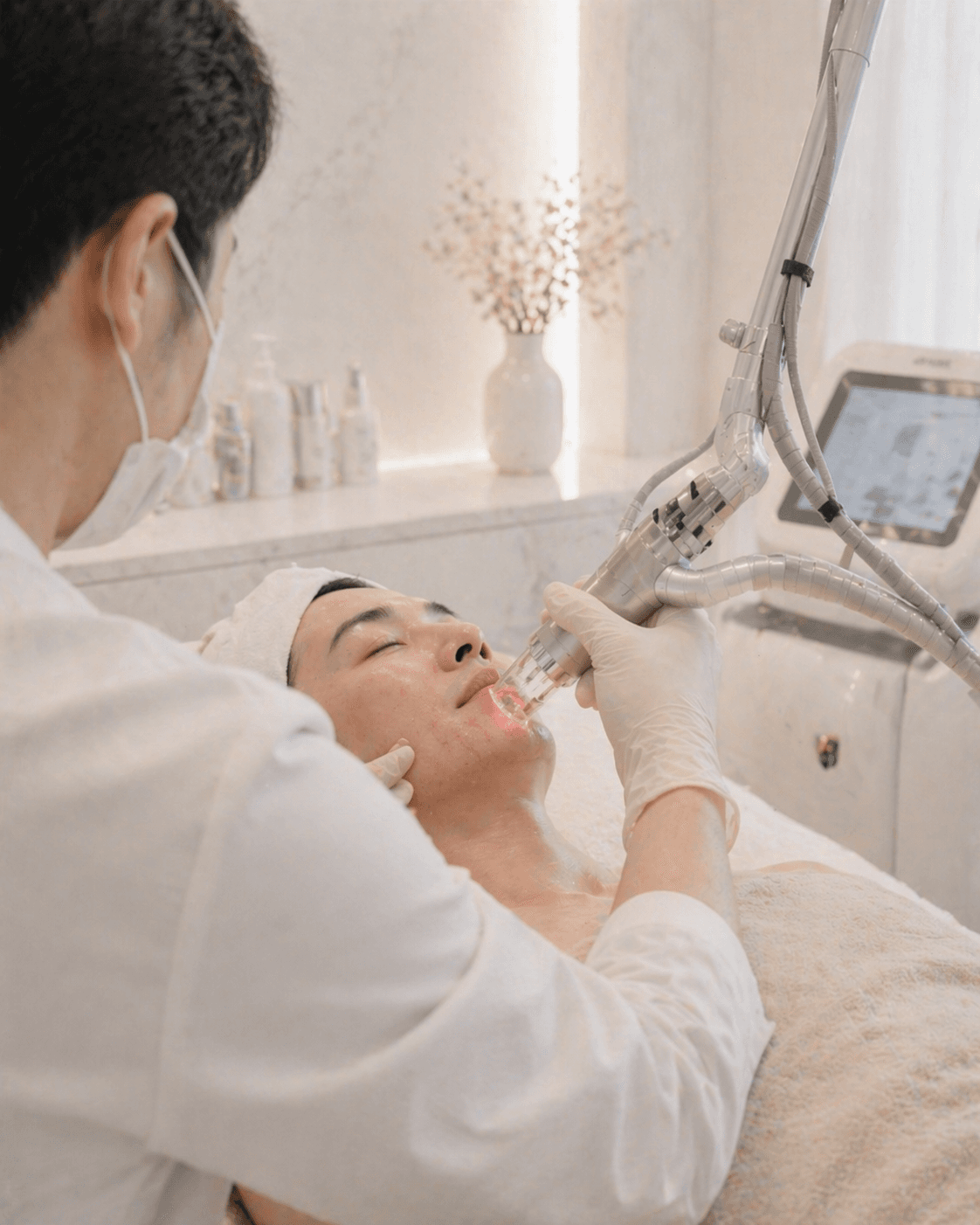 Fraxel scar laser· Performed by the doctor2 sessions
* Soft-meso injection is available if lumping occurs
Included in the surgery cost.
If additional care is needed, NB surgery patients receive a 50% discount
Legal Notice
※ If care cannot be provided due to reasons such as equipment malfunction, the affected care item may not be offered; as a service item, it is non-refundable.
※ Depending on your constitution and healing process, side effects such as swelling, bruising, inflammation, and scarring may occur after surgery.
A better result than before that is the goal of NB revision rhinoplasty
Private consultation · ultrasound analysis included · direct consultation with the doctor