
Facial Redesign,
Addressing Adhesions, Irregularities & Imbalance
Revision is not simply about refilling.
Unnatural results, adhesions, irregularities, and imbalance from previous procedures
are addressed together to redesign a smoother, more harmonious appearance.
A consultation only is perfectly fine.
If Previous Procedure Marks
Have Been on Your Mind
- Expressions or appearance feel unnatural after a previous procedure or surgery
- The surface feels irregular or seems pulled to one side
- Left-right asymmetry makes the face look unbalanced from the front
- Some areas feel overdone while others feel insufficient
Revision is not just about refilling what is lacking —
it may involve addressing adhesions, irregularities, and imbalance together to redesign the result.
“Before refilling,
clearing things up first is where natural results begin.”
Five Types That May Indicate Revision
Multiple types often coexist in one face, so categorising them individually is the first step.
Overcorrection
More volume was added than needed, leaving a heavy or overdone appearance
Undercorrection
Insufficient augmentation leaves certain areas still sunken or hollow
Adhesion
The treated area has bonded to surrounding tissue, causing a pulling or stiff sensation
Volume Imbalance
Some areas within the same face have excess volume while others lack it
Asymmetry
Differences in position, height, or volume between sides disrupt frontal balance
Adhesion, Imbalance & Volume Discrepancy
Diagnosed Together
Revision cannot be resolved by looking at a single issue. NB examines not only surface irregularities but also the adhesions beneath, left-right imbalance, and volume discrepancy by area.
Only after separating what is excessive from what is lacking — and where things are pulling versus where there are voids — can a correction sequence be designed.
Release, Redistribute, and Supplement as Needed
First, adhesions causing tension are released; left-right and area-specific imbalances are redistributed; then only areas of deficiency are supplemented to the extent needed to redesign overall harmony.
Adhesion Release
Adhesions pulling at the surface are gently released to reduce restriction of movement.
Imbalance Redistribution
Excess and deficiency by side and area are compared and rebalanced accordingly.
Supplement as Needed
Only deficient areas are supplemented to the extent required to maintain a natural, non-overdone result.
Redesign
Rather than addressing individual parts, the entire facial flow is redesigned for a softer, more harmonious impression.
Not simply refilling,
but releasing and rebalancing first to restore natural harmony.
The Director Personally Evaluates
Adhesion Direction and Balance
Even when the unnatural appearance looks similar, the underlying cause and correction sequence differ from person to person. The director personally confirms adhesion direction, left-right differences, and volume discrepancy by area, then designs the revision sequence to match the individual cause.
- Adhesion level evaluated alongside surface appearance
- Left-right asymmetry assessed separately
- Correction sequence designed after distinguishing areas of excess and deficiency
- Whether release is needed before refilling is assessed first
Not Just Individual Parts —
Restoring Harmony Across the Face
When adhesions are released and balance redistributed, the appearance of prominent individual areas diminishes and the surface settles into a much smoother, more natural flow.
Results vary by individual; detailed information will be provided during consultation.
Frequently Asked Questions
Q. Is facial revision just a matter of refilling what is missing?
Revision is not simply adding back what is lacking. It involves evaluating adhesions, surface irregularities, left-right imbalance, and excess or insufficient volume left from previous procedures — clearing these first, then supplementing only what is necessary to redesign overall harmony. Individual variation exists, and a precise assessment is provided after consultation.
Q. Why do adhesion and surface irregularity occur together?
When the treated area bonds to surrounding tissue, the surface can be pulled to one side, leaving a bumpy or stiff feeling. That is why NB does not look only at the surface but evaluates adhesion, imbalance, and volume status together to distinguish the cause.
Q. Can revision address both overcorrection and undercorrection at the same time?
It is common for some areas in the same face to be overcorrected while others are undercorrected. NB assesses excess and deficiency by area, then works to clear what is excessive and supplement what is deficient to redistribute balance. Results vary by individual.
Q. Can I consult about revision for a procedure done elsewhere?
Because the approach varies depending on the previous procedure method and the current tissue condition, confirming the current state directly is more important than knowing where it was done. After examination, guidance will be provided on whether revision is appropriate and the suggested sequence.
Q. Does revision always make the result more natural-looking?
It is not possible to guarantee a specific outcome. NB aims to achieve a softer, more harmonious impression by releasing adhesions, redistributing imbalance, and supplementing only what is needed. How much improvement is possible depends on tissue condition and is best confirmed during consultation.
Q. How long is the recovery period?
Return to daily activities is generally possible within a few days, and swelling gradually subsides over about two weeks. It may take approximately one to three months for the surface to settle smoothly. Individual variation applies.

After surgery, through swelling and scar care
Included Value
Based on standard market price
- 01VersaClear light therapy2 sessions
- 02Ucell standing-wave therapy2 sessions
- 03
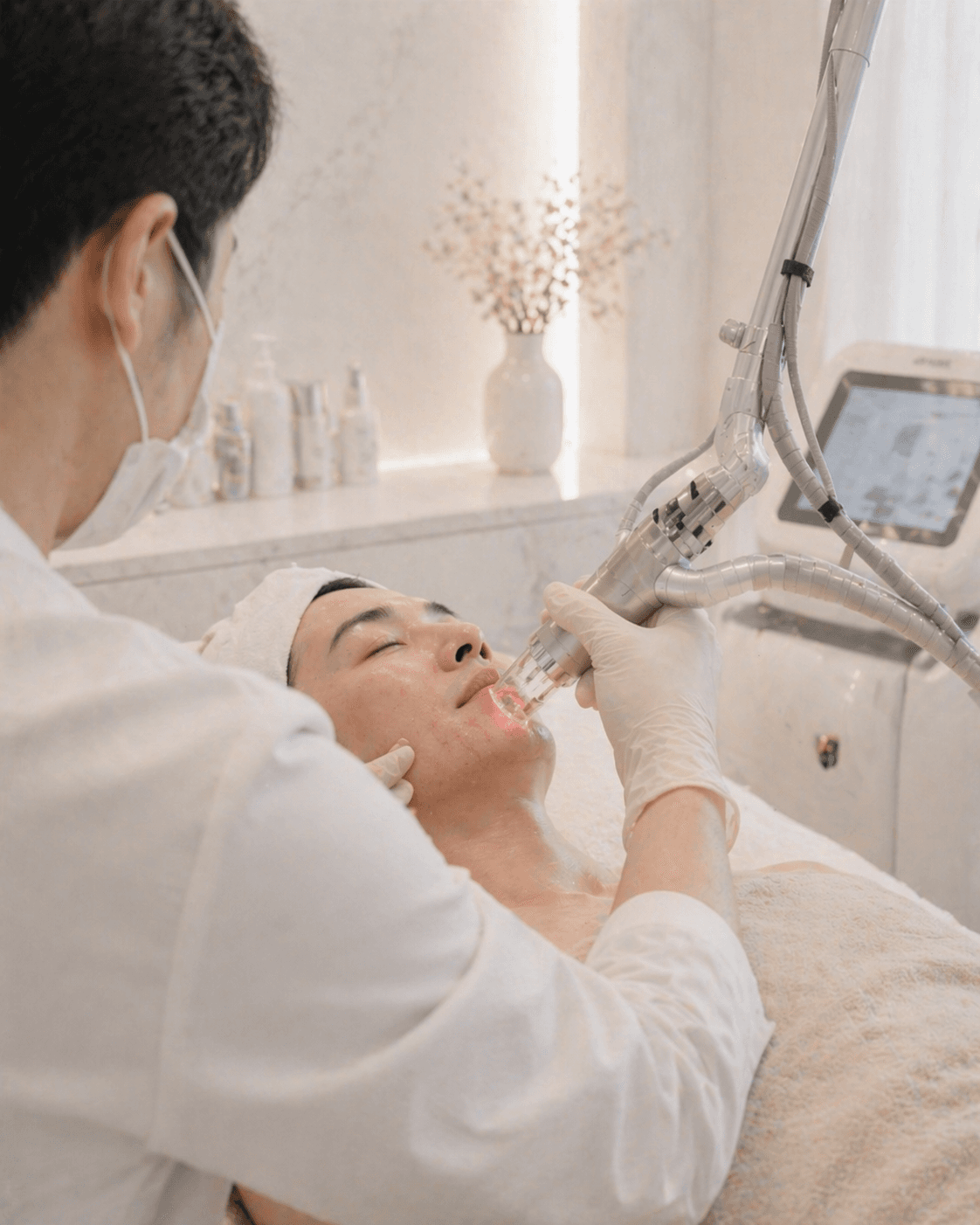 Fraxel scar laser· Performed by the doctor2 sessions
* Soft-meso injection is available if lumping occurs
Included in the surgery cost.
If additional care is needed, NB surgery patients receive a 50% discount
Legal Notice
※ If care cannot be provided due to reasons such as equipment malfunction, the affected care item may not be offered; as a service item, it is non-refundable.
※ Depending on your constitution and healing process, side effects such as swelling, bruising, inflammation, and scarring may occur after surgery.
Before Refilling,
Confirm During Consultation
What Needs to Be Addressed First
Revision involves addressing adhesions, imbalance, and volume discrepancy together.
Accurately confirming the current condition is the first step.
A consultation only is perfectly fine.
Take your time with the decision.
Coming alone is no problem at all.