

Lower Blepharoplasty
Under-eye aging is not a matter of skin sagging alone
We look at fat protrusion, under-eye hollowing, the tear trough, and mid-cheek support together.
Not about removing, but designing whether to remove, reposition, or reinforce.

YOUR CONCERN
If your under-eyes make you look tired
- I often hear that I always look tired
- My under-eyes bulge outward
- My under-eyes are hollow and the tear trough looks deep
- My under-eyes make me look aged
DIAGNOSIS
The under-eye is not one thing — we look at several layers together
Skin sagging, fat protrusion, tear-trough/lower-orbital hollowing, the mid-cheek transition, lower-lid elasticity, and — common in Koreans — anterior maxilla and mid-cheek support: the cause must be distinguished for the direction to be set.
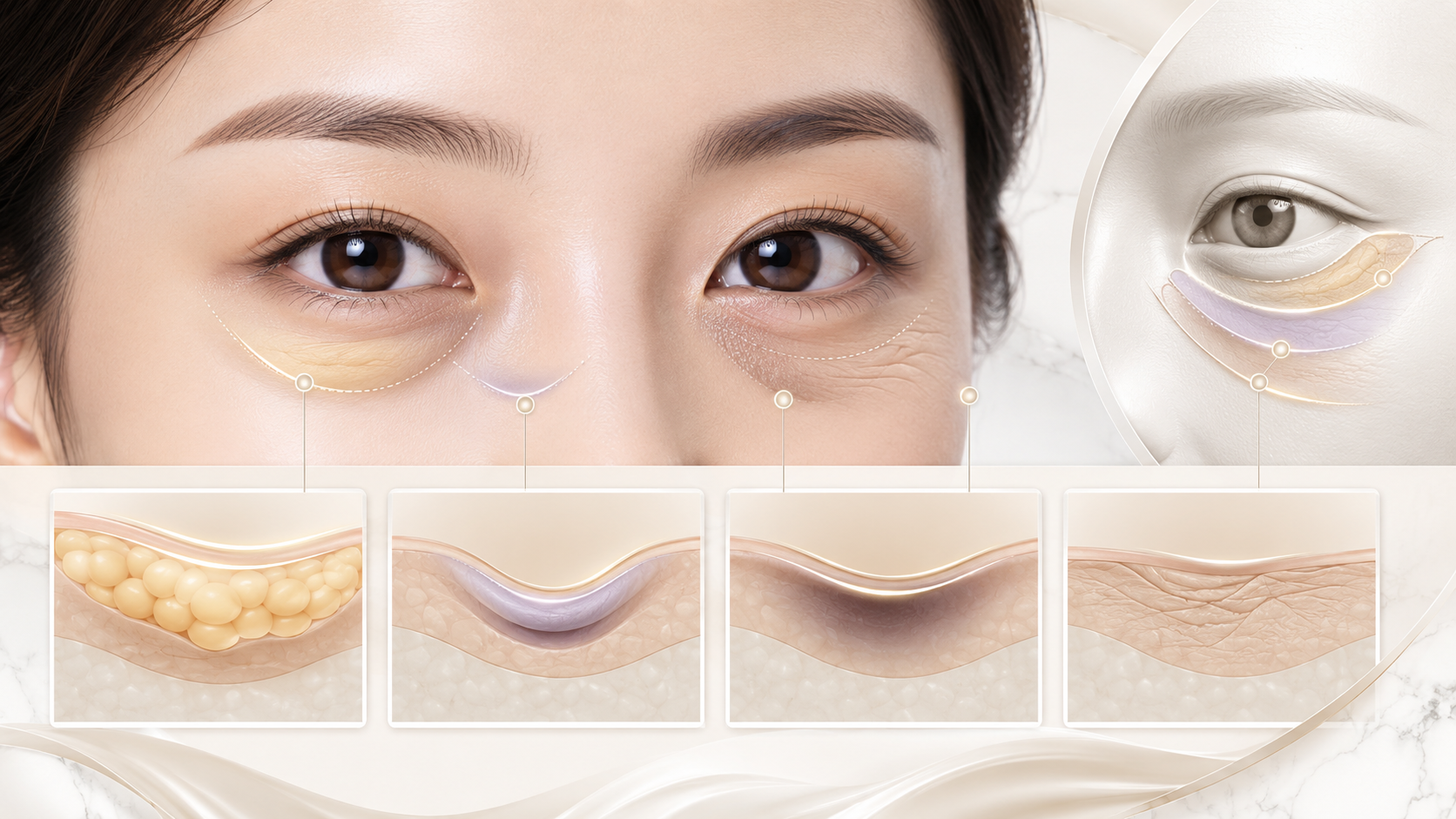
Skin sagging
A state where the lower-lid skin and muscle sag, showing wrinkles and drooping.
Under-eye fat protrusion
A state where orbital fat pushes forward, looking bulged and casting a shadow.
Tear trough / lower-orbital hollowing
A state where the area below the under-eye is hollowed like a groove, creating dark circles and a tired impression.
Mid-cheek transition hollowing
A state where the transition from the under-eye to the mid-cheek is hollowed, showing a step.
Lower-lid elasticity / eversion risk
When elasticity is weak, the risk of the lower lid being pushed outward (ectropion) upon excessive resection must be considered.
Maxilla / mid-cheek support
Koreans often have weak anterior maxilla and mid-cheek support, so repositioning can be more advantageous than simple removal.
WHY REPOSITION
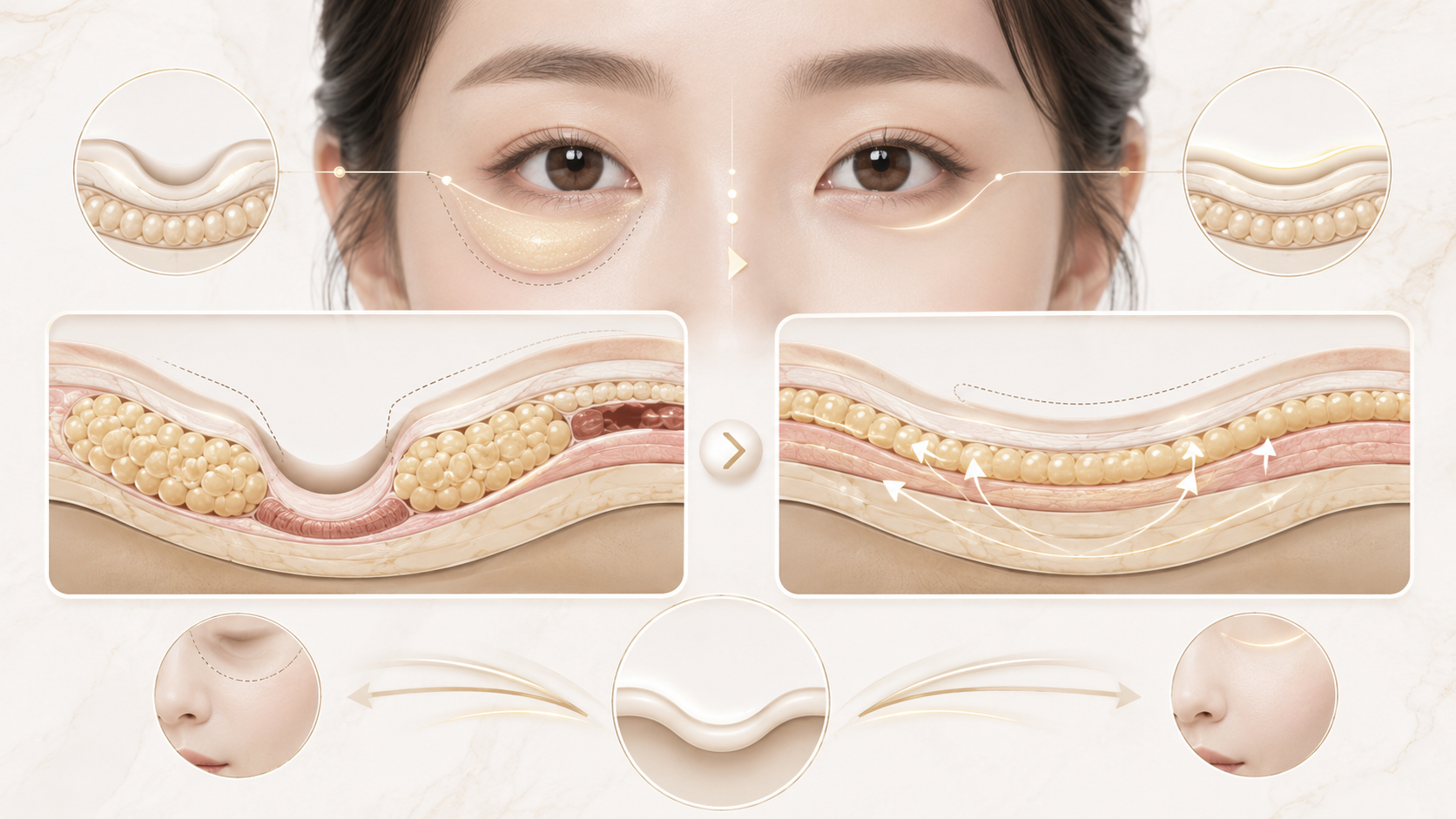
Not removing, but repositioning and reinforcing
Koreans often have weak anterior maxilla and mid-cheek support, so simply removing fat can make the under-eye look more hollow and aged. That is why repositioning the protruding fat into the hollowed area can be a more natural choice.
When fat is insufficient or hollowing is severe, the volume that repositioning alone cannot cover can be reinforced with fat grafting (this varies by individual condition).
METHOD
Lower blepharoplasty is designed to the under-eye structure
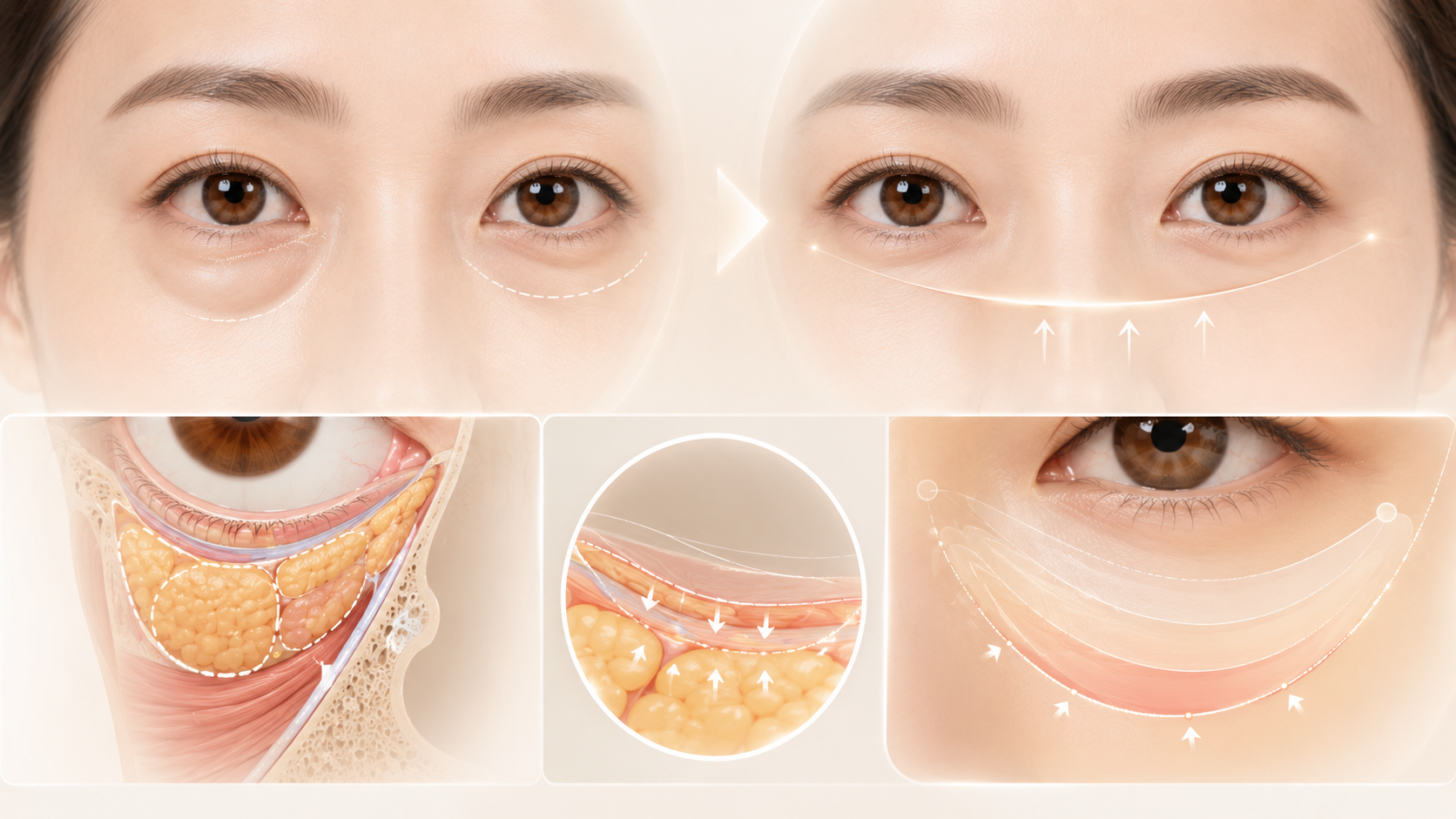
01
Refining skin/muscle sagging
We refine the sagging lower-lid skin and muscle to fit the condition. If elasticity is sufficient, it can be done through a transconjunctival incision.
02
Repositioning protruding fat
Rather than removing bulged orbital fat outright, we reposition it toward the hollowed under-eye and tear trough to create a smooth transition.
03
Fat grafting for lacking volume
If repositioning alone is not enough, fat grafting to the tear-trough, under-eye, and mid-cheek areas can be combined (varies by individual condition).
04
Considering lower-lid support / eversion
We design conservatively, considering lower-lid support and eversion risk together. We avoid a hollow-looking result from excessive resection.
REPOSITION + FAT GRAFT
If repositioning alone is not enough, fat grafting can be combined
If the following apply, fat grafting to the tear-trough, under-eye, and mid-cheek areas may be combined. Whether it is needed is judged in consultation according to your individual under-eye structure.
NB DIFFERENCE
Features of NB lower blepharoplasty
Repositioning over simple removal
We don't remove fat outright. We prioritize repositioning the bulged fat into the hollowed under-eye to create a natural transition.
Including the tear trough and mid-cheek
Rather than the under-eye alone, we look at the tear trough, lower orbit, and mid-cheek transition together. A step-free, continuous under-eye can contribute to a younger-looking impression.
Choice of incision
Depending on skin elasticity, we choose a transconjunctival (non-skin-incision) or a sub-eyelash incision. We design so the scar isn't noticeable.
Eversion-risk-minimizing design
We design conservatively, considering lower-lid support. We avoid a result where the under-eye is hollowed or pulled from excessive resection.

SURGEON-LED CONSULTATION
Whether removal is right or repositioning is right, first
We look at fat protrusion, hollowing, the tear trough, the mid-cheek transition, and lower-lid elasticity together and guide which direction — removal, repositioning, or fat grafting — suits you. The same doctor is in charge from consultation through surgery.
AFTER LOWER BLEPHAROPLASTY
A refined under-eye makes the impression look brighter

RECOVERY
Recovery timeline
Day 1–5
Early recovery
Early swelling & bruising
Week 1–2
Bruising eases
Return to daily life possible
Month 1
Swelling settles
Under-eye line refined
Month 3
Final result
Natural under-eye complete
FAQ
Frequently asked questions
Q. If I remove under-eye fat, won't it hollow?
Removing it outright can look hollow. We fill the hollowed area with fat repositioning, and if insufficient, combine fat grafting to create a natural under-eye.
Q. Do you do fat repositioning and fat grafting together?
When orbital fat is insufficient or hollowing/tear trough is deep, they can be combined. We guide it in consultation according to your individual under-eye structure.
Q. Will the under-eye surgery scar show?
With a transconjunctival incision, there is no external scar. If a skin incision is needed, we incise beneath the eyelashes so it isn't noticeable.
Q. Can I work during the recovery period?
The first 1–2 weeks with bruising and swelling can be uncomfortable. A light return to daily life is possible after about 2 weeks.
RELATED CHECK
Under-eye bulge and hollowing,
check the cause first
Under-eye bulge and hollowing can have different causes. Self-diagnosis is for reference; the final judgment is decided in consultation with the doctor.
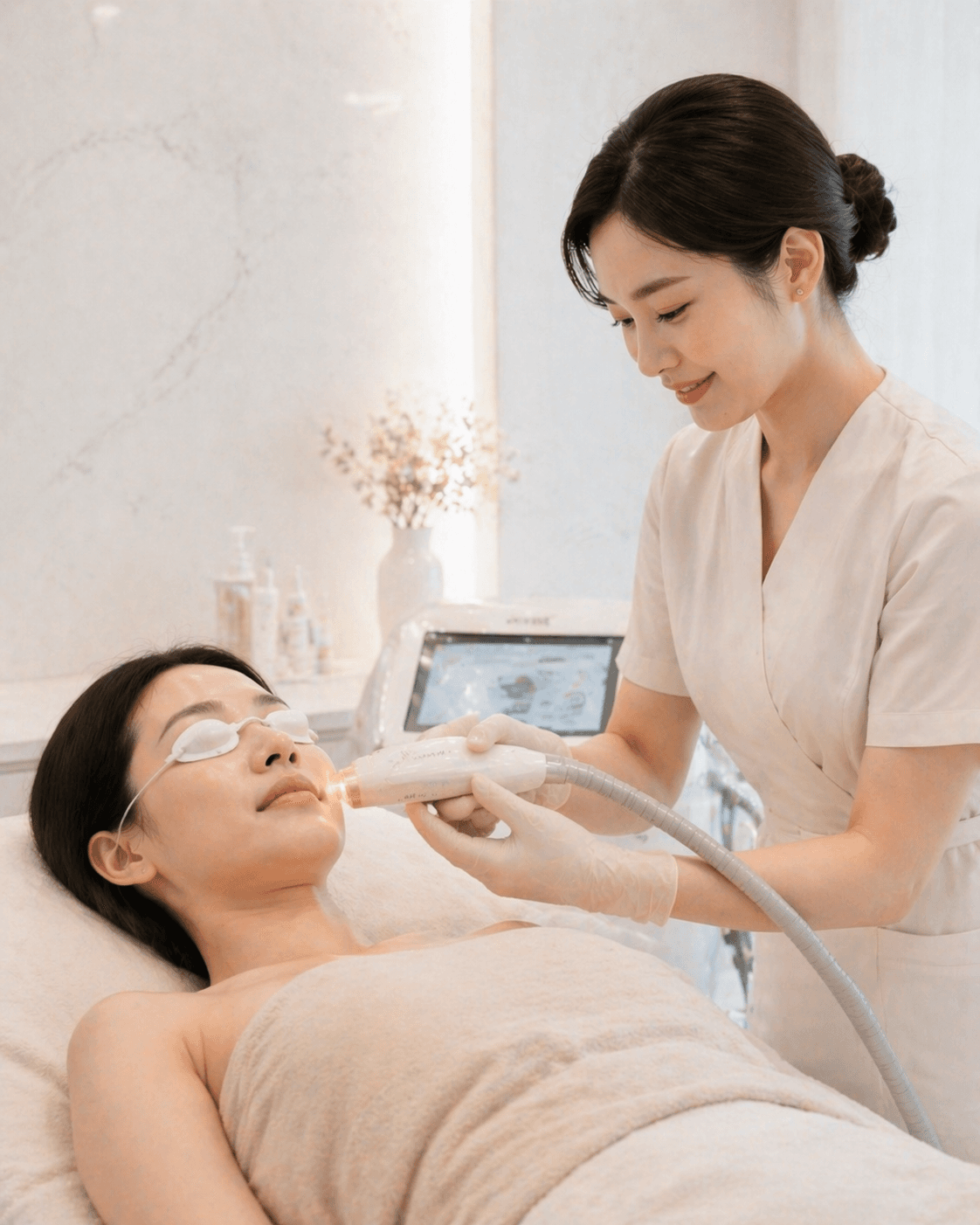
After surgery, through swelling and scar care
Included Value
Based on standard market price
- 01VersaClear light therapy2 sessions
- 02Ucell standing-wave therapy2 sessions
- 03
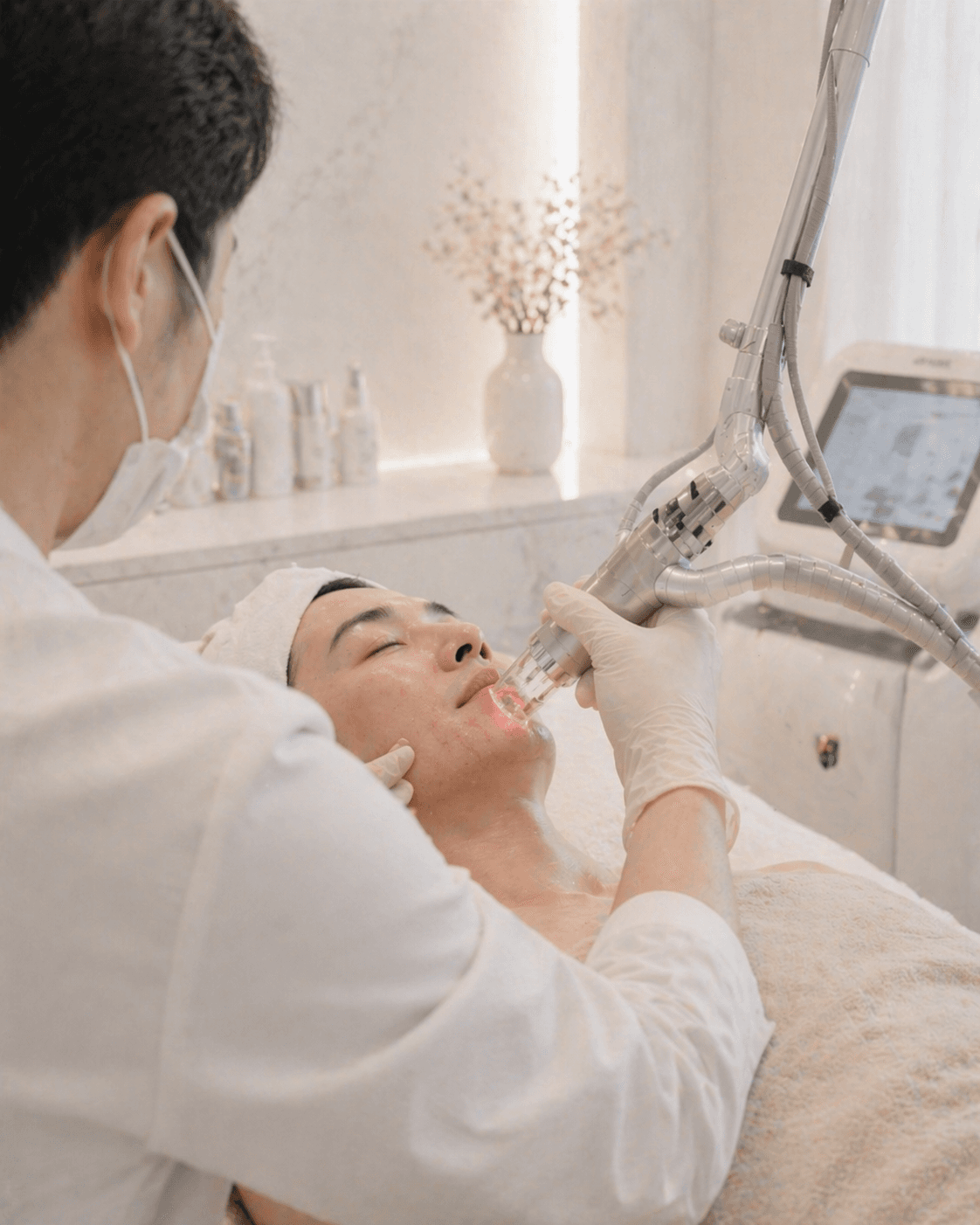 Fraxel scar laser· Performed by the doctor2 sessions
* Soft-meso injection is available if lumping occurs
Included in the surgery cost.
If additional care is needed, NB surgery patients receive a 50% discount
Legal Notice
※ If care cannot be provided due to reasons such as equipment malfunction, the affected care item may not be offered; as a service item, it is non-refundable.
※ Depending on your constitution and healing process, side effects such as swelling, bruising, inflammation, and scarring may occur after surgery.

NB LOWER BLEPHAROPLASTY
A consultation on the lower-blepharoplasty method that suits your under-eye structure
Whether to remove or reposition under-eye fat · including the tear trough and mid-cheek transition\nNB Plastic Surgery, Sinsa, Gangnam