
Unflattering or awkward dimples —
naturally softened
Congenitally clustered dimples, surgically created dimples,
or an unnatural depression that pulls inward when you smile —
a dimple is not a skin problem but an adhesion that moves with your expressions.
A consultation alone is perfectly fine.
If you feel self-conscious
every time you smile in the mirror
- When I smile, my dimples pull too deeply and look awkward.
- Having multiple dimples makes my cheeks look uneven.
- I am unhappy with the placement or shape of my surgically created dimples.
- When I make expressions, my cheeks pull inward unnaturally.
A dimple may not be simply the result of a facial expression —
it can be a dynamic depression where an adhesion between the expression muscles and skin pulls together.
“If it deepens only when you smile,
it may be a structural issue, not a surface one.”
We recommend a consultation in these cases
We evaluate a range of presentations — from congenital and surgical dimples to expression-related pulling.
Congenitally clustered dimples on one or both cheeks
Feeling that the shape or placement of a congenital dimple looks unnatural
Dimples that pull too deeply or unnaturally when smiling
Dissatisfaction with the placement of a surgically created dimple
A surgical dimple that feels too deep or locked in place
A specific area that pulls inward when making expressions, creating an awkward depression
Wanting to reduce or naturally soften a dimple
A dimple is not sunken skin —
it is a depression that pulls with your expression
A fibrous adhesion band formed between the expression muscles and skin pulls the skin inward during smiling — producing a dynamic depression that appears deeper when smiling than at rest.
Even similar-looking dimples can have different underlying structures.
Congenital
A fibrous band structure connecting the expression muscles to the overlying skin.
Acquired (Surgical)
A fixed adhesion formed by suture-related tethering.
We assess separately
at rest and when smiling
Because dimples change with expression, accurate evaluation requires observing both the neutral face and a smiling expression. We assess location, depth, number, expression-related changes, and left-right asymmetry to identify the underlying structure.
Location
Depth
Number
Change with expression
Left-right asymmetry
Release the adhesion, restore the cheek surface
We precisely release the pulling adhesion, prepare the space to help reduce the chance of re-adhesion, and — when needed — use a small amount of micro-autologous fat grafting to support the depression.
Adhesion Release
A specialised instrument is used to precisely release the adhesion band pulling the skin inward.
Space Preparation
The released area is gently prepared to help reduce the chance of re-adhesion.
Micro-Fat Support
When necessary, a small amount of micro-autologous fat grafting is used to support the depression — only as much as needed, not to add volume.
The approach is not about forcibly filling the dimple,
but releasing the pull to design a naturally smooth cheek surface.
The surgeon personally evaluates
expression changes and adhesion direction
Even when dimples look similar, the underlying structure and direction of pull vary from person to person. The surgeon directly observes how the face changes with expression and the direction of the adhesion, then plans a customised approach based on congenital or acquired cause.
- Direct evaluation comparing neutral and smiling expressions
- Distinguishing congenital fibrous bands from surgical suture tethering
- Release extent and supportive correction planned according to cause
- Left-right asymmetry assessed separately to consider balance
A naturally smooth cheek surface
when you smile
As the pulling is eased, the sensation of a specific area drawing deeply inward when smiling may reduce, and the cheek surface can settle into a softer, more natural appearance.
Results vary by individual; details will be discussed during consultation.
Frequently Asked Questions
Q. Is a dimple caused by sunken skin?
A dimple is not simply a sunken skin problem — it can be a dynamic depression where an adhesion between the expression muscles and skin pulls together with each expression. This is why it often appears deeper when smiling than at rest. NB precisely releases this adhesion and, when needed, uses a small amount of micro-autologous fat grafting to support the area and design a natural cheek surface. Results vary by individual; exact assessment follows consultation.
Q. Is the approach different for congenital versus surgical dimples?
Congenital dimples involve a fibrous band structure, while surgical dimples involve a suture-related adhesion — so the cause and location differ. NB first evaluates expression changes and the direction of adhesion before planning the release extent and degree of support to match the cause. Results may vary by individual.
Q. Can a dimple be removed entirely?
We cannot make promises about specific outcomes. NB aims to carefully release the adhesion to soften the depression, prepare the space to reduce the risk of re-adhesion, and use a small amount of micro-autologous fat grafting to create a naturally smooth cheek surface. Whether full removal or gradual softening is appropriate is best determined during consultation.
Q. Will micro-autologous fat grafting make my cheeks look puffy?
A small amount of micro-autologous fat grafting is not intended to add volume — its purpose is to support the depression and help reduce re-adhesion. Only as much as necessary is used to maintain a natural cheek contour.
Q. Can asymmetric dimples also be evaluated?
Asymmetric dimples often involve stronger adhesion on one side. Both sides are assessed separately — examining location, depth, and expression changes — and the approach aims to improve balance.
Q. I had a dimple procedure elsewhere before. Can I still come in for a consultation?
Concerns about surgical dimple placement or unnatural pulling are welcome topics for consultation. However, the approach may differ depending on the previous procedure method and tissue condition, so assessment follows examination.
Q. How long is the recovery?
Returning to daily activities is typically possible within 3–5 days, with swelling gradually settling over about 2 weeks. A naturally smooth cheek surface tends to stabilise over 1–3 months. Results vary by individual.
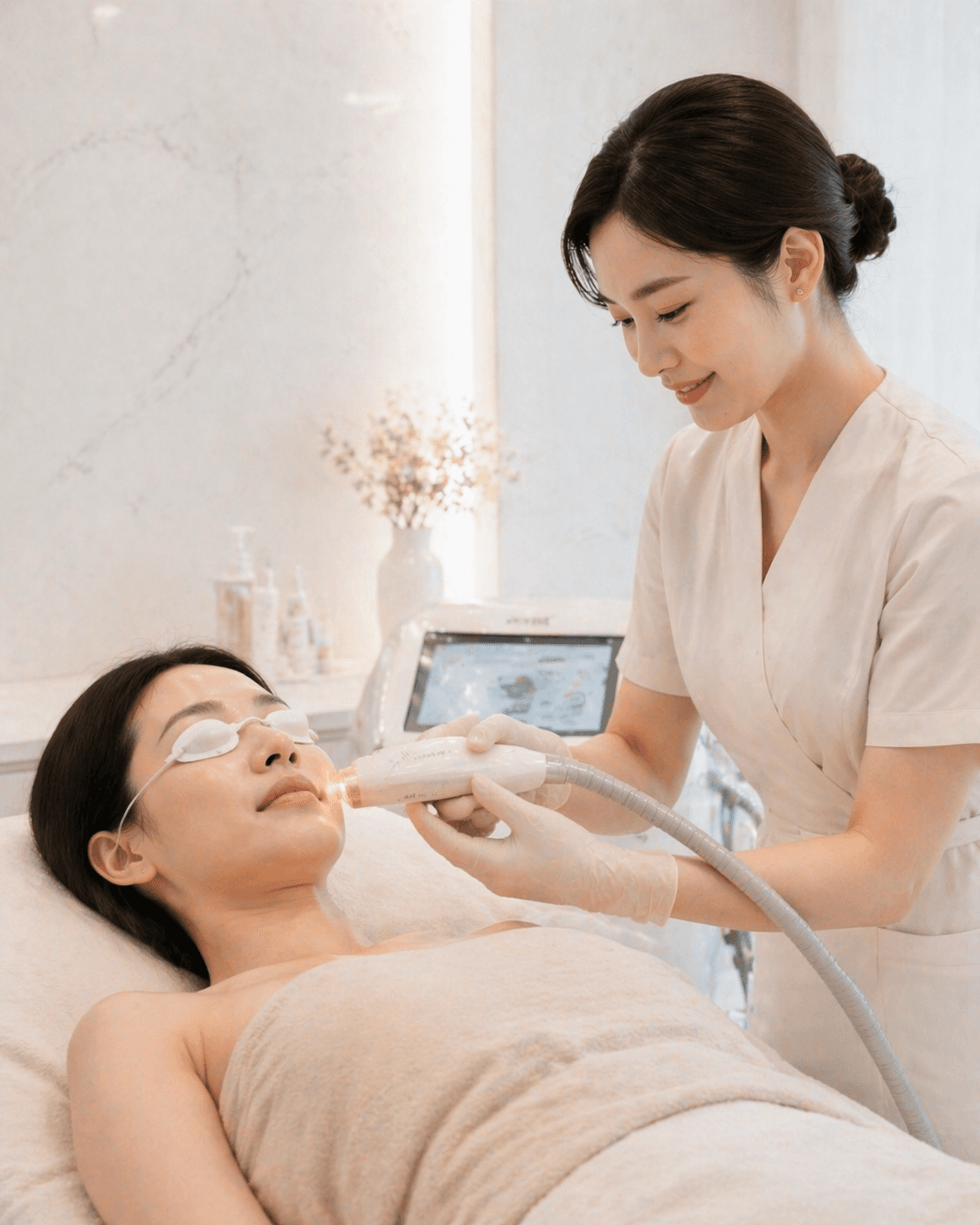
After surgery, through swelling and scar care
Included Value
Based on standard market price
- 01VersaClear light therapy2 sessions
- 02Ucell standing-wave therapy2 sessions
- 03
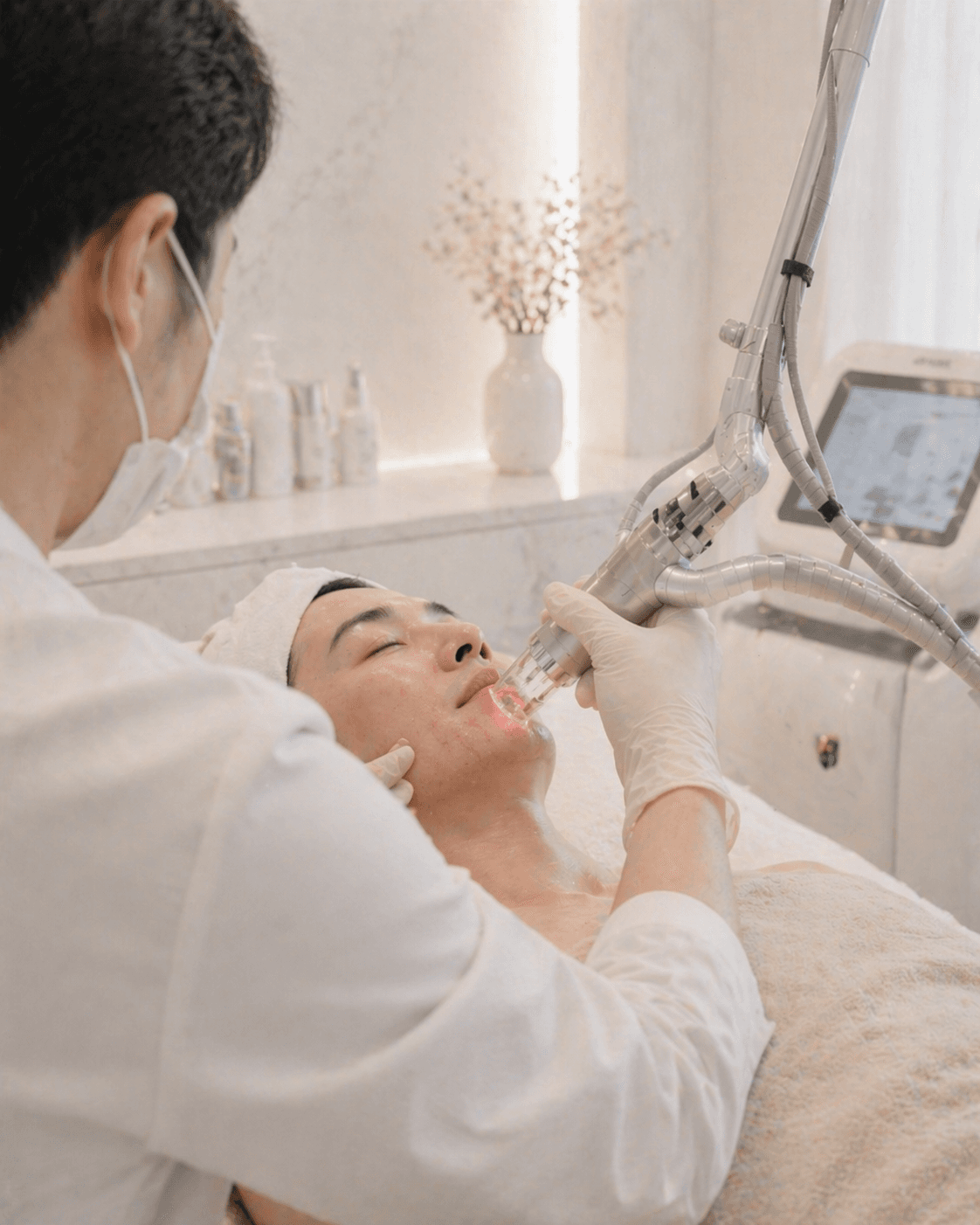 Fraxel scar laser· Performed by the doctor2 sessions
* Soft-meso injection is available if lumping occurs
Included in the surgery cost.
If additional care is needed, NB surgery patients receive a 50% discount
Legal Notice
※ If care cannot be provided due to reasons such as equipment malfunction, the affected care item may not be offered; as a service item, it is non-refundable.
※ Depending on your constitution and healing process, side effects such as swelling, bruising, inflammation, and scarring may occur after surgery.
Find out whether your dimple can be reduced
or naturally softened —
discuss it in a consultation
A dimple may be an adhesion that moves with your expressions.
The first step is an accurate assessment of your current condition.
A consultation alone is perfectly fine.
You can take your time deciding.
Coming alone is no problem at all.