

NB Full Body Design Lipo
Not draining the whole body at once, but designing balance in stages
We look at your whole silhouette first,
then complete it area by area within a safe range — full-body body design
Quick Type Check
What concerns you most right now?
Get a consultation for my body typeYour Concern
Do any of these sound like you?
- My body shape doesn't change even when I lose weight
- My overall figure feels heavy
- Each area looks disconnected from the others
- Reducing just one area actually made it look awkward
Body shape is about “proportion,” not individual parts
Staged Full Body Plan
Full-body design is not a one-and-done surgery
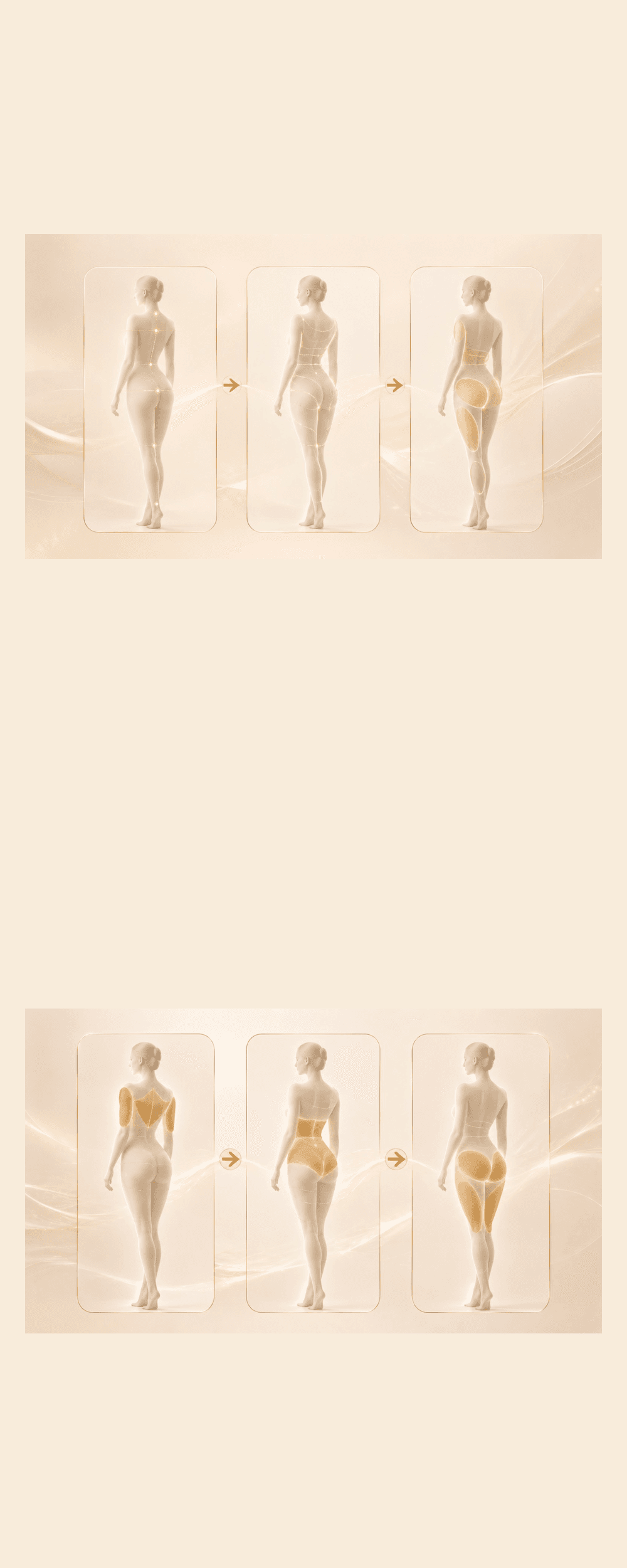
Full-body liposuction is surgery that considers the balance of the whole body, but forcing every area at once is not a good plan. NB first designs the overall silhouette, then proceeds area by area in stages, taking anesthesia time, the amount of anesthetic used, recovery burden, the possibility of swelling and bleeding, and individual stamina and tissue condition into account.
Stage 1
Core silhouette design
We first assess the areas that most influence overall proportion, such as the abdomen, waist, flanks, and thighs.
Stage 2
Refining the connecting lines
We refine flows that appear to break, such as the bra line, love handles, pelvis, hips, and the hip-to-thigh connection.
Stage 3
Fine-tuning the balance
Observing how the lines change and how the tissue settles after recovery, we refine detail areas where needed.
The actual number of sessions and scope can vary depending on each person's fat layer, skin elasticity, any existing adhesion, and stamina and recovery status.
Usually carried out over 2–3 sessions, spaced about 1–2 weeks apart while checking recoveryFull-body design is not done by treating the whole body at once; it is a plan that divides areas by calculating the surgical scope together with anesthesia time, the amount of anesthetic used, the possibility of swelling and bleeding, and recovery burden. The interval between stages is generally reviewed on the basis of about 1–2 weeks, but the actual schedule can vary with individual stamina and tissue condition, prior surgical history, and the course of recovery.
Why NB
Why full-body design
Full-body design shapes the flow of the line,
not individual parts
01
Total Design
We design your whole-body proportion as a single flow
We don't view the waist, abdomen, hips, thighs, and arms in isolation. We design them as one continuous flow so that your whole-body proportion connects naturally.
02
Connection Line
The connecting lines have to look natural for the whole figure to change
The boundary between waist and hip, the link from hip to thigh, the join between shoulder and arm — when these connecting lines are smooth, the entire silhouette changes.
03
Priority Design
We design in stages, weighing the priority of each area
We consider the overall silhouette together from the very start, but the actual surgical scope is planned in separate stages, taking anesthesia time, recovery burden, stamina, and tissue condition into account.
04
Revision Ready
We also account for any history of revision or adhesion
Even with an imbalance from a previous procedure or a history of adhesion, we re-analyze on a whole-body basis and redesign a natural overall line.
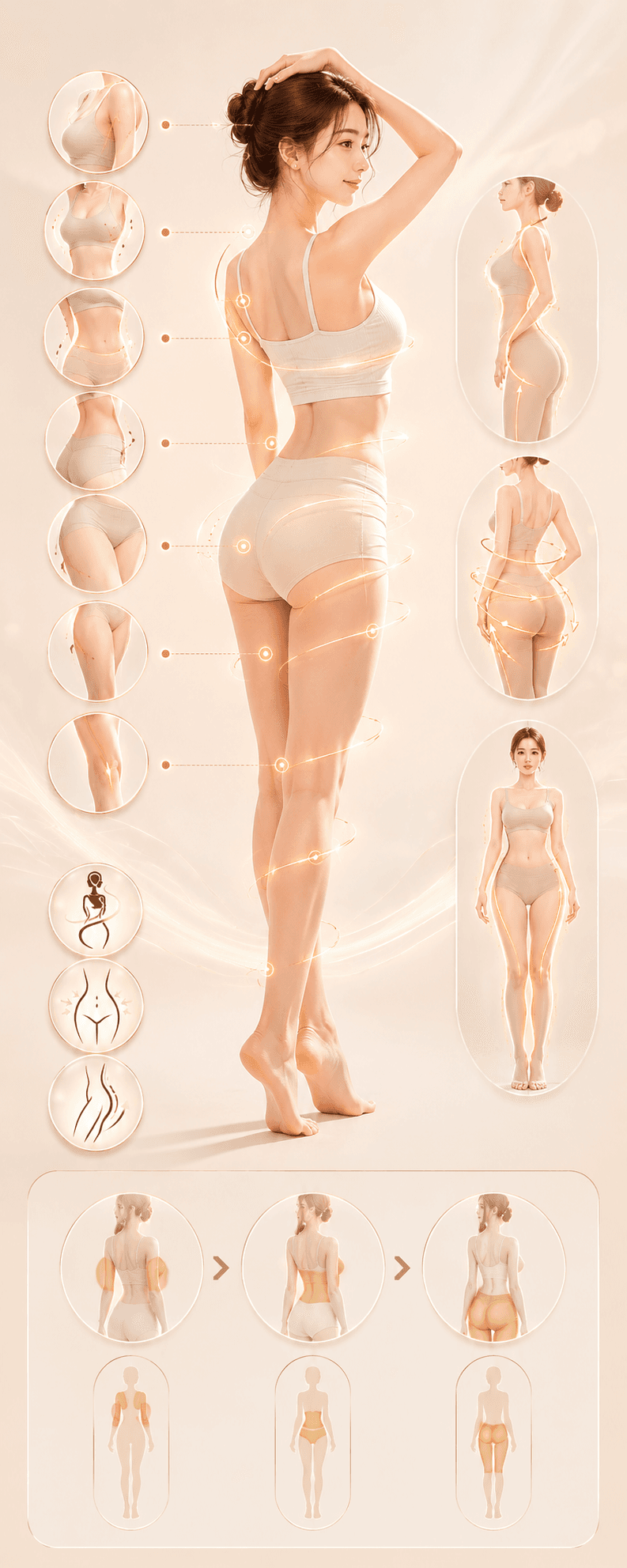
Key Connection
We view the whole-body line as 7 connecting segments
01
Shoulder–bra line connection
This is where the upper-body line begins. If the shoulder and bra line break apart, the upper body can look heavy from the front, so we assess it together with the flow of the back.
02
Bra line–waist connection
This is the flow that links the upper body to the waist. When the back and flanks connect smoothly, the line reads naturally even through clothing.
03
Abdomen–flank connection
This segment shapes both the front and side impression together. Refining only the abdomen can make the flanks stand out, so we look at the flow of both areas together.
04
Waist–pelvis connection
This is the key segment where the curve begins. The waistline can be influenced more by the angle of the flow into the pelvis than by thickness alone.
05
Pelvis–hip connection
This is the segment where the balance of the rear silhouette is formed. If the pelvis and hip don't connect naturally, the line can look flat.
06
Hip–thigh connection
This is the segment that determines the side-profile curve. We design it together so the flow from the under-hip line into the top of the thigh doesn't break.
07
Thigh–above-knee flow
This is the finishing segment of the lower-body line. Refining only the thigh can leave the above-knee line looking awkward, so we assess through to the finishing flow.
The scope and order of the connecting segments can vary depending on individual body shape, fat layer, skin elasticity, adhesion status, and prior surgical history.
Design Solution
Which whole-body type is closest to yours?
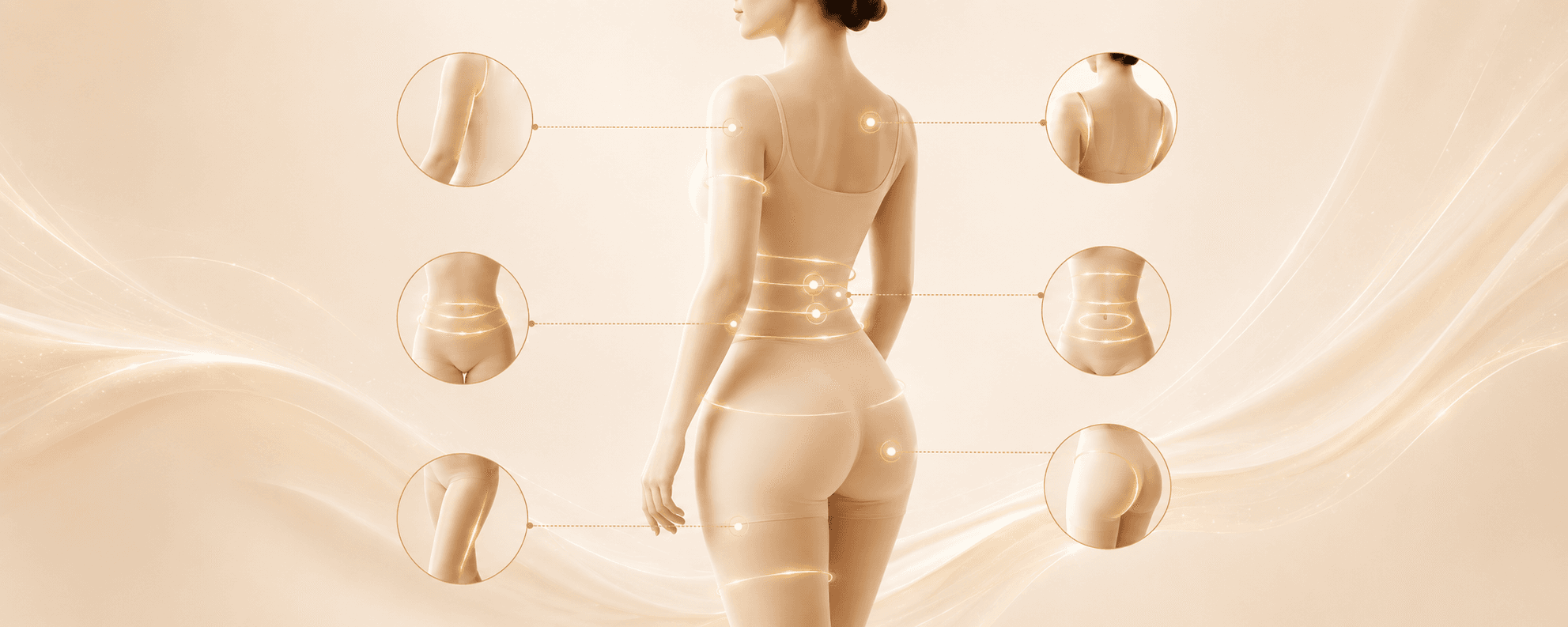
Whole-body type is judged by looking at how the upper body, waist, pelvis, and lower body flow together, rather than the size of a single area.
Upper-lower imbalance type
→Balance Design
Whole-body proportion redesign
We analyze the upper-to-lower-body proportion as a whole and redesign it into a balanced silhouette
Learn more →No-waistline type
→Waist Line
Waist–abdomen–hip connection design
We integrate the flow from waist through abdomen to hip into a single, unified line
Learn more →Full-body design can't be done with a single method which is why the approach changes with your body structure and goals
Procedures
Full-body design solutions by body type
① Upper-lower imbalance type
Whole-body proportion redesign
Analyze the upper-to-lower-body proportion as a whole and redesign it into a balanced silhouette
② No-waistline type
Waist–abdomen–hip connection design
Integrate the flow from waist to hip into a single, unified line
③ Overall heaviness type
Stage-by-stage scope design
Consider whole-body fat distribution while setting area priorities within a safe range
④ Partial-revision type
Whole-body balance readjustment
Realign the imbalance that appeared after a partial procedure on a whole-body basis

It's not that you've lost weight —
your proportions look different
Expected Results
When the whole-body line is refined, the entire impression of your figure changes
Improved upper-lower proportion
A previously unbalanced figure moves toward an overall balanced silhouette
A defined waist–abdomen line
A waistline that wasn't there emerges, changing the impression of the whole figure
Natural connecting lines
Lines that used to look disconnected between areas flow together naturally
A change across fit and silhouette
A silhouette refinement that changes how your figure reads in clothes
Recovery Plan
Full-body design also factors in the recovery burden

FAQ
Full-Body Design Liposuction — Frequently Asked Questions
In which cases is full-body liposuction suitable?
Full-body design is an approach considered for those who want to view their whole-body silhouette and proportion together, rather than the thickness of a single area. That said, it is not a procedure recommended equally for everyone; suitability and scope can vary with body shape, fat layer, skin elasticity, stamina, and prior surgical history, so it is guided after consultation and assessment.
Is it better to treat several areas together?
Treating more areas together does not automatically mean a better result. With full-body design, first planning the overall silhouette and then treating areas in stages within a safe range can support more precise design and a more stable recovery.
Can full-body liposuction all be done at once?
Full-body design is a plan that looks at the balance of the whole body together, but for safety the actual surgical scope is often carried out in separate stages. Taking anesthesia time, the amount of anesthetic used, bleeding, swelling and recovery burden, and individual stamina and tissue condition into account, it is often planned across 2–3 sessions, or more stages if needed. Between stages we usually allow an interval of about 1–2 weeks and check on recovery, but the specific scope and order can change after consultation and assessment.
How long is the recovery period?
The point of return to daily life and the pace at which swelling and bruising resolve differ depending on the surgical scope and individual tissue condition. Generally, swelling and bruising gradually stabilize over several weeks, and the lines settle naturally over the course of several months. In the case of staged treatment, the timing of the next stage is decided after checking recovery status.
How are scars or marks managed?
Incisions are designed to be as minimal as possible, but marks can remain depending on the recovery process and individual skin characteristics. NB manages this together with you through recovery care and aftercare so that any marks settle as naturally as possible.
What if I have skin laxity?
When skin elasticity has changed, removing fat alone may not fully refine the line. During assessment we check your skin elasticity together and then advise whether to combine tightening or supplementary procedures; the approach varies with your individual skin condition.
Is revision surgery possible?
Re-correction after a previous procedure, or correction where adhesion is present, is possible in some cases. However, the approach differs depending on the previous surgical method, the current degree of adhesion, and skin elasticity, so feasibility and scope are guided after assessment.
How are the lines maintained after full-body liposuction?
The lines settle over the course of several months, and how they are maintained afterward can vary with individual skin elasticity, weight changes, lifestyle habits, and the pace of aging. NB places importance on looking beyond the moment right after surgery — at the process by which the lines settle stably and at aftercare — together with you.
This information is general guidance and does not replace a medical consultation.
NB AFTER CARE
As important as the surgery itself:
Post-operative care
At NB Plastic Surgery, we give full attention not only to the surgery but also to post-operative dressing and aftercare, aiming to support the best possible results.
The aftercare below is provided as standard after surgery.
01 · 4 swelling-care sessions
Swelling recovery care
- Versa Clear light therapyVersa Clear
- U-Cell standing-wave circulation careU-Cell
02 · 4 firmness-care sessions
Easing firmness and fibrosis
- Radiofrequency massage care
- Soft-meso injection, 2 sessionsHelps shorten fibrosis · additional fat reduction
03 · 2 scar laser sessions
Minimizing scars
- MiXto Evolution fractional laserMiXto Evolution · CO₂ Fractional
04 · Rigorous surgical principles
A safety-first system
- Managed schedule of 1–2 surgeries per day
- Thorough pre-operative screening · fasting of 8 hours or more
- Surrogate and ghost surgery strictly prevented as a matter of policy
- The head surgeon personally handles consultation, surgery, and follow-up care
If you would like additional care beyond the standard number of sessions, patients who have had surgery at our clinic can receive the same aftercare services at a 50% discount.

After surgery, with you through recovery
- 01VersaClear light therapy2 sessions
- 02Ucell standing-wave therapy2 sessions
- 03Radiofrequency care4 sessions
- 04
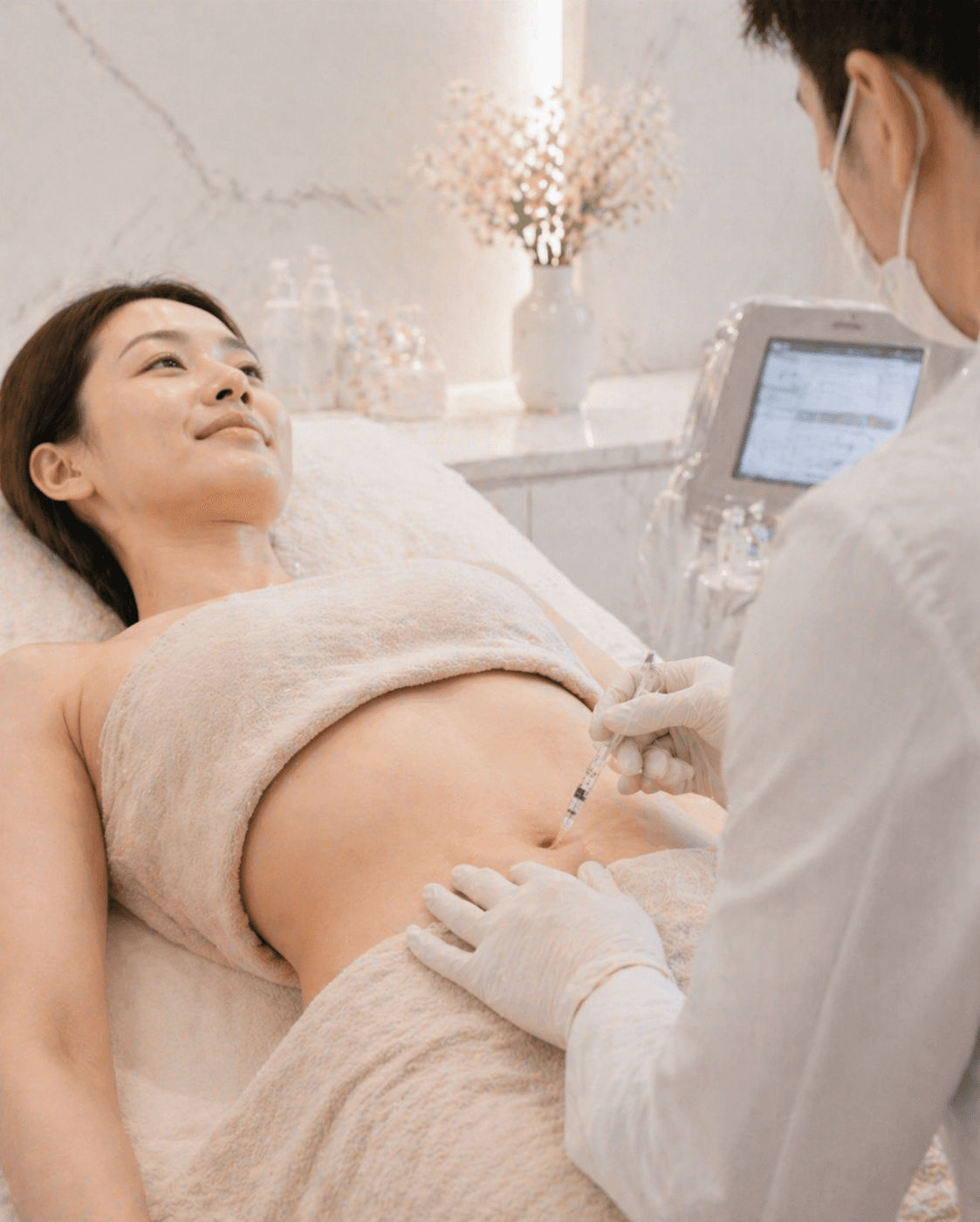 Soft-meso injection· Performed by the doctor2 sessions
 - 05
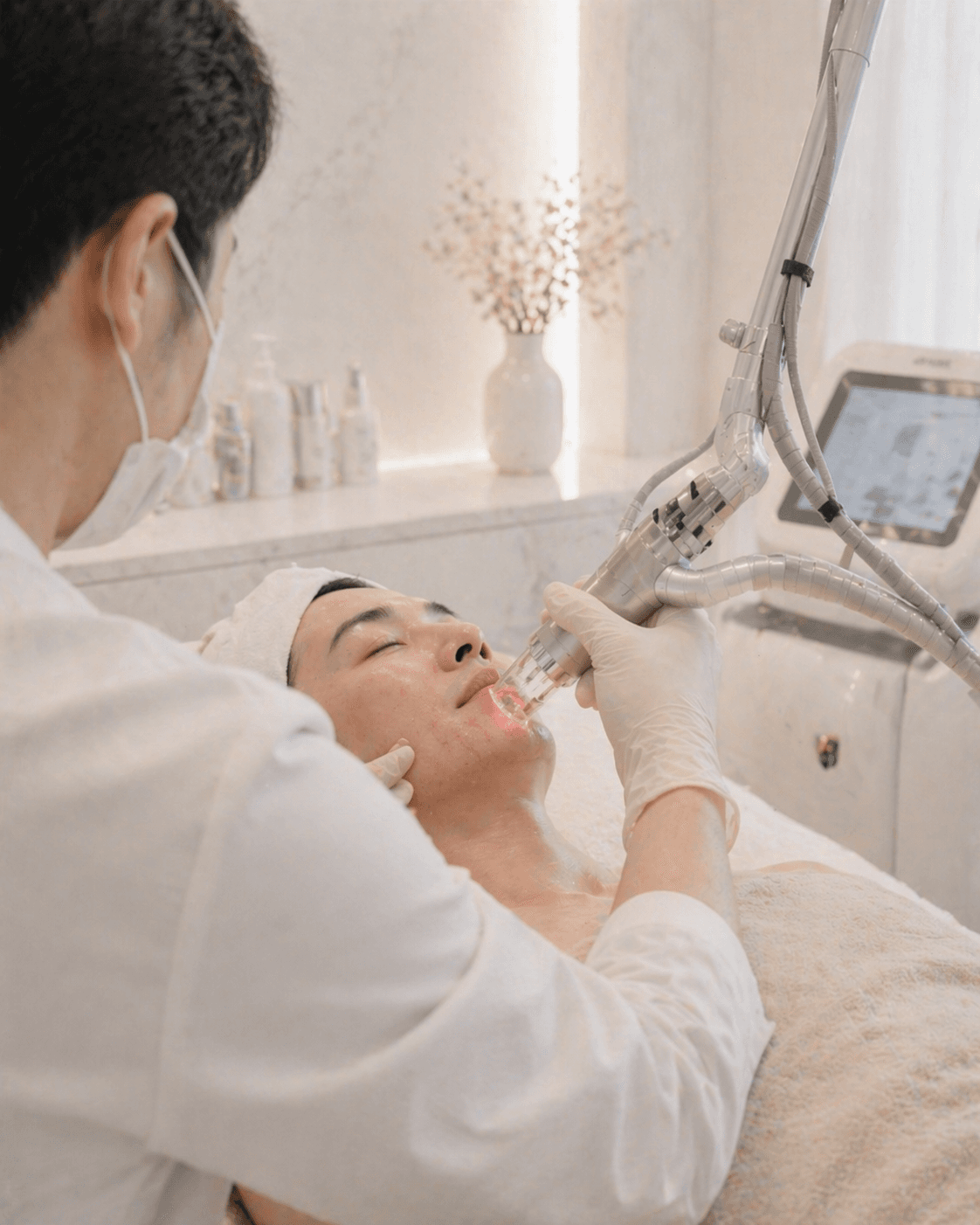 Fraxel scar laser· Performed by the doctor2 sessions
Basic aftercare is provided as a standard programme of 12 sessions in total — 4 swelling-care, 4 radiofrequency, 2 scar-laser and 2 meso-injection sessions. Actual scheduling and completion may vary depending on your ability to attend.
If care is needed beyond the basic aftercare, NB surgery patients receive a 50% discount on the standard price.
Legal Notice
※ If care cannot be provided due to reasons such as equipment malfunction, the affected care item may not be offered; as a service item, it is non-refundable.
※ Depending on your constitution and healing process, side effects such as swelling, bruising, inflammation, and scarring may occur after surgery.
Where should my line design begin?
Even within the Signature 7, the starting point can differ. Reading the paired line together makes a more natural plan possible.
Full-Body Design Liposuction
An integrated design that plans the abdomen, waist, thighs and arms as one whole-body proportion.
Current pageThigh 360 · Heoeongmu
A lower-body connection plan that tidies the inner, outer and rear thigh through 360 degrees.
See in detail →S-line waist and back
Planning a rear-view line that joins the flank, back and waist curve into one flow.
See in detail →HD 11-Line Abs
Abdominal design that brings out a feminine vertical line naturally.
See in detail →NB Full Body Design Liposuction
Approaching the whole body area by area can leave the overall line looking awkward — let's talk through your full-body design plan
See a whole-body line design tailored to your body shape for yourself
NB Plastic Surgery, Sinsa, Gangnam
02-3446-7575 · 02-3446-9009