

Epicanthoplasty
From the inner corner to the outer corner, only the direction needed, naturally
Epicanthoplasty is not one thing. From a medial-epicanthoplasty, to a medial-upward vector adjustment, to a lateral/lower canthoplasty,
we examine the inner corner, outer corner, and lower-lid line and design only as much as needed, naturally.
YOUR CONCERN
Do you have concerns like these?

- My eyes look small and stuffy
- An epicanthal fold is covering my eyes
- My eyes look too close-set
- I have double eyelids but my eyes look small
TYPES OF TRIM
Epicanthoplasty is not one thing
The design changes depending on which you focus on — the inner corner, the medial-canthus direction, or the outer-corner/lower-lid line. Rather than opening wide across the board, NB designs only the direction needed, naturally.
Medial
Medial epicanthoplasty
A design that opens the epicanthal fold and stuffy inner corner only as much as needed. We design it without overdoing it, considering the inter-eye distance and the double-eyelid line connection together.
Medial-Upward Vector
Medial-upward epicanthoplasty
Not a separate, exaggerated procedure, but a design that adjusts the direction of the medial epicanthoplasty. When the inner corner sits somewhat low or the outer corner appears relatively raised, opening the inner corner in a medial-upward (about 45° upward) direction helps the inner-corner vector and eye slant look a little softer.
Lateral / Lower
Lateral/lower canthoplasty
A design that looks at the outer-corner direction, the lower-lid line, and the horizontal eye length together. We distinguish lateral, lower, and combined canthoplasty and design within a natural range, without over-opening or conjunctival show.
A medial-upward epicanthoplasty is not a procedure that corrects eye-opening strength. Eye-opening (levator) issues are the domain of ptosis correction (Müller tucking, etc.); a medial-upward epicanthoplasty is a design that adjusts the inner-corner direction and medial-canthus vector. The degree of effect may vary by condition, so the scope is checked first in consultation.
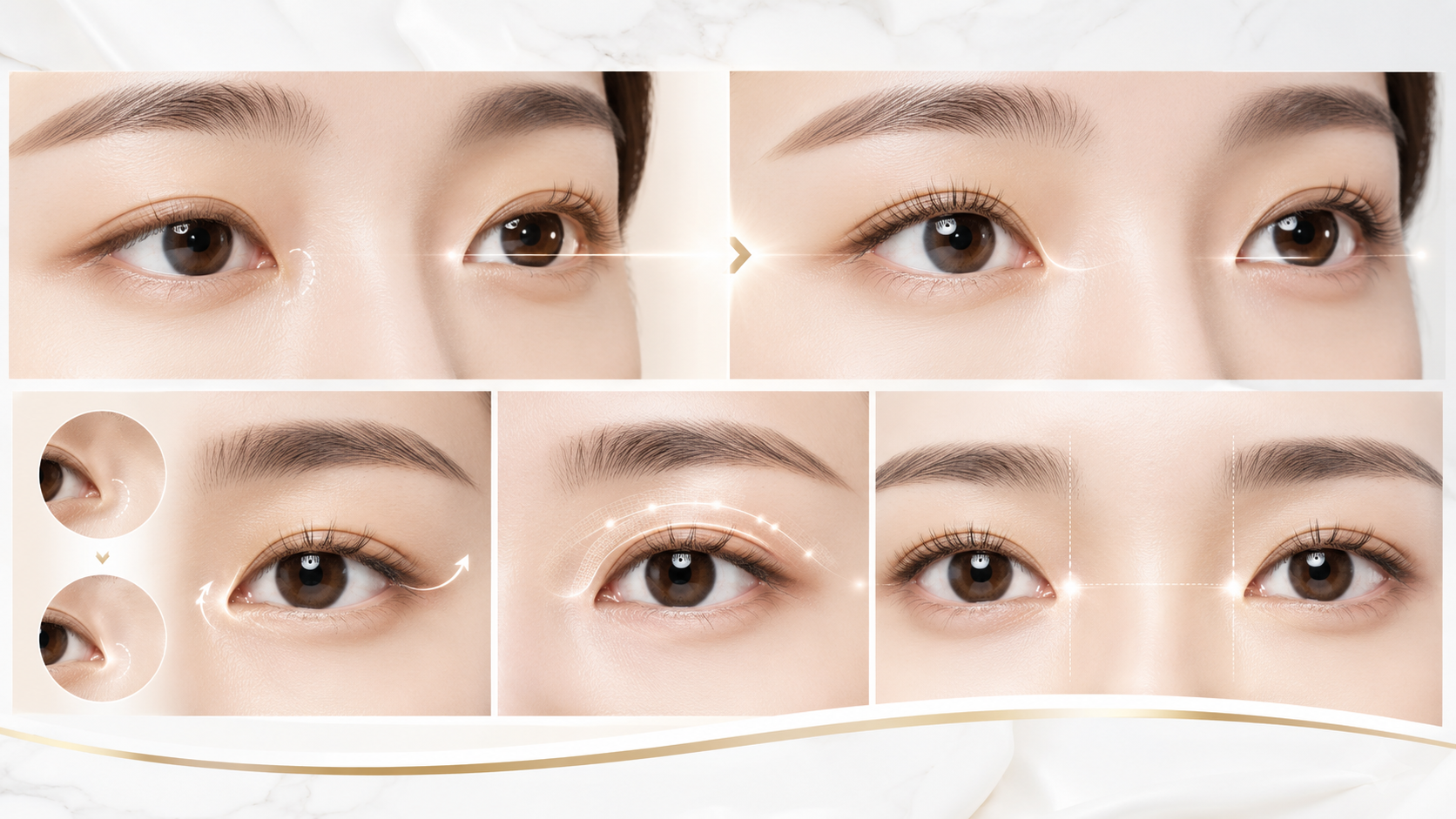
DESIGN POINT — Medial epicanthoplasty
Not opening across the board,
but designing only as much as needed
A medial epicanthoplasty opens only as much as needed, considering the inter-eye distance and eye harmony. Overdoing it can look unnatural and make the eyes appear crowded, so we design the inner-corner exposure and the double-eyelid line connection together.
SUITABILITY CHECK
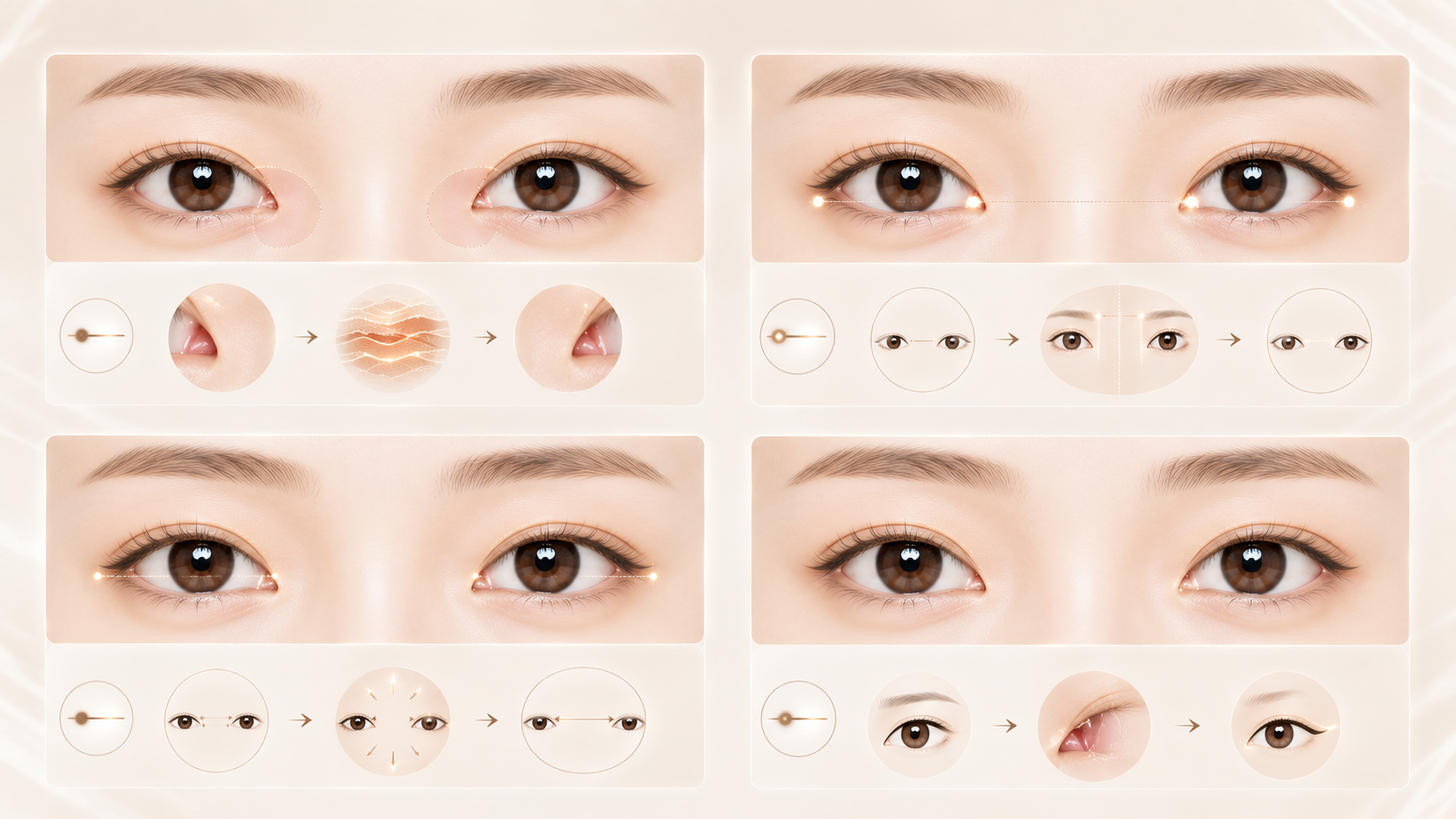
Eyes that need it,
eyes that must not overdo it
Eyes with a prominent epicanthal fold covering much of the eye and a wide inter-eye distance benefit greatly from a medial epicanthoplasty. Conversely, eyes that are close-set or have a faint epicanthal fold should avoid an excessive medial epicanthoplasty to stay natural.
MEDIAL-UPWARD VECTOR — Medial-upward epicanthoplasty
Not an ‘upper-opening,’
but a directional design of the medial epicanthoplasty
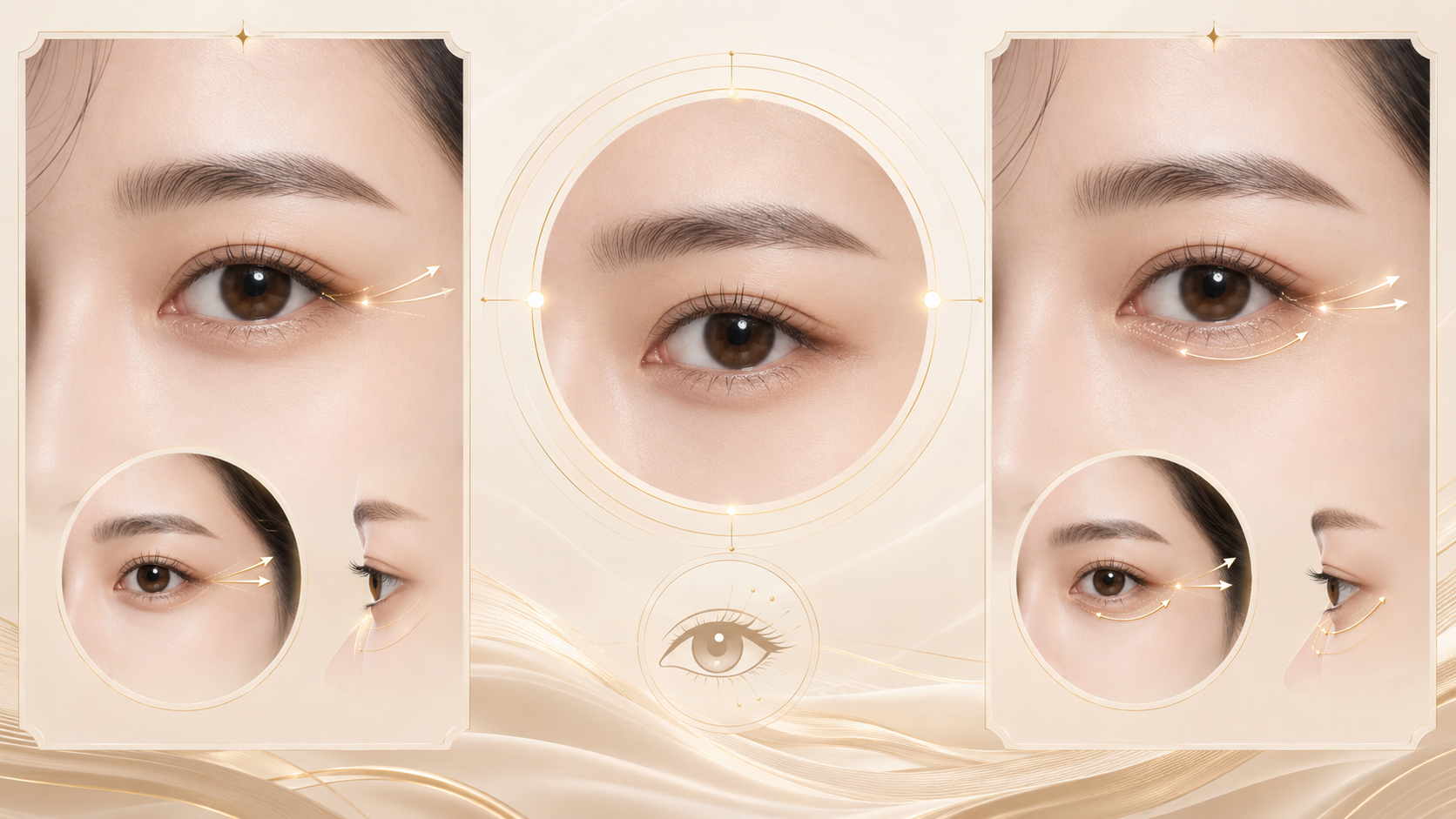
The term ‘upper-opening’ used in the market is ambiguous because it means different things at different clinics. NB does not use it as a separate, exaggerated procedure name, but explains it as a design that adjusts the direction (vector) of the medial epicanthoplasty.
When the inner corner sits somewhat low or the outer corner appears relatively raised, opening the inner corner in a medial-upward (about 45° upward) direction can help the inner-corner direction and eye slant look a little softer.
It is not a procedure that changes eye-opening strength. Eye-opening (levator) is the domain of ptosis correction (Müller tucking, etc.); a medial-upward epicanthoplasty is a design of the inner-corner direction and medial-canthus vector. Rather than completely changing the eye slant, it is a concept that helps it look softer depending on the condition, so suitability and scope are checked first in consultation.
LATERAL / LOWER — Lateral/lower canthoplasty diagnosis
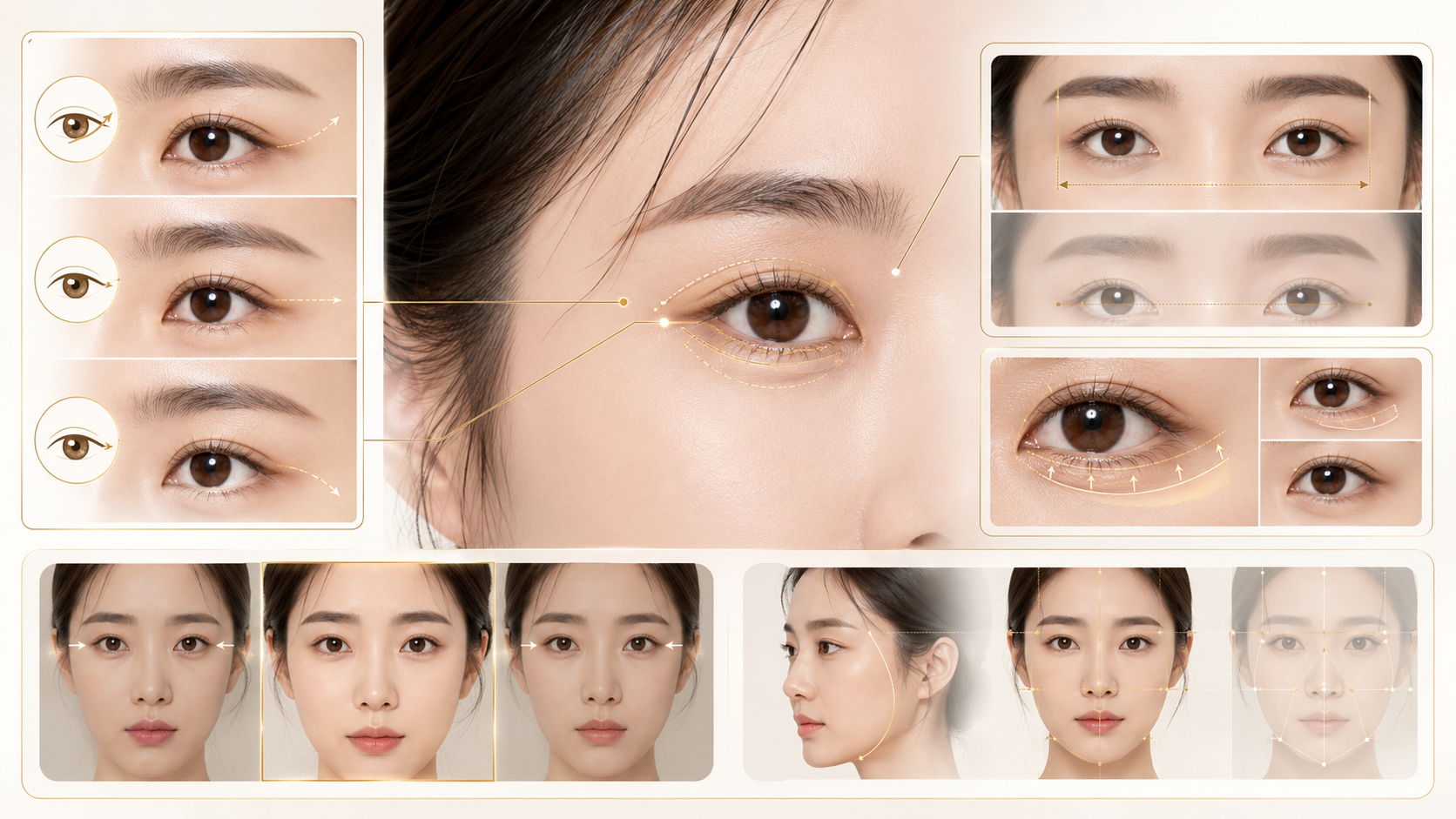
The outer corner and lower-lid line are
a design of reading the direction
A lateral/lower canthoplasty looks at the outer-corner direction, the horizontal eye length, the lower-lid line, and the facial proportion together. Rather than opening the eye wide across the board, we first judge where and how much can be opened while staying natural.
LATERAL / LOWER — Lateral/lower canthoplasty method
We distinguish lateral,
lower, and combined canthoplasty
Lateral
Lateral canthoplasty
A design that looks at the horizontal length and direction toward the outer corner. Considered when the eyes look short or the outer corner looks closed.
Lower
Lower canthoplasty
A design that looks at the lower-lid line and a soft sense of openness in the eyes. Rather than pulling excessively downward, it is adjusted to the eye's flow.
Combined
Combined canthoplasty
For cases where the outer-corner direction and the lower-lid line must be adjusted together. Rather than always doing lateral and lower together, we distinguish the needed scope.
Excessive opening can look like conjunctival show, an everted appearance, or unnatural eyes. NB prioritizes a change that looks naturally refreshed within a safe range.
PROCEDURE METHOD
Epicanthoplasty methods
Medial epicanthoplasty
Extending horizontal eye length by removing the epicanthal fold
Medial EpicanthoplastyLateral canthoplasty
Refreshed eyes through outer-side extension
Lateral CanthotomyMedial & lateral together
Done together when a larger change is wanted
CombinedNB DIFFERENCE
What sets NB epicanthoplasty apart
- Scar-minimizing precise incision technique
- Natural eye-proportion design
- Double eyelid & ptosis correction can be done together
- Surgery directly by a plastic surgery specialist

DESIGN CONSULTATION
From the inner corner to the outer corner,
we read the direction together
The doctor directly examines the inner corner, the medial-canthus direction, the outer-corner angle, and the lower-lid line together to decide the opening direction. Whether a medial epicanthoplasty, a medial-upward adjustment, or a lateral/lower canthoplasty is needed is distinguished at once.
AFTER DESIGN
Refreshed, clearer eyes,
into a natural everyday

RECOVERY
Recovery timeline
Day 1–3
Early recovery
Early swelling & bruising
Week 1
Suture removal
Return to daily life begins
Month 1
Swelling settles
Eye shape stabilizes
Month 3
Final result
Natural eyes complete
FAQ
Frequently asked questions
Q. Should I get a medial or a lateral canthoplasty?
It depends on your eye shape and the change you want. We guide a method suited to your condition after the doctor's diagnosis.
Q. Won't a scar remain?
The incision line is designed to align with the skin's creases, so over time it becomes almost unnoticeable.
Q. Can it be done together with double eyelid?
Yes. Doing them together can create a more balanced eye proportion.
Q. How much bigger will my eyes get?
It varies by individual eye structure, and we guide the expected range of change in consultation.
RELATED CHECK
Check your opening direction
before the consultation
Which direction you need — medial, medial-upward, or lateral/lower — is confirmed in consultation. Self-diagnosis is for reference.

After surgery, through swelling and recovery
Included Value
Based on standard market price
- 01VersaClear light therapy2 sessions
- 02Ucell standing-wave therapy2 sessions
- 03
 Fraxel scar laser· Performed by the doctor2 sessions
Included in the surgery cost.
If additional care is needed, NB surgery patients receive a 50% discount
NB Double-Eyelid Revision Assurance
If natural loosening occurs within two years after surgery,
we will re-secure it using the buried-suture method.(A separate cost consultation is required if you prefer a different surgical method)
Legal Notice
※ If care cannot be provided due to reasons such as equipment malfunction, the affected care item may not be offered; as a service item, it is non-refundable.
※ Depending on your constitution and healing process, side effects such as swelling, bruising, inflammation, and scarring may occur after surgery.
NB TRIM DESIGN
A consultation on the opening direction that suits your eyes
Whether a medial epicanthoplasty, a medial-upward direction, or a lateral/lower canthoplasty suits you · refreshed eyes without overdoing it — check the scope in consultation first · NB Plastic Surgery, Sinsa, Gangnam