

The hip should not be made bigger but designed to fit its structure
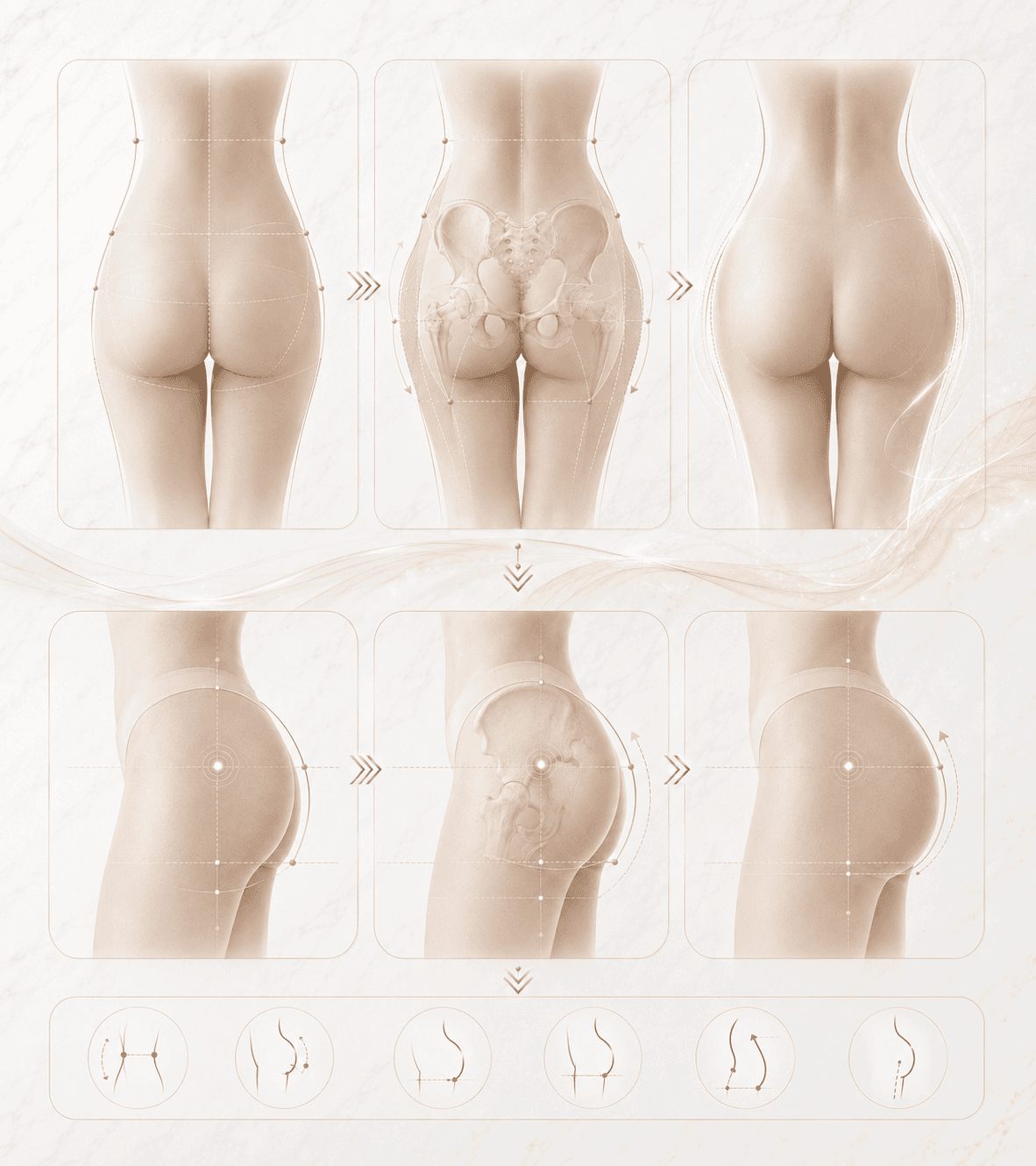
We analyze pelvic height, side hip, upper hip, hip dip, and the infragluteal line together to design a hip line that fits your body.
Do you have concerns like these
- 01
My side hip is flat, so my clothes don't fit well
- 02
My upper hip looks sunken, so my back looks flat
- 03
My hip dip stands out, so the line breaks
- 04
My buttocks look long and square
- 05
The connection between waist and hip isn't smooth
Hip dip, a flat side hip, a sunken upper hip, a long square hip impression — these may not be problems that arise simply from a lack of flesh.
If you're curious about your hip type, check it in consultation
Why the hip line can look different even with the same pelvic width
Even with the same pelvic width, if the vertical length of the ilium is long, the waist space decreases, and because muscle must cover a longer pelvis, the side hip and upper hip can become relatively flat. In this case the vertical length of the buttocks itself increases, which can look square and sagging rather than round.
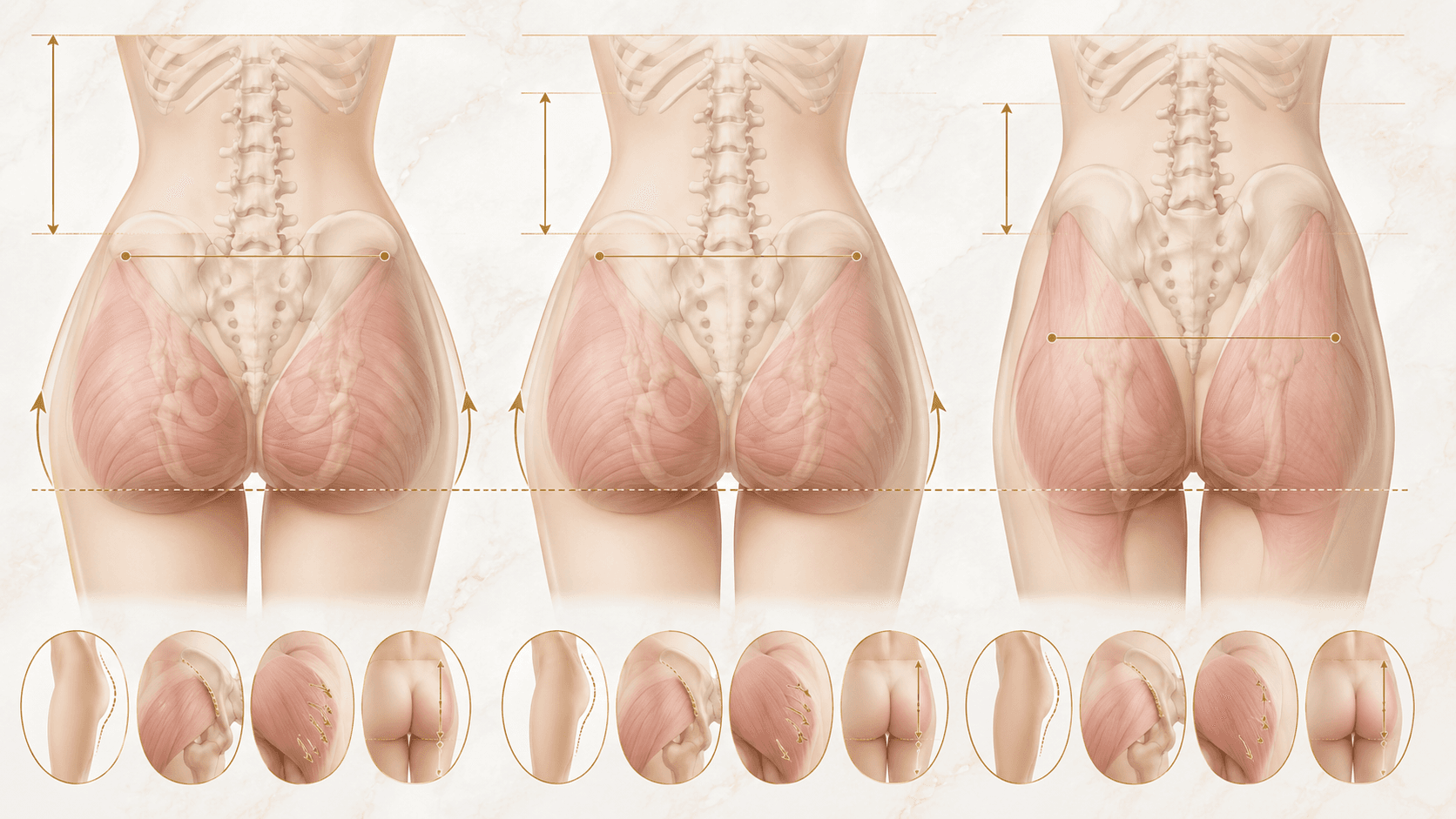
Left · center · right — same pelvic width · fixed ischium baseline · varying ilium height
Ample waist space · round hip
The ilium is short, so waist space is sufficient, and the same soft tissue covers a shorter pelvis, bringing out side-hip·upper-hip volume.
Balanced type
The waist-hip ratio forms naturally, so it often looks like a round, dimensional hip impression.
Reduced waist space · long square hip
The ilium is long, so waist space decreases, and the muscle·fat that must cover a longer pelvis is dispersed, which can make the side hip flat and the buttocks look long.
* This is not a surgery that changes the pelvic bone itself, but a procedure that analyzes your innate structure and designs the soft-tissue line within the possible range.
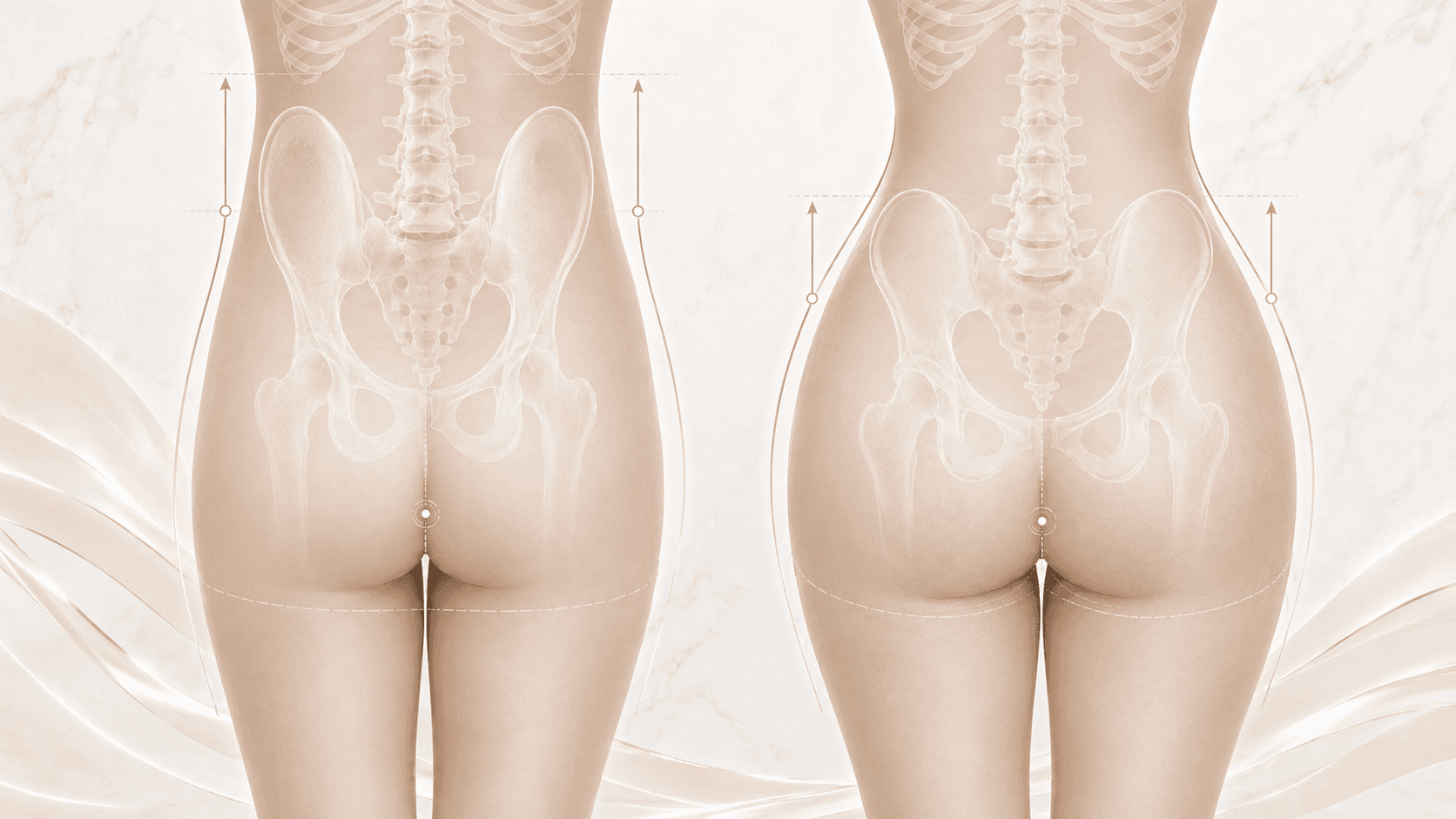
Bone · muscle · fat · skin a line the four layers create together
The hip line is created not by a single layer but by four overlapping ones — the skeleton (pelvis)·muscle coverage·fat layer·skin elasticity. Even the same amount of fat grafting gives a different result depending on which layer it settles in and how, so each layer must be evaluated individually before the procedure.
- Skeleton
Pelvic width·ilium height·ischium position — the baseline of the design
- Muscle
Gluteus maximus·medius coverage determines the side-hip/upper-hip volume impression
- Fat
Distribution·thickness·remaining amount — the possible grafting range and settling position
- Skin
Elasticity·direction of sagging — judging whether lifting is combined
Hip design evaluation factors — we look at 9 together
We evaluate pelvic height·waist-hip ratio·hip dip·upper-hip·side-hip volume·projection point·infragluteal fold·skin laxity·hip-thigh connection together. Even the same fat grafting differs by which area, at what depth, and how much to place, depending on the body structure.
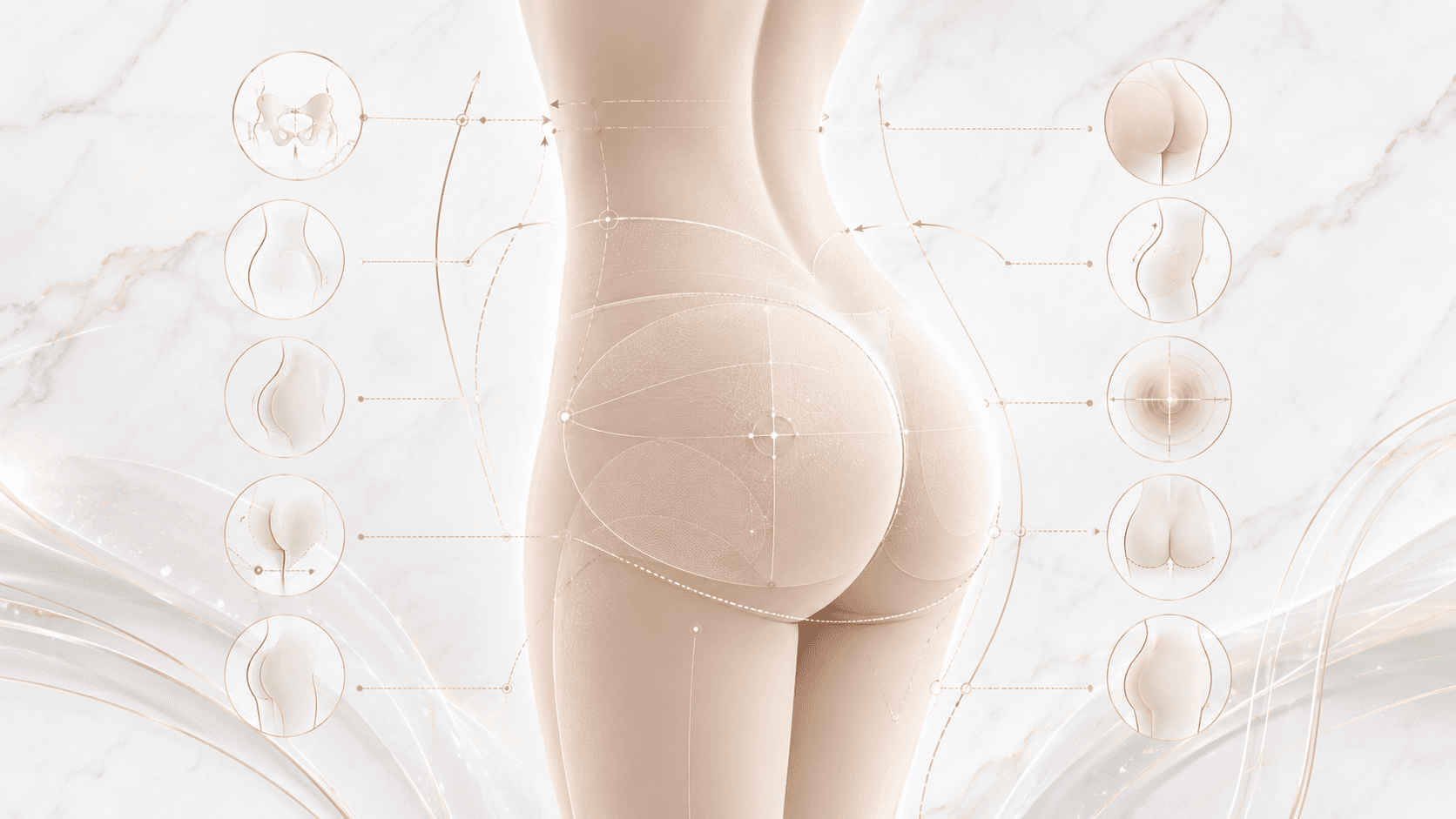
The ilium length determines the vertical length of the hip
The connection of waist space and hip width
Whether the upper part sags·is sunken
The side curve and the position of the hollow
Ideal position vs. current position
A signal of line breaking·sagging
Judging fat grafting vs. lifting
The muscle-attachment line
The flow of the whole silhouette
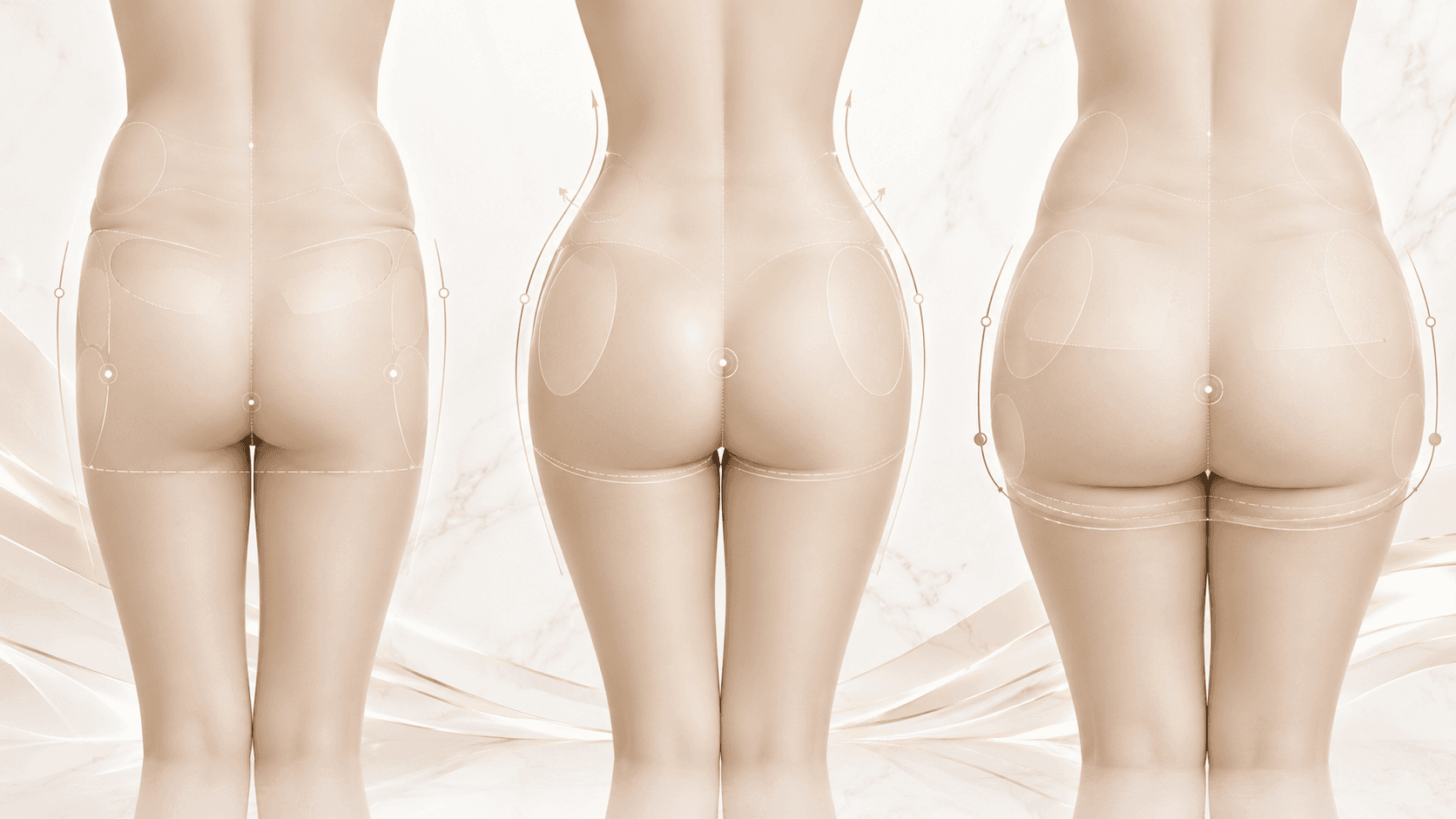
Even the same volume gives a different side-hip / upper-hip impression by position
Check the possibility of improving hip dip·side hipFrom analysis to integrated design it proceeds in four steps
After analyzing the current hip line, we consider the lacking volume·direction of sagging·pelvic structure·skin elasticity together and decide step by step whether liposuction·fat grafting·lifting is used.
- 01
Structure analysis
We check pelvic width·ilium height, waist-hip ratio, and the position of the rearmost projection point together.
- 02
Soft-tissue evaluation
We evaluate upper-hip·side-hip volume, hip-dip depth, skin elasticity, and the direction of sagging.
- 03
Direction decision
We decide step by step whether liposuction·fat grafting·lifting is used and the extent of application.
- 04
Integrated line design
We finish with the whole-silhouette flow, including the waist·infragluteal line·thigh connection.
The result is realistically designed in consultation
In the doctor's consultation we don't just check the hip shape you want. We look at pelvic height, muscle coverage, fat layer, skin elasticity, and the infragluteal line together and explain a realistically feasible hip-design direction.
- Check height relative to pelvic width
- Evaluate upper-hip and side-hip volume
- Hip-dip depth and position
- Rearmost projection point position
- Infragluteal fold and skin sagging
- Possible fat-grafting range
- Whether lifting is combined


A balanced hip line changes the impression of your back and how clothes fit, together
A balanced hip line changes not only the back but also the waistline, leg proportion, and the impression of how clothes fit. We aim for a natural line that harmonizes with the whole silhouette rather than excessive volume.
When the hip line alone is organized — the waistline, leg proportion, how clothes fit, and the back change together.
Waistline
A smooth waist-hip connection
Leg proportion
Organizing the infragluteal line makes the proportion look longer
How clothes fit
Bringing denim·leggings lines to life
Back
Connecting the upper-hip·side-hip·hip-dip flow
Why design your hip at NB
Direct analysis by the doctor
The doctor personally looks at the pelvic structure and soft tissue and guides the design direction.
Integrated structure-line evaluation
We evaluate pelvic width·height, hip dip, upper-hip·side-hip, the infragluteal line, and skin laxity together.
Step-by-step direction decision
We decide step by step whether liposuction·fat grafting·lifting is applied, matched to the body condition.
Naturalness first
We prioritize a line balance that suits the body structure over excessive volume.
Frequently asked questions
The shape of the pelvic bone does not change with surgery. NB Hip Design analyzes your innate pelvic structure and then designs the distribution and line of the fat·muscle·skin covering it. Structural information such as pelvic width·ilium height·waist space becomes the basis for deciding which area to add how much volume to and which line to organize.
* The above is general information; for accurate details, please be guided during a specialist consultation.

After surgery, with you through recovery
- 01VersaClear light therapy2 sessions
- 02Ucell standing-wave therapy2 sessions
- 03Radiofrequency care4 sessions
- 04
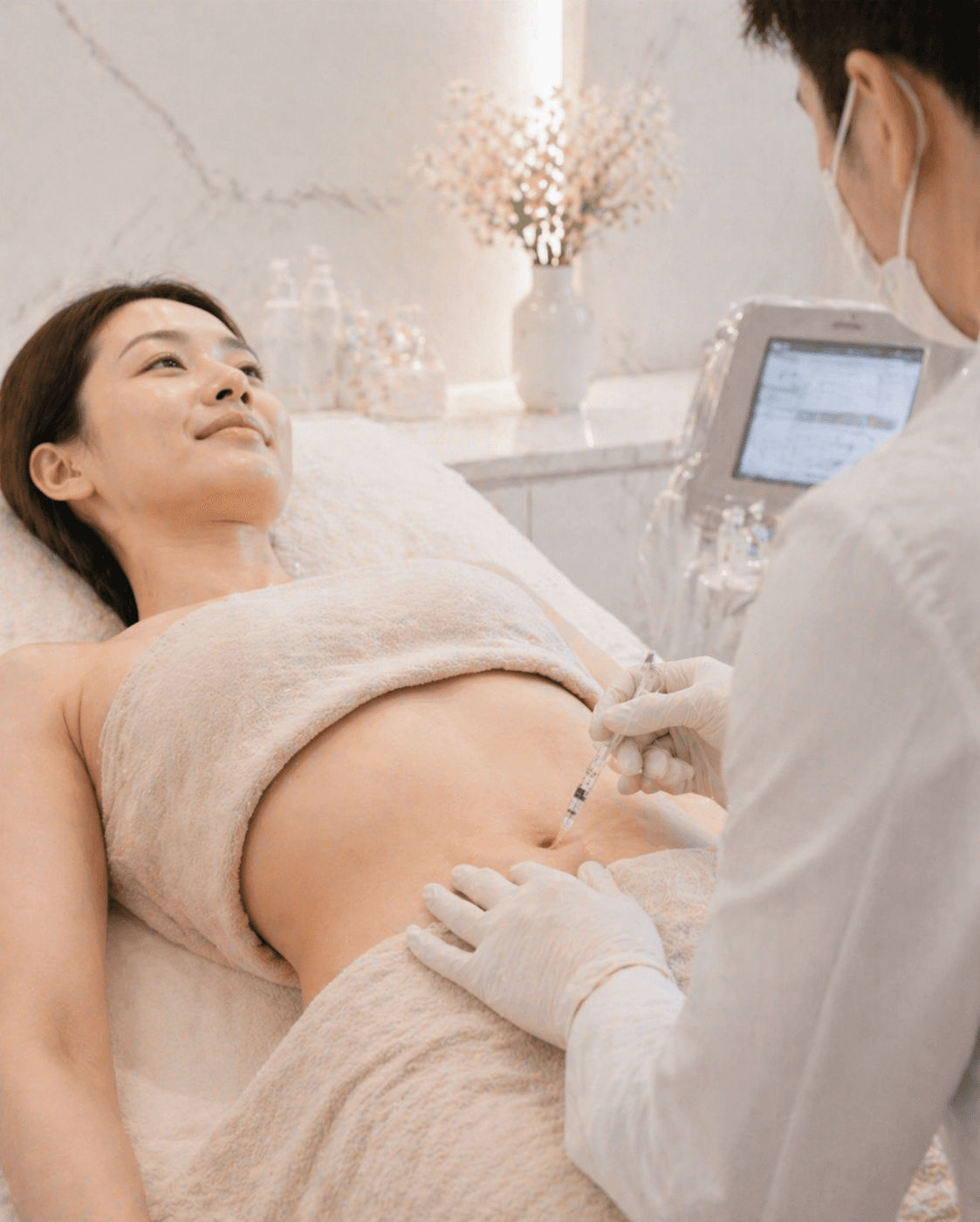 Soft-meso injection· Performed by the doctor2 sessions
 - 05
 Fraxel scar laser· Performed by the doctor2 sessions
Basic aftercare is provided as a standard programme of 12 sessions in total — 4 swelling-care, 4 radiofrequency, 2 scar-laser and 2 meso-injection sessions. Actual scheduling and completion may vary depending on your ability to attend.
If care is needed beyond the basic aftercare, NB surgery patients receive a 50% discount on the standard price.
Legal Notice
※ If care cannot be provided due to reasons such as equipment malfunction, the affected care item may not be offered; as a service item, it is non-refundable.
※ Depending on your constitution and healing process, side effects such as swelling, bruising, inflammation, and scarring may occur after surgery.
Check in consultation why your hip looks the way it does
Whether fat grafting is suitable, whether lifting or organizing the surrounding line is needed — we guide you while looking at the pelvic structure and soft tissue together. Even with photos alone, you can first be guided on a rough consultation direction.
Weekdays 10:00–19:00 · Saturday 10:00–16:00 · closed Sundays·holidays
* Whether surgery is possible and the suitable method may vary depending on individual pelvic structure, fat layer, skin elasticity, and past surgery history.
Apply right away with just your name and contact