
01
Depression type
A type where a certain area looks sunken and casts a shadow

Depression, tethering, and bumpiness after previous liposuction can be hard to solve simply by suctioning again. With ultrasound we check the tissue's adhesion and fibrosis, and through adhesion release and tissue repositioning we redesign toward a more natural line.
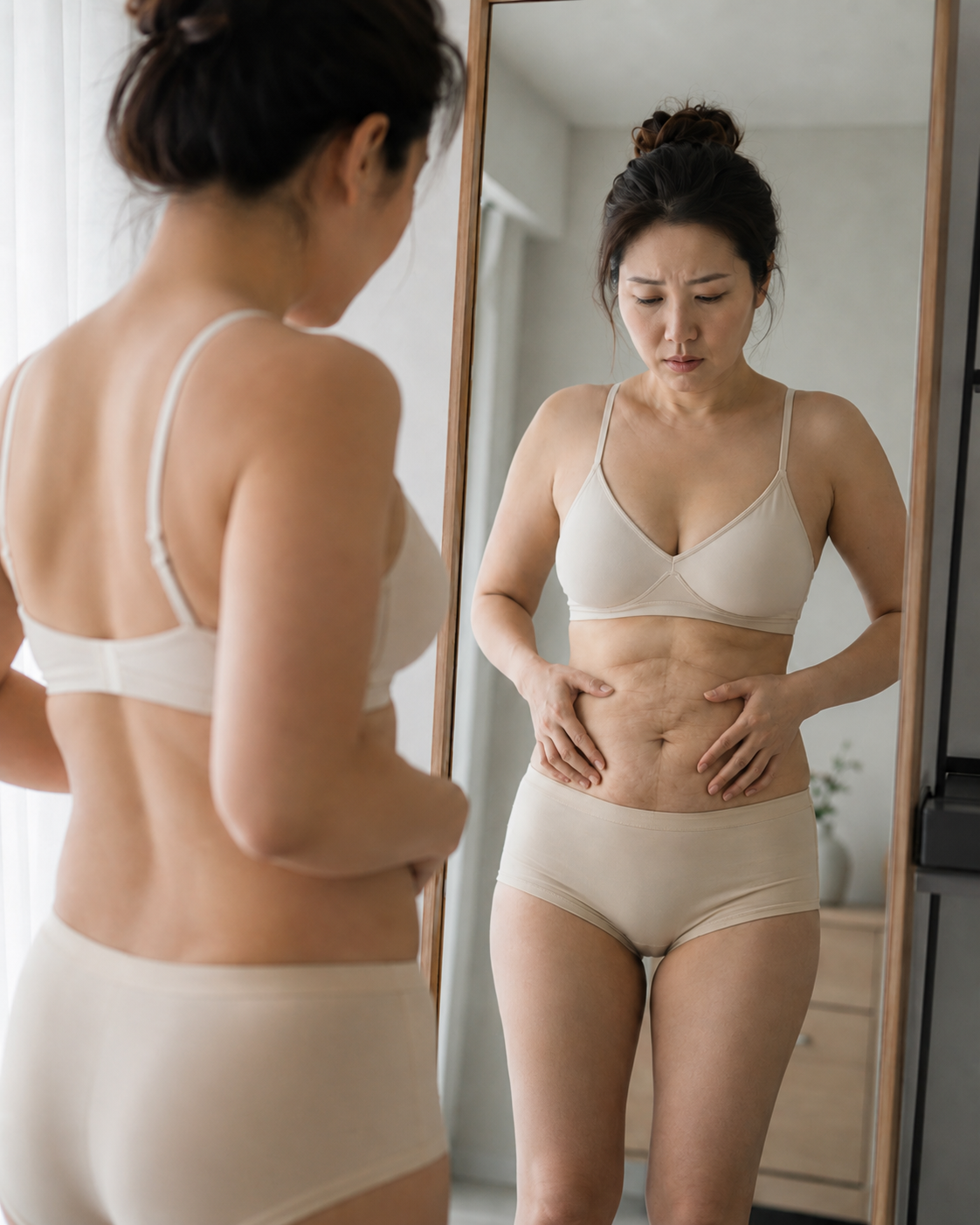
If, long after liposuction, your abdomen is still bumpy or a certain area looks tethered and sunken, it may not be simple swelling or a weight issue. When adhesion or fibrosis forms between the skin, fat layer, and fascia, the line may not smooth out even with exercise, and abdominal contours can show even under clothing.
Adhesion and fibrosis may not simply be a matter of leftover fat. After previous liposuction, when fibrotic tissue connects abnormally between the skin, fat layer, and fascia, the surface becomes bumpy, and some areas can look pulled or sunken. In such cases, exercise, massage, or weight loss alone may not bring sufficient improvement; after analyzing and releasing the adhered structure, a corrective approach that repositions or supplements the deficient areas may be needed.
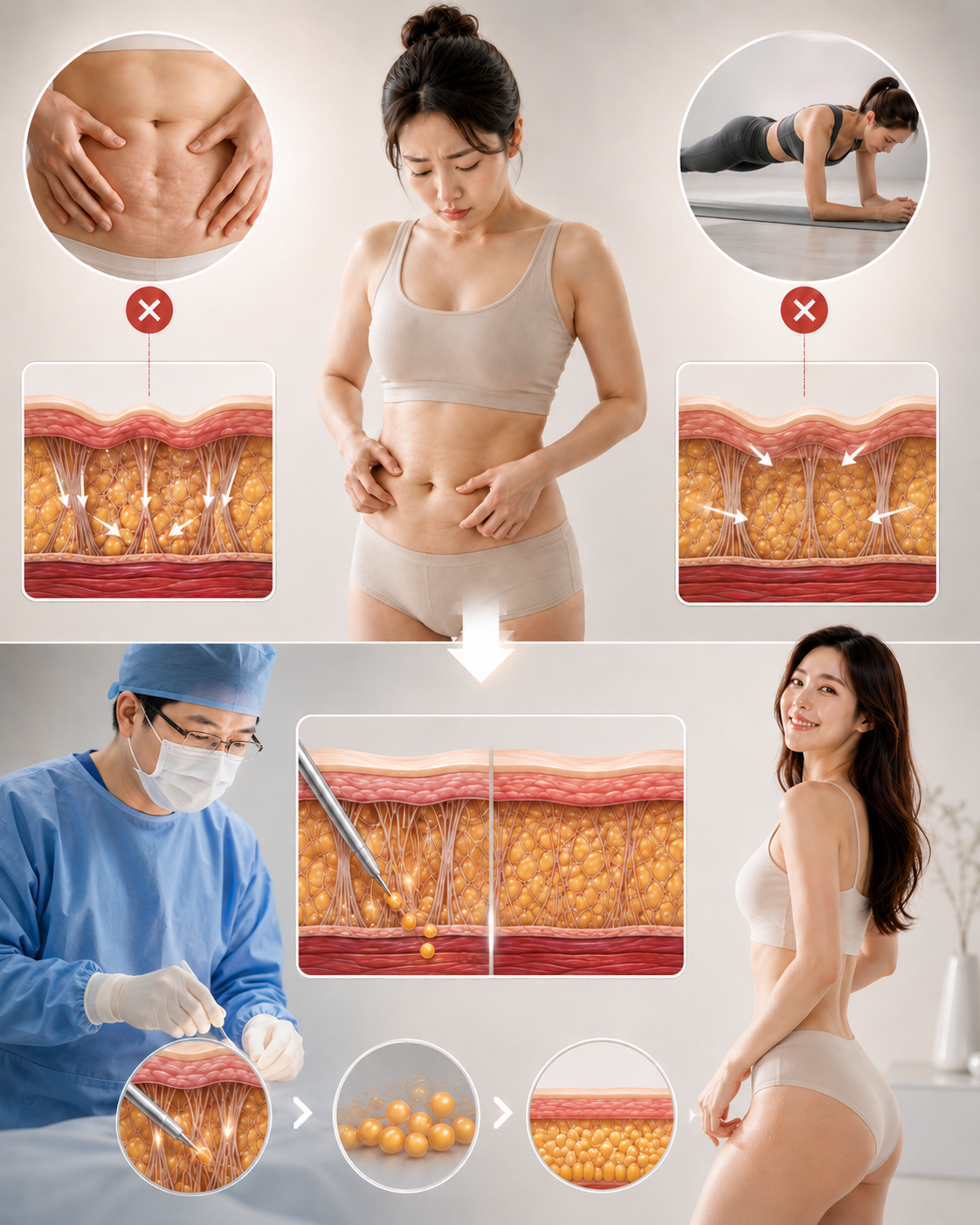
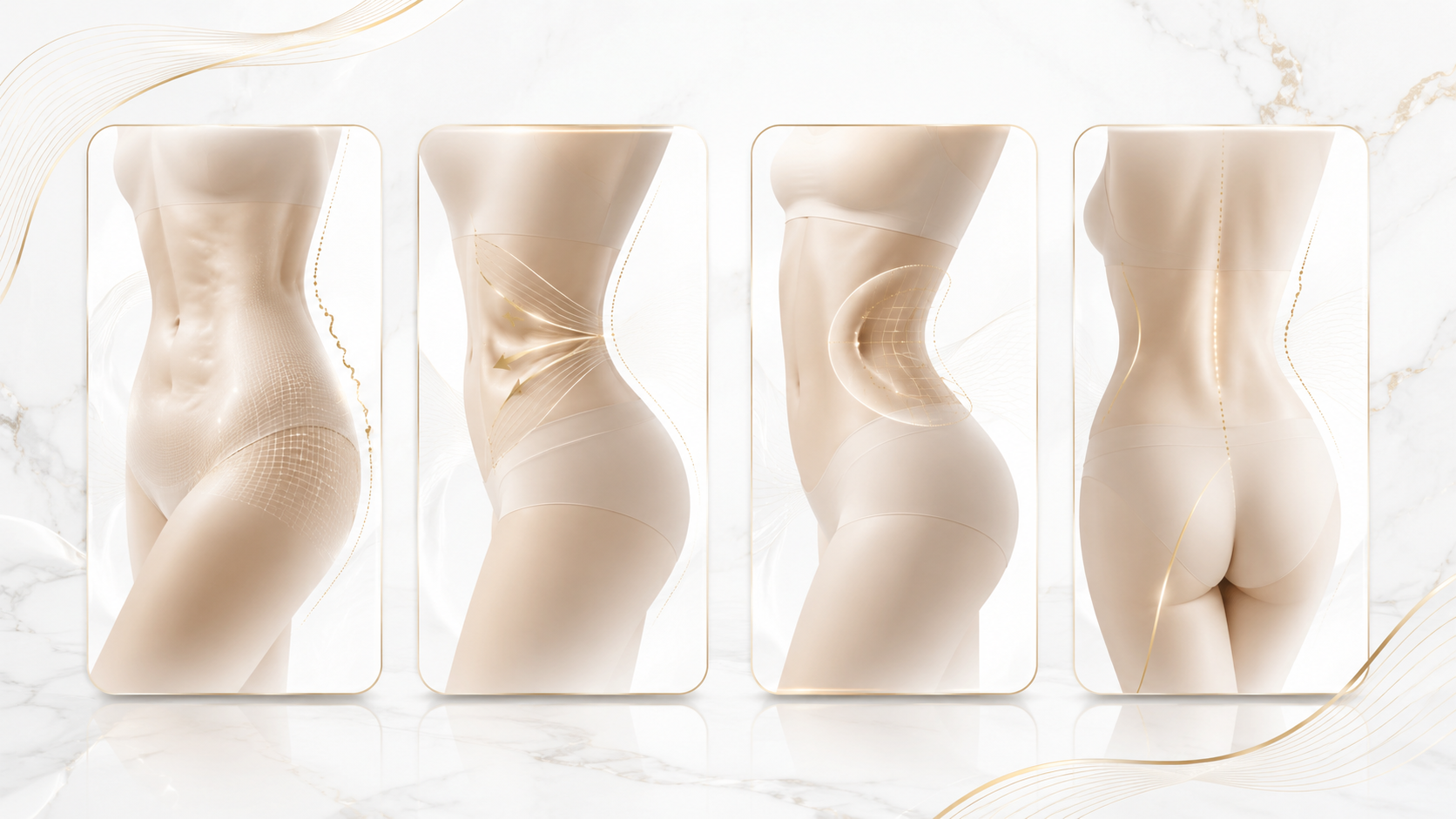
A type where a certain area looks sunken and casts a shadow
A type where the skin is drawn inward or pulled along when moving
A type where the fat layer and fibrotic tissue are uneven, leaving an irregular surface
A type where more volume than needed was removed, making the connection with surrounding lines awkward
A type where left-right line or contour differences grow, making the whole silhouette awkward
Adhesion Reset is not a surgery that re-suctions without distinguishing the type. We must judge together which layer is pulling, where there is a deficit, and what the remaining fat layer and skin elasticity are like.
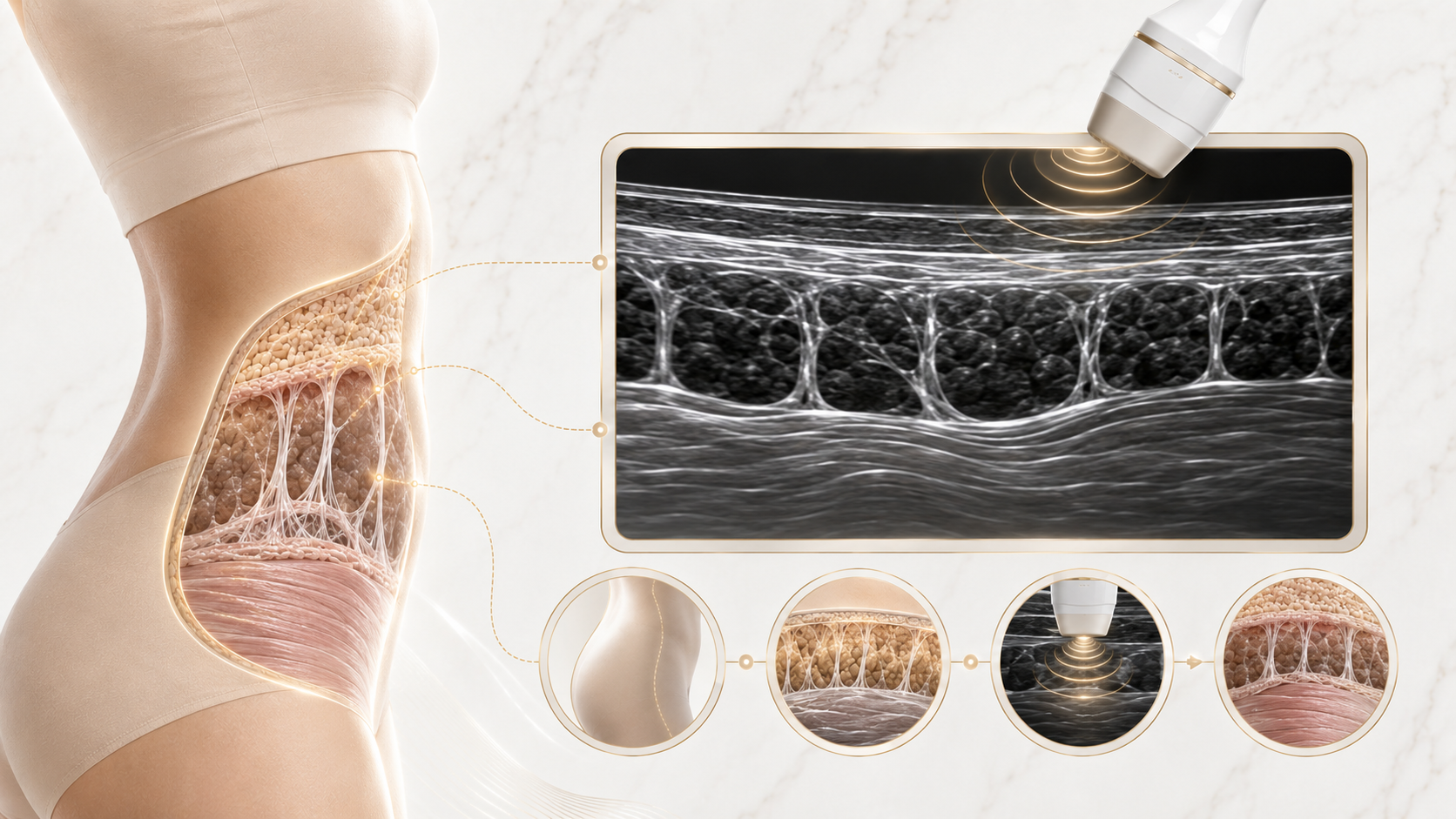
Even if it looks like similar bumpiness on the surface, the cause can differ — superficial adhesion, deep adhesion, fibrosis, fat-layer deficit, over-suction, reduced skin elasticity, and more. At NB, when needed during consultation, we use ultrasound to check fat-layer thickness, the degree of fibrosis, adhesion depth, and the cause of depression, and design the revision range and method.
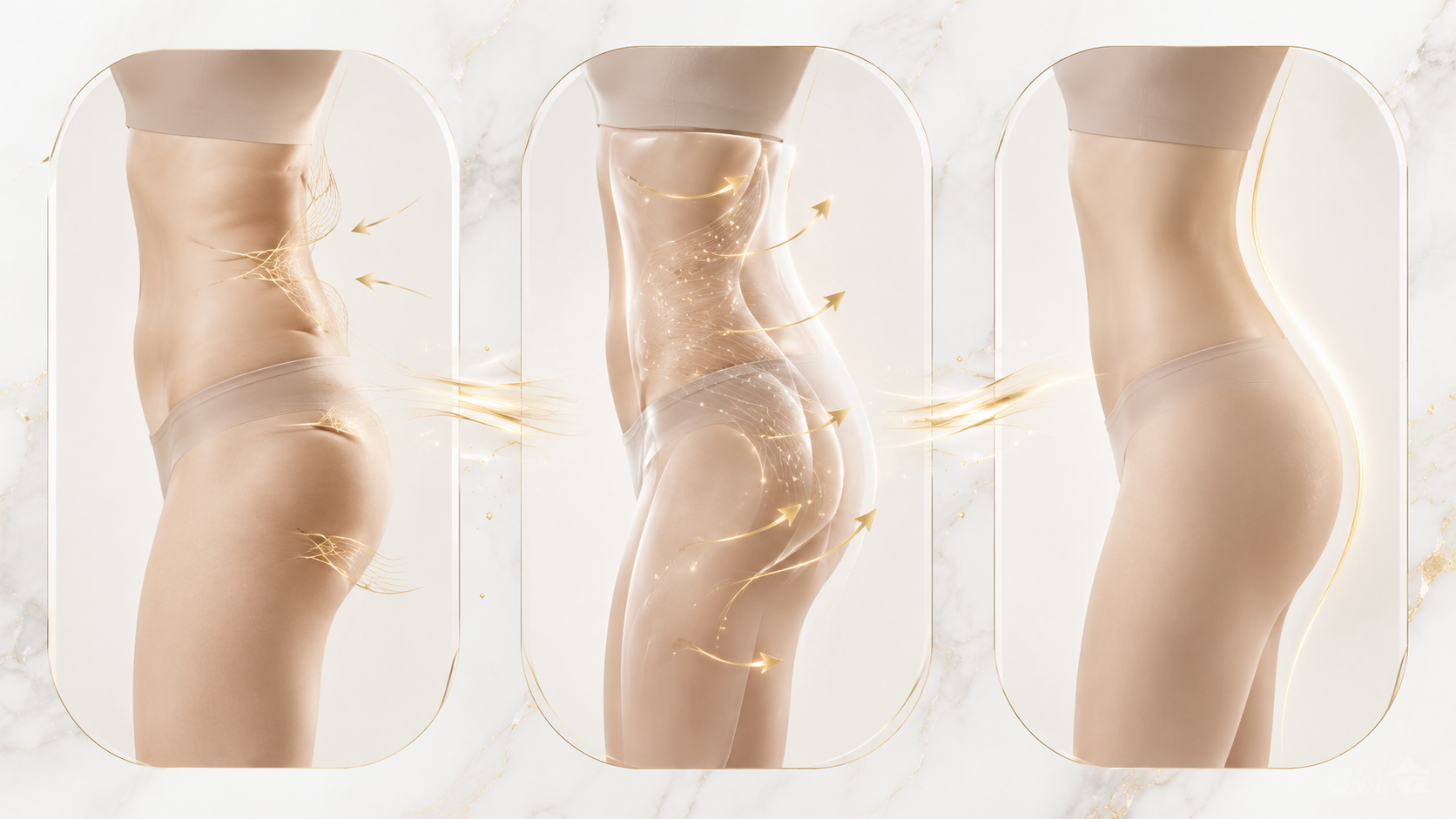
Through ultrasound and palpation, we check superficial·deep adhesion, fibrosis, and the cause of depression.
We carefully release the pulled, adhered tissue and reorganize the uneven tissue layers.
When needed, we combine micro fat grafting, fat repositioning, and tightening, aiming to design a more natural abdominal line.
The goal of revision is not simply to suction once more. We identify the tissue tethering and deficit left by the previous surgery, and combine release·supplementation·repositioning within the needed range to create a more natural line flow.

For Adhesion Reset, it is hard to determine the surgical range from photos alone. The movement of the skin and fat layer, tissue firmness, the degree of fibrosis on ultrasound, and the extent of previous surgery together with the fat layer that currently remains must be checked together.
What we check in consultation
The goal of correction is not simply to make things flat, but to regain a natural line under clothing, comfort when moving, and the confidence you feel in front of the mirror.
Superficial swelling may subside over time, but fibrotic adhesion sometimes does not release enough with time alone. It may vary by individual tissue condition, and we judge after consultation and diagnosis.
Some superficial adhesion may improve to a degree with ultrasound·MFR·radiofrequency care, but when deep adhesion and deficit are present, care alone sometimes does not improve it enough.
It is not an approach of simply removing more fat, but a corrective approach that first analyzes the adhesion·fibrosis structure and combines release·repositioning·micro fat grafting to redesign the line.
It is not mandatory, but it is used to visually confirm the layer and depth of adhesion and the extent of fibrosis. It is sometimes recommended in consultation to raise diagnostic accuracy.
Depending on the depth and extent of the depression and the surrounding tissue condition, micro fat grafting is sometimes combined. Release alone is sufficient in some cases, so it is decided in consultation.
Depending on the extent·degree of adhesion, it is sometimes split into 1–2 sessions. After evaluating the first-stage result, we decide whether and when additional correction is needed.
Consultation is possible regardless of timing, but generally the adhesion extent can be assessed accurately once at least 6 months have passed after liposuction and swelling has stabilized.
It varies by release extent and area and by individual condition. The general recovery flow is explained in consultation; this is general information and does not replace medical care.
Re-adhesion is possible, and to minimize it we apply a recovery protocol and monitor during recovery. Results may vary by individual condition.
It varies by area·extent·correction method·whether fat grafting is combined, and is decided after consultation and diagnosis. This is general information and does not replace medical care.
Even when considering revision after previous surgery, we don't approach everyone the same way. The approach differs between those for whom adhesion·depression correction comes first and those for whom an aesthetic line upgrade is possible.
A problem-solving approach that analyzes depression·tethering·bumpiness·fibrosis and recovers the line with release·repositioning·micro fat grafting.
Current pageFor those whose volume decreased with previous surgery but whose line completeness feels lacking — a redesign connecting the abdomen·waist·back·hip line.
View the Body Redesign page →The causes of bumpiness, depression, and tethering differ from person to person. NB looks not only at the visible line but also at the tissue structure, and determines the possible revision range and correction direction in consultation.